- BPM
- 106
- Key
- B♭ Major
- Camelot
- 6B
Introduction, Theme and Variations for Clarinet and Orchestra in E-Flat Major - Cadenza: Charles Neidich: Var. V: Maggiore by Gioachino Rossini, Charles Neidich, Orpheus Chamber Orchestra Song Details
On January 1, 1992, the song "Introduction, Theme and Variations for Clarinet and Orchestra in E-Flat Major - Cadenza: Charles Neidich: Var. V: Maggiore" was released by Gioachino Rossini, Charles Neidich, Orpheus Chamber Orchestra. The duration of This song is about two minutes long, specifically at 2:53. This song does not appear to have any foul language. Introduction, Theme and Variations for Clarinet and Orchestra in E-Flat Major - Cadenza: Charles Neidich: Var. V: Maggiore's duration is considered a little bit shorter than the average duration of a typical track. This song is part of Weber: Clarinet Concertos / Rossini: Introduction, Theme and Variations by Charles Neidich, Orpheus Chamber Orchestra. The song's track number on the album is #13 out of 16 tracks. Based on our data, Germany was the country where this track was produced or recorded. In terms of popularity, Introduction, Theme and Variations for Clarinet and Orchestra in E-Flat Major - Cadenza: Charles Neidich: Var. V: Maggiore is currently not that popular. The overall mood can be danceable to some, especially with it's high amount of postive energy.
BPM and Tempo
Since Introduction, Theme and Variations for Clarinet and Orchestra in E-Flat Major - Cadenza: Charles Neidich: Var. V: Maggiore by Gioachino Rossini, Charles Neidich, Orpheus Chamber Orchestra has a tempo of 106 beats per a minute, the tempo markings of this song would be Andante (at a walking pace). With Introduction, Theme and Variations for Clarinet and Orchestra in E-Flat Major - Cadenza: Charles Neidich: Var. V: Maggiore being at 106 BPM, the half-time would be 53 BPM with a double-time of 212 BPM.In addition, we consider the tempo speed to be pretty slow for this song. The time signature for this track is 3/4.
Music Key
This song is in the music key of B♭ Major. Or for those who are familiar with the camelot wheel, this song has a camelot key of 6B. So, the perfect camelot match for 6B would be either 6B or 7A. While, 7B can give you a low energy boost. For moderate energy boost, you would use 3B and a high energy boost can either be 8B or 1B. Though, if you want a low energy drop, you should looking for songs with either a camelot key of 6A or 5B will give you a low energy drop, 9B would be a moderate one, and 4B or 11B would be a high energy drop. Lastly, 3A allows you to change the mood.
Want to find the BPM and music key for other songs? Check out our BPM and Key Finder page!
- Popularity
- 6%
- Loudness
- -22.983 dB
- Acousticness
- 98%
- Danceability
- 52%
- Energy
- 19%
- Instrumentalness
- 87%
- Liveness
- 15%
- Loudness
- 62%
- Speechiness
- 5%
- Valence
- 89%
Recommendations
| Track | Artist | Key | Energy | Camelot | BPM | ||
|---|---|---|---|---|---|---|---|
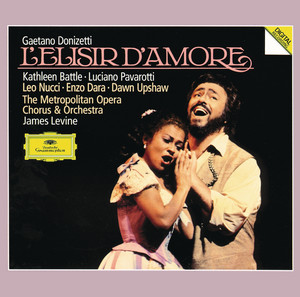 | L'elisir d'amore / Act II: "Una furtiva lagrima" | Gaetano Donizetti, Luciano Pavarotti, Metropolitan Opera Orchestra, James Levine | B♭ Minor | 1 | 3A | 87 BPM | |
 | Sorochintsi Fair, Act I: Gopak (Hopak) | Modest Mussorgsky, Slovak Philharmonic, Kenneth Jean | G Major | 2 | 9B | 127 BPM | |
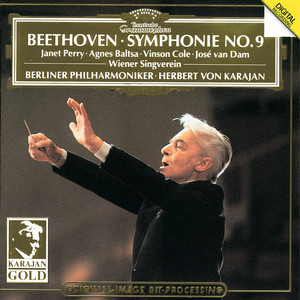 | Symphony No.9 In D Minor, Op.125 - "Choral" - Excerpt From 4th Movement: 4. Presto | Ludwig van Beethoven, Berliner Philharmoniker, Herbert von Karajan | D Major | 1 | 10B | 74 BPM | |
 | Il pipistrello - Ouverture | Metropolitan Symphony Orchestra, Leonard Mandell | D Major | 3 | 10B | 94 BPM | |
 | Carmen, Opera Suite No. 2: IV. Chanson du Toreador (Act 2) | London Festival Orchestra, Alfred Scholz | F Major | 1 | 7B | 113 BPM | |
 | Galop Infernal (Can-Can) - De La Opera "Orfeo En Los Infiernos" | Jacques Offenbach, Inma Shara | D Major | 4 | 10B | 74 BPM | |
 | Il barbiere di Siviglia (the Barber of Seville): Overture | Gioachino Rossini, Zagreb Festival Orchestra, Michael Halasz | C Major | 2 | 8B | 91 BPM | |
 | Wilhelm Tell-Galoppe, Op. 29b | Johann Strauss I, Slovak Sinfonietta, Zilina, Ernst Marzendorfer | C Major | 1 | 8B | 155 BPM | |
 | Symphony No. 10 in E Minor, Op. 93: II. Allegro | Dmitri Shostakovich, Royal Liverpool Philharmonic Orchestra, Vasily Petrenko | B♭ Minor | 6 | 3A | 89 BPM | |
 | La traviata, Act I: Libiamo ne' lieti calici | Giuseppe Verdi, Alfredo Kraus, Ambrosian Opera Chorus, John McCarthy, Philharmonia Orchestra, Renata Scotto, Riccardo Muti | D♭ Major | 2 | 3B | 138 BPM | |
 | Beethoven: Symphony No. 5 in C Minor, Op. 67: II. Andante con moto | Ludwig van Beethoven, Kurt Masur, New York Philharmonic | A♭ Major | 0 | 4B | 72 BPM | |
 | Procession of the Sardar from Caucasian Sketches, Op.10 - Instrumental | Mikhail Ippolitov-Ivanov, Eugene Ormandy, Philadelphia Orchestra | E Major | 4 | 12B | 107 BPM | |
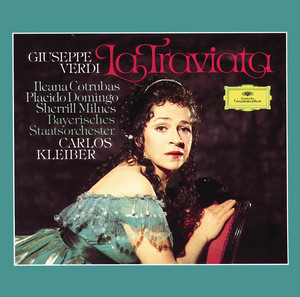 | La traviata, Act I: Follie! Follie! – Sempre libera "Cabaletta" | Giuseppe Verdi, Ileana Cotrubas, Plácido Domingo, Bavarian State Orchestra, Carlos Kleiber | A♭ Major | 1 | 4B | 117 BPM | |
 | Beethoven: Symphony No. 6 in F Major, Op. 68 "Pastoral": IV. Gewitter. Sturm. Allegro - | Ludwig van Beethoven, Philadelphia Orchestra, Riccardo Muti | G Major | 0 | 9B | 127 BPM | |
 | 21 Hungarian Dances for Orchestra, WoO 1: No. 5, Allegro (Arr. A. Parlow) | Johannes Brahms, Magyar Szimfonikus Zenekarok, Istvan Bogar | G Minor | 2 | 6A | 144 BPM | |
 | La forza del destino: Overture (Sinfonia) | Giuseppe Verdi, Philharmonia Orchestra, Giuseppe Sinopoli | E Minor | 1 | 9A | 64 BPM | |
 | Il Barbiere di Siviglia: Alfine eccoci qua - Ah! Qual colpo | Gioachino Rossini, Cesare Sterbini, Giuseppe Valdengo, Giuseppe Di Stefano, Lily Pons, Alberto Erede | F Major | 2 | 7B | 79 BPM | |
 | Romeo and Juliet, Op. 64: No. 13 Dance of the Knights | Sergei Prokofiev, Orchestra of the Royal Opera House, Covent Garden, Mark Ermler | C Major | 1 | 8B | 73 BPM | |
| Carmen, Opera Suite No. 1: V. Seguedille, Act 1 | London Festival Orchestra, Alfred Scholz | D Major | 0 | 10B | 92 BPM | |
 | Glinka: Overture from Ruslan and Ludmilla | Mikhail Glinka, Budapest Philharmonic Orchestra, Rico Saccani | D Major | 3 | 10B | 76 BPM | |
 | Beethoven : Hymn to Joy - The European Hymn At Olympics | London Festival Orchestra | D Major | 1 | 10B | 75 BPM | |
 | Der Barbier von Sevilla (Il Barbiere di Siviglia) · Arien und Szenen in deutscher Sprache (2000 Digital Remaster), Act 1: Die Verleumdung, sie ist ein Lüftchen (La calunna è un venticello) (Basilio) | Cesare Sterbini, Gioachino Rossini, Pierre-Augustin Caron de Beaumarchais, Hermann Prey, Erika Köth, Richard Holm, Gottlob Frick, Berliner Symphoniker, Wilhelm Schüchter, Wilhelm Schuechter | C Major | 3 | 8B | 106 BPM | |
 | Vivaldi: The Four Seasons, Violin Concerto in F Minor, Op. 8 No. 4, RV 297 "Winter": I. Allegro non molto | Antonio Vivaldi, Nigel Kennedy, English Chamber Orchestra | F Minor | 2 | 4A | 159 BPM | |
 | Hungarian Rhapsody No. 2 in C Sharp Minor, S. 244 | Franz Liszt, Roberto Szidon | D♭ Major | 3 | 3B | 102 BPM | |
 | Carmen, WD 31 / Act 1: "L'amour est un oiseau rebelle" | Georges Bizet, Marilyn Horne, Wiener Opernchor, Wiener Opernorchester, Henry Lewis | D Major | 2 | 10B | 129 BPM |
- ISRC
- DEF059103857
- Label
- L-M Records/RCA Records