- BPM
- 72
- Key
- E Minor
- Camelot
- 9A
2 Pieces for String Quartet: No. 1, Elegy (Adagio) by Dmitri Shostakovich, Arabella Quartet Song Details
Dmitri Shostakovich, Arabella Quartet's '2 Pieces for String Quartet: No. 1, Elegy (Adagio)' had a release date set for May 12, 2017. With this song being around four minutes long, at 4:01, the duration of this song is pretty average compared to other songs. This track is safe for children and doesn't appear to contain any foul language, since the "Explicit" tag was not present in this track. The track order of this song in Arabella Quartet's "In the Moment: Short Pieces for String Quartet" album is number 4 out of 13. On top of that, Hong Kong appears to be the country where this track was created. 2 Pieces for String Quartet: No. 1, Elegy (Adagio) is unknown right now. In our opinion, the overall tone is not very danceable and projects negative sounds, such as being sad, depressed, or angry.
BPM and Tempo
We consider the tempo marking of 2 Pieces for String Quartet: No. 1, Elegy (Adagio) by Dmitri Shostakovich, Arabella Quartet to be Adagio (slowly with great expression) because the track has a tempo of 72 BPM, a half-time of 36BPM, and a double-time of 144 BPM. Based on that, the speed of the song's tempo is slow. The time signature for this track is 4/4.
Music Key
E Minor is the music key of this track. Because this track belongs in the E Minor key, the camelot key is 9A. So, the perfect camelot match for 9A would be either 9A or 8B. While, a low energy boost can consist of either 9B or 10A. For moderate energy boost, you would use 6A and a high energy boost can either be 11A or 4A. However, if you are looking for a low energy drop, finding a song with a camelot key of 8A would be a great choice. Where 12A would give you a moderate drop, and 7A or 2A would be a high energy drop. Lastly, 12B allows you to change the mood.
Want to find the BPM and music key for other songs? Check out our BPM and Key Finder page!
- Popularity
- 0%
- Loudness
- -18.569 dB
- Acousticness
- 96%
- Danceability
- 29%
- Energy
- 20%
- Instrumentalness
- 83%
- Liveness
- 12%
- Loudness
- 69%
- Speechiness
- 5%
- Valence
- 36%
Recommendations
| Track | Artist | Key | Energy | Camelot | BPM | ||
|---|---|---|---|---|---|---|---|
 | Scheherazade: Calm at Sea | Nikolai Rimsky-Korsakov, Lars Hjalmar Joakim | E Major | 2 | 12B | 84 BPM | |
 | Raymonda, Op. 57: Act III - Variation IV | Alexander Glazunov, Moscow Symphony Orchestra, Alexander Anissimov | D Minor | 0 | 7A | 90 BPM | |
 | The Firebird (L'oiseau De Feu) - Suite (1919): Finale | Igor Stravinsky, Orchestre de l'Opéra National de Paris, Myung-Whun Chung | E Major | 2 | 12B | 78 BPM | |
 | The Firebird (Original Version): No. 20, Lullaby | Igor Stravinsky, City Of Birmingham Symphony Orchestra, Andris Nelsons | E♭ Minor | 0 | 2A | 172 BPM | |
 | Carnival of the Animals: The Swan | Camille Saint-Saëns, Isata Kanneh-Mason, Jeneba Kanneh-Mason, Sheku Kanneh-Mason | G Major | 1 | 9B | 65 BPM | |
 | Borodin: String Quartet No. 2 in D Major: III. Notturno. Andante | Alexander Borodin, Borodin Quartet | F Major | 3 | 7B | 96 BPM | |
 | Etude in D-Sharp Minor, Op. 8, No. 12: Patetico - Remastered | Alexander Scriabin, Vladimir Horowitz | D♭ Minor | 3 | 12A | 72 BPM | |
 | Gavotte - Arr. for Cello and Piano | Jean-Baptiste Lully, Mischa Maisky, Pavel Gililov | D Minor | 0 | 7A | 85 BPM | |
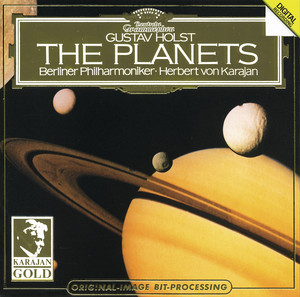 | The Planets, Op. 32: 4. Jupiter, the Bringer of Jollity | Gustav Holst, Berliner Philharmoniker, Herbert von Karajan | G Minor | 3 | 6A | 140 BPM | |
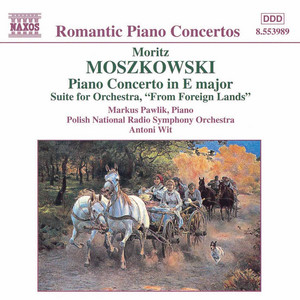 | Aus aller Herren Landern (From Foreign Lands), Op. 23: II. Italian: Presto | Moritz Moszkowski, Markus Pawlik, Polish National Radio Symphony Orchestra, Antoni Wit | E Major | 2 | 12B | 171 BPM | |
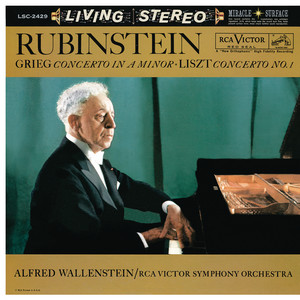 | Piano Concerto in A Minor, Op. 16: I. Allegro molto moderato - Remastered | Edvard Grieg, Arthur Rubinstein, RCA Victor Symphony Orchestra, Alfred Wallenstein | A Minor | 1 | 8A | 82 BPM | |
 | Peer Gynt Suite No. 1, Op. 46: II. The Death of Åse - Recorded 1982 | Edvard Grieg, Berliner Philharmoniker, Herbert von Karajan | G Major | 0 | 9B | 45 BPM | |
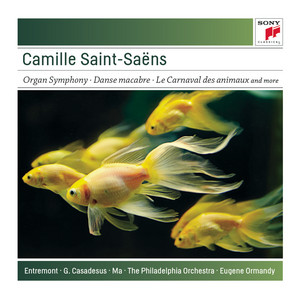 | Samson et Dalila, Op. 47: Bacchanale | Camille Saint-Saëns, Eugene Ormandy, Philadelphia Orchestra | D Minor | 3 | 7A | 134 BPM | |
 | Mozart: Requiem in D Minor, K. 626: VIII. Lacrimosa | Wolfgang Amadeus Mozart, Pierre Génisson, Bruno Fontaine | D Minor | 0 | 7A | 121 BPM | |
 | Mendelssohn: String Quartet No. 6 in F Minor, Op. 80, MWV R37: II. Allegro assai | Felix Mendelssohn, Quatuor Ébène | F Minor | 3 | 4A | 139 BPM | |
 | Ballet Suite No. 1 (arr. L. Atovmyan): Romance (The Limpid Stream) | Lev Atovmyan, Dmitri Shostakovich, Russian Philharmonic Orchestra, Dmitry Yablonsky | F Major | 1 | 7B | 90 BPM | |
| Peer Gynt Suite No. 1, Op. 46: I. Morning Mood | Edvard Grieg, Berliner Philharmoniker, Herbert von Karajan | E Major | 0 | 12B | 141 BPM | |
| Scheherazade: The princess in a palanquin | Nikolai Rimsky-Korsakov, Lars Hjalmar Joakim | G Major | 1 | 9B | 166 BPM | |
 | Carmen Suite No. 1 (Arr. E. Guiraud): III. Intermezzo | Georges Bizet, Orquestra Simfònica de Barcelona i Nacional de Catalunya, Pablo González | E♭ Major | 0 | 5B | 81 BPM | |
 | 21 Hungarian Dances for Orchestra, WoO 1: No. 5, Allegro (Arr. A. Parlow) | Johannes Brahms, Magyar Szimfonikus Zenekarok, Istvan Bogar | G Minor | 2 | 6A | 144 BPM | |
 | Polovetsian Dances from Prince Igor: Moderato alla breve | Alexander Borodin, George Szell, The Cleveland Orchestra | A Major | 2 | 11B | 108 BPM | |
 | La Campanella, Op.7 | Niccolò Paganini, David Garrett, Alexander Markovich | D Major | 1 | 10B | 102 BPM | |
 | Waltz No. 19 in A Minor, KK IVb (Version for Harp in A Flat Minor) | Frédéric Chopin, Magdalena Hoffmann | A♭ Minor | 1 | 1A | 127 BPM | |
 | Lieder ohne Worte, Op. 19b: Lieder ohne Worte (Song without Words) No. 6 in G Minor, Op. 19, No. 6, "Venezianisches Gondellied" [Venetian Gondola Song] | Felix Mendelssohn, Péter Nagy | G Major | 0 | 9B | 101 BPM | |
 | Symphony No. 9 in E Minor, Op. 95 "From the New World": II. Largo | Antonín Dvořák, New York Philharmonic, Alan Gilbert | D♭ Major | 0 | 3B | 87 BPM |
- ISRC
- HKI191627004
- Label
- L-M Records/RCA Records