- BPM
- 130
- Key
- G Major
- Camelot
- 9B
Candide, Act I (Remastered): Oh, Happy We - 2017 Remastered Version by Leonard Bernstein, Robert Rounseville, Barbara Cook, Candide Orchestra, Samuel Krachmalnick Song Details
Leonard Bernstein, Robert Rounseville, Barbara Cook, Candide Orchestra, Samuel Krachmalnick's ' "Candide, Act I (Remastered): Oh, Happy We - 2017 Remastered Version" was released on its scheduled release date, January 19, 2018. With This song being less than two minutes long, at 1:51, we are fairly confident that this song is not explicit and is safe for all ages. Based on the duration of this song, this song duration is much smaller than the average song duration. The song is number 3 out of 16 in Candide (Original Broadway Cast Recording) by Leonard Bernstein. Going off of the ISRC code of this track, we detected that the origin of this track is from United States. Based on our statistics, Candide, Act I (Remastered): Oh, Happy We - 2017 Remastered Version's popularity is not that popular right now. Since there is more of a neutral sound being played, this makes the track somewhat danceable.
BPM and Tempo
The tempo marking of Candide, Act I (Remastered): Oh, Happy We - 2017 Remastered Version by Leonard Bernstein, Robert Rounseville, Barbara Cook, Candide Orchestra, Samuel Krachmalnick is Allegro (fast, quick, and bright), since this song has a tempo of 130 BPM. With that information, we can conclude that the song has a fast tempo. This song can go great with walking. The time signature for this track is 1/4.
Music Key
This song is in the music key of G Major. This also means that this song has a camelot key of 9B. So, the perfect camelot match for 9B would be either 9B or 10A. While, 10B can give you a low energy boost. For moderate energy boost, you would use 6B and a high energy boost can either be 11B or 4B. Though, if you want a low energy drop, you should looking for songs with either a camelot key of 9A or 8B will give you a low energy drop, 12B would be a moderate one, and 7B or 2B would be a high energy drop. Lastly, 6A allows you to change the mood.
Want to find the BPM and music key for other songs? Check out our BPM and Key Finder page!
- Popularity
- 10%
- Loudness
- -15.078 dB
- Acousticness
- 87%
- Danceability
- 44%
- Energy
- 22%
- Instrumentalness
- 0%
- Liveness
- 15%
- Loudness
- 75%
- Speechiness
- 5%
- Valence
- 58%
Recommendations
| Track | Artist | Key | Energy | Camelot | BPM | ||
|---|---|---|---|---|---|---|---|
 | Symphony No. 2 in D Major, Op. 43: I. Allegretto | Jean Sibelius, Leonard Bernstein, New York Philharmonic | B♭ Major | 3 | 6B | 98 BPM | |
 | Symphony No. 9 in E Minor, Op. 95 "From the New World": II. Largo | Antonín Dvořák, New York Philharmonic, Alan Gilbert | D♭ Major | 0 | 3B | 87 BPM | |
 | Warsaw Concerto | Richard Addinsell, Jean-Yves Thibaudet, BBC Symphony Orchestra, Hugh Wolff | B Major | 1 | 1B | 76 BPM | |
 | String Quartet No. 1 in D Major, Op. 11, TH 111: II. Andante cantabile (Version for String Orchestra) | Pyotr Ilyich Tchaikovsky, Leonard Bernstein, New York Philharmonic | B♭ Major | 1 | 6B | 93 BPM | |
 | Symphony No. 5: IV. Adagietto. Sehr langsam | Gustav Mahler, Berliner Philharmoniker, Claudio Abbado | F Major | 0 | 7B | 91 BPM | |
 | La Mer, L.109: 1. From Dawn Till Noon On The Sea (De l'aube à midi sur la mer) | Claude Debussy, Orchestre Symphonique de Montréal, Charles Dutoit | F♯ Major | 1 | 2B | 61 BPM | |
 | Carmen Suite No. 1 (Arr. E. Guiraud): III. Intermezzo | Georges Bizet, Orquestra Simfònica de Barcelona i Nacional de Catalunya, Pablo González | E♭ Major | 0 | 5B | 81 BPM | |
 | Symphony No. 3 In C Minor, Op. 78 "Organ Symphony": 1. Adagio - Allegro moderato - Poco adagio | Camille Saint-Saëns, Simon Preston, Berliner Philharmoniker, James Levine | A♭ Major | 1 | 4B | 118 BPM | |
 | D'un matin de printemps | Lili Boulanger, Yan Pascal Tortelier, BBC Philharmonic | C Major | 1 | 8B | 130 BPM | |
| Symphony No. 2 in D Major, Op. 43: IV. Finale. Allegro moderato | Jean Sibelius, Leonard Bernstein, New York Philharmonic | D Major | 3 | 10B | 86 BPM | |
 | West Side Story Symphonic Dances: VI. Meeting Scene - Live | Leonard Bernstein, Los Angeles Philharmonic | A Minor | 0 | 8A | 92 BPM | |
 | Symphonie espagnole, Op. 21: I. Allegro non troppo | Édouard Lalo, Itzhak Perlman, Orchestre de Paris, Daniel Barenboim | D Minor | 1 | 7A | 75 BPM | |
 | Scheherazade: The Tale of the Kalendar Prince | Nikolai Rimsky-Korsakov, Lars Hjalmar Joakim | B Minor | 1 | 10A | 62 BPM | |
 | Suite No. 3, P. 172: I. Italiana: Andantino | Ottorino Respighi, RTÉ National Symphony Orchestra | B♭ Major | 1 | 6B | 94 BPM | |
 | Appalachian Spring: VIII. Coda. Moderato | Aaron Copland, Leonard Bernstein, New York Philharmonic | C Major | 0 | 8B | 106 BPM | |
 | Brahms: Violin Concerto in D Major, Op. 77: III. Allegro giocoso, ma non troppo vivace | Johannes Brahms, Itzhak Perlman, Carlo Maria Giulini, Chicago Symphony Orchestra | G Major | 3 | 9B | 87 BPM | |
 | Fauré: Élégie in C Minor, Op. 24 | Gabriel Fauré, Jacqueline du Pré, Gerald Moore | A♭ Major | 0 | 4B | 56 BPM | |
 | The Planets, Op. 32: IV. Jupiter, the Bringer of Jollity | Gustav Holst, Leonard Bernstein, New York Philharmonic | C Minor | 3 | 5A | 60 BPM | |
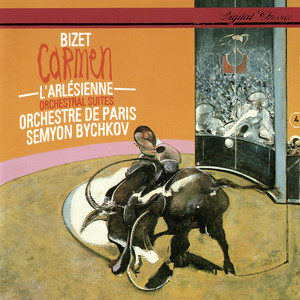 | Carmen Suite No. 1: 1. Prélude | Georges Bizet, Orchestre de Paris, Semyon Bychkov | A Minor | 1 | 8A | 96 BPM | |
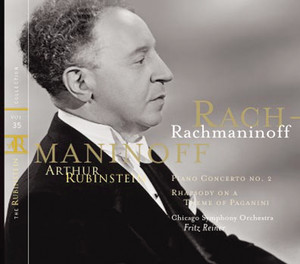 | Piano Concerto No. 2 in C Minor, Op. 18: I. Moderato | Sergei Rachmaninoff, Arthur Rubinstein, Fritz Reiner | C Minor | 1 | 5A | 71 BPM | |
 | The Rite of Spring: Part One: Adoration of the Earth: The Augurs of Spring - Dance of the Young Girls | Igor Stravinsky, Teodor Currentzis, musicAeterna | B♭ Major | 3 | 6B | 120 BPM | |
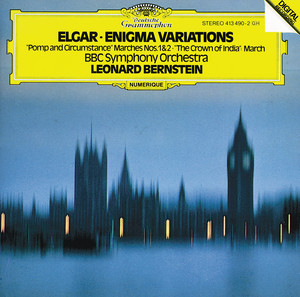 | Variations On An Original Theme, Op.36 "Enigma": 6. Ysobel (Andantino) | Edward Elgar, BBC Symphony Orchestra, Leonard Bernstein | C Major | 0 | 8B | 65 BPM | |
 | Symphony No. 1 in D Major, Op. 25: I. Allegro | Sergei Prokofiev, Leonard Bernstein, New York Philharmonic | D Major | 1 | 10B | 134 BPM | |
 | Symphony No. 2: V. Allegro molto vivace | Charles Ives, Leonard Bernstein, New York Philharmonic | F Major | 3 | 7B | 143 BPM | |
 | Night on Bald Mountain | Modest Mussorgsky, Wiener Philharmoniker, Gustavo Dudamel | D Major | 2 | 10B | 69 BPM |
- ISRC
- USSM11703240
- Label
- L-M Records/RCA Records