- BPM
- 92
- Key
- E♭ Major
- Camelot
- 5B
Wiegenlied, Op. 49, No. 4 by Johannes Brahms, Renée Fleming, Hartmut Höll Song Details
"Wiegenlied, Op. 49, No. 4" by Johannes Brahms, Renée Fleming, Hartmut Höll had its release date on June 14, 2019. The duration of This song is about two minutes long, specifically at 2:04. This song does not appear to have any foul language. Wiegenlied, Op. 49, No. 4's duration is considered a little bit shorter than the average duration of a typical track. The song is number 1 out of 21 in Brahms, Schumann & Mahler: Lieder by Renée Fleming. Going off of the ISRC code of this track, we detected that the origin of this track is from United Kingdom. In terms of popularity, Wiegenlied, Op. 49, No. 4 is currently not that popular. In our opinion, the overall tone is not very danceable and projects negative sounds, such as being sad, depressed, or angry.
BPM and Tempo
The tempo marking of Wiegenlied, Op. 49, No. 4 by Johannes Brahms, Renée Fleming, Hartmut Höll is Andante (at a walking pace), since this song has a tempo of 92 BPM. With that information, we can conclude that the song has a slow tempo. This song can go great with yoga or pilates. The time signature for this track is 4/4.
Music Key
This song is in the music key of E♭ Major. This also means that this song has a camelot key of 5B. So, the perfect camelot match for 5B would be either 5B or 6A. While, 6B can give you a low energy boost. For moderate energy boost, you would use 2B and a high energy boost can either be 7B or 12B. Though, if you want a low energy drop, you should looking for songs with either a camelot key of 5A or 4B will give you a low energy drop, 8B would be a moderate one, and 3B or 10B would be a high energy drop. Lastly, 2A allows you to change the mood.
Want to find the BPM and music key for other songs? Check out our BPM and Key Finder page!
- Popularity
- 2%
- Loudness
- -26.426 dB
- Acousticness
- 99%
- Danceability
- 28%
- Energy
- 2%
- Instrumentalness
- 5%
- Liveness
- 11%
- Loudness
- 56%
- Speechiness
- 5%
- Valence
- 18%
Recommendations
| Track | Artist | Key | Energy | Camelot | BPM | ||
|---|---|---|---|---|---|---|---|
 | In the Steppes of Central Asia | Alexander Borodin, Royal Philharmonic Orchestra, Vladimir Ashkenazy | A Major | 0 | 11B | 69 BPM | |
 | Elegy No. 1 in D Major | Giovanni Bottesini, Andrew Burashko, Joel Quarrington | D Major | 0 | 10B | 89 BPM | |
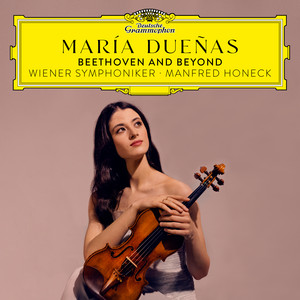 | 3 Old Viennese Dances: No. 2, Liebesleid (Transcr. for Violin and Orchestra) | Fritz Kreisler, María Dueñas, Wiener Symphoniker, Manfred Honeck | G Major | 0 | 9B | 103 BPM | |
 | Handel / Orch. Hale: Keyboard Suite No. 4 in D Minor, HWV 437: III. Sarabande | George Frideric Handel, Alexander Briger, Academy of St. Martin in the Fields | D Minor | 0 | 7A | 116 BPM | |
 | Kinderszenen | Robert Schumann, Ivan Moravec | F Major | 0 | 7B | 131 BPM | |
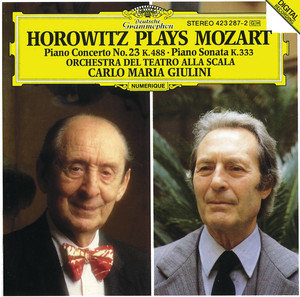 | Piano Concerto No. 23 in A Major, K. 488: II. Adagio | Wolfgang Amadeus Mozart, Vladimir Horowitz, Orchestra Del Teatro Alla Scala, Milano, Carlo Maria Giulini | F♯ Minor | 0 | 11A | 108 BPM | |
 | Piano Concerto No. 2 in F Major, Op. 102: II. Andante | Dmitri Shostakovich, Boris Giltburg, Royal Liverpool Philharmonic Orchestra, Vasily Petrenko | C Minor | 0 | 5A | 80 BPM | |
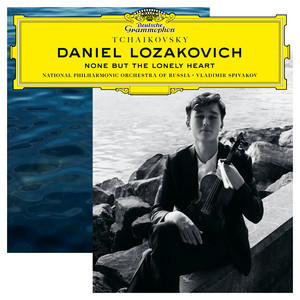 | Souvenir d'un lieu cher, Op. 42: III. Mélodie (Ed. Herrmann) | Pyotr Ilyich Tchaikovsky, Daniel Lozakovich, Stanislav Soloviev | E♭ Major | 1 | 5B | 178 BPM | |
 | Lieder ohne Worte (Songs without Words), Book 2, Op. 30: No. 7 in E-Flat Major, Op. 30, No. 1, MWV U103 | Felix Mendelssohn, Péter Nagy | E♭ Major | 0 | 5B | 65 BPM | |
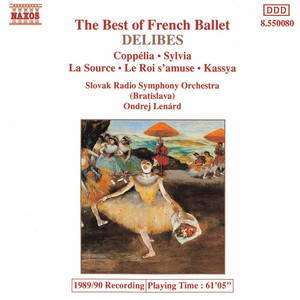 | Le roi s'amuse: Pavane | Léo Delibes, Slovak Philharmonic, Ondrej Lenard | B♭ Major | 0 | 6B | 91 BPM | |
 | Samson et Dalila: Bacchanale | Camille Saint-Saëns, Slovak Radio Symphony Orchestra, Stephen Gunzenhauser | A Minor | 1 | 8A | 109 BPM | |
 | Elgar: Salut d'amour, Op. 12 | Edward Elgar, Min Kym, Gordon Back | E Major | 1 | 12B | 86 BPM | |
 | Fantasia in D Minor, K. 397 | Wolfgang Amadeus Mozart, Seong-Jin Cho | D Major | 1 | 10B | 130 BPM | |
 | Ständchen, S. 560 (Trans. from Schwanengesang No. 4, D. 957) | Franz Schubert, Franz Liszt, Khatia Buniatishvili | D Major | 0 | 10B | 67 BPM | |
 | The Well-Tempered Clavier I, Prelude & Fugue No. 1 in C Major, BWV 846: I. Prelude | Johann Sebastian Bach, Lang Lang | C Major | 1 | 8B | 134 BPM | |
 | Les Barricades Mystérieuses | François Couperin, Khatia Buniatishvili | B♭ Major | 0 | 6B | 149 BPM | |
 | 21 Hungarian Dances, WoO 1 (arr. J. Joachim for violin and piano): No. 2 in D Minor | Joseph Joachim, Johannes Brahms, Marat Bisengaliev, John Lenehan | D Minor | 1 | 7A | 91 BPM | |
 | 3 Études de Concert, S. 144: No. 3 in D-Flat Major "Un sospiro" | Franz Liszt, Daniil Trifonov | D♭ Major | 1 | 3B | 76 BPM | |
 | Saint-Saëns: Le carnaval des animaux, R 125: XIII. Le cygne | Camille Saint-Saëns, Güher Pekinel, Éric Levionnais, Süher Pekinel | E♭ Major | 1 | 5B | 82 BPM | |
 | 16 Waltzes, Op. 39: 15. Waltz in A Flat | Johannes Brahms, Nelson Freire | A♭ Major | 0 | 4B | 72 BPM | |
 | Flute Sonata in E-Flat Major, BWV 1031: II. Siciliano (Arr. for Piano by Ignaz Friedman) | Johann Sebastian Bach, Joseph Banowetz | G Minor | 0 | 6A | 73 BPM | |
 | Allegro molto agitato in D Minor | Fanny Mendelssohn, Heather Schmidt | D Major | 1 | 10B | 111 BPM | |
 | The Carnival of the Animals, R. 125: XIII. The Swan (Arr. for Cello and Piano) | Camille Saint-Saëns, Yo-Yo Ma, Kathryn Stott | C Major | 2 | 8B | 99 BPM | |
 | Orfeo ed Euridice, Wq. 30 / Act II: Dance of the Blessed Spirits (Arr. by Mathieu Herzog for Cello and Strings) | Christoph Willibald Gluck, Camille Thomas, Brussels Philharmonic, Mathieu Herzog | B Minor | 1 | 10A | 87 BPM | |
 | Romeo and Juliet, Op. 64 / Act 1: Dance Of The Knights | Sergei Prokofiev, The Cleveland Orchestra, Lorin Maazel | B♭ Major | 6 | 6B | 124 BPM |
- ISRC
- GBBBA1800617
- Label
- L-M Records/RCA Records