- BPM
- 75
- Key
- B♭ Major
- Camelot
- 6B
Requiem, Op. 48 (version 1893): Requiem, Op. 48 (version 1893): Pie Jesu by Gabriel Fauré, Agnes Mellon, Les Petits Chanteurs de Saint-Louis, Ensemble Musique Oblique, Philippe Herreweghe, La Chapelle Royale Song Details
"Requiem, Op. 48 (version 1893): Requiem, Op. 48 (version 1893): Pie Jesu" by Gabriel Fauré, Agnes Mellon, Les Petits Chanteurs de Saint-Louis, Ensemble Musique Oblique, Philippe Herreweghe, La Chapelle Royale had its release date on 1988. With this song being around four minutes long, at 4:23, the duration of this song is pretty average compared to other songs. This track is safe for children and doesn't appear to contain any foul language, since the "Explicit" tag was not present in this track. The song is number 4 out of 12 in Fauré: Requiem, Op. 48 (version 1893) by Gabriel Fauré, Ensemble Musique Oblique, La Chapelle Royale, Philippe Herreweghe. Requiem, Op. 48 (version 1893): Requiem, Op. 48 (version 1893): Pie Jesu is not that popular right now. In our opinion, the overall tone is not very danceable and projects negative sounds, such as being sad, depressed, or angry.
BPM and Tempo
The tempo marking of Requiem, Op. 48 (version 1893): Requiem, Op. 48 (version 1893): Pie Jesu by Gabriel Fauré, Agnes Mellon, Les Petits Chanteurs de Saint-Louis, Ensemble Musique Oblique, Philippe Herreweghe, La Chapelle Royale is Adagio (slowly with great expression), since this song has a tempo of 75 BPM. With that information, we can conclude that the song has a slow tempo. The time signature for this track is 4/4.
Music Key
This song is in the music key of B♭ Major. This also means that this song has a camelot key of 6B. So, the perfect camelot match for 6B would be either 6B or 7A. While, 7B can give you a low energy boost. For moderate energy boost, you would use 3B and a high energy boost can either be 8B or 1B. Though, if you want a low energy drop, you should looking for songs with either a camelot key of 6A or 5B will give you a low energy drop, 9B would be a moderate one, and 4B or 11B would be a high energy drop. Lastly, 3A allows you to change the mood.
Want to find the BPM and music key for other songs? Check out our BPM and Key Finder page!
- Popularity
- 8%
- Loudness
- -31.811 dB
- Acousticness
- 95%
- Danceability
- 7%
- Energy
- 1%
- Instrumentalness
- 21%
- Liveness
- 9%
- Loudness
- 47%
- Speechiness
- 5%
- Valence
- 3%
Recommendations
| Track | Artist | Key | Energy | Camelot | BPM | ||
|---|---|---|---|---|---|---|---|
 | Delibes: Lakmé, Act 1: Duo des fleurs (Instrumental Version) | Léo Delibes, Camille Berthollet, Romain Dumas, Orchestre National Bordeaux Aquitaine | A Major | 2 | 11B | 82 BPM | |
 | 24 Preludes, Op. 11: No. 21 in B-Flat Major - Andante | Alexander Scriabin, Mao Fujita | F Major | 1 | 7B | 149 BPM | |
 | Piano Concerto No. 2 in F Major, Op. 102: II. Andante | Dmitri Shostakovich, Yuja Wang, Boston Symphony Orchestra, Andris Nelsons | F Major | 1 | 7B | 104 BPM | |
 | Les chemins de l'amour, FP. 106 | Francis Poulenc, Mischa Maisky, Daria Hovora | E Major | 1 | 12B | 67 BPM | |
 | Crisantemi | Brodsky Quartet | F♯ Minor | 0 | 11A | 75 BPM | |
 | Nisi Dominus, RV 608 - Arr. Cello: 4. Cum dederit dilectis suis (Arr. Cello) | Antonio Vivaldi, Harriet Krijgh, Amsterdam Sinfonietta, Candida Thompson | G Minor | 0 | 6A | 106 BPM | |
 | Ma mère l'oye, M. 62: Apothéose. Le jardin féerique | Maurice Ravel, Orchestre National De Lyon, Leonard Slatkin | C Major | 0 | 8B | 62 BPM | |
 | Piano Concerto in G Major, M. 83: II. Adagio assai | Maurice Ravel, Krystian Zimerman, Cleveland Orchestra, Pierre Boulez | E Major | 0 | 12B | 74 BPM | |
 | Melodie from "Orfeo ed Euridice", Wq. 30 (Arr. Kreisler for Violin and Piano) | Christoph Willibald Gluck, Daniel Lozakovich, Stanislav Soloviev | D Minor | 2 | 7A | 98 BPM | |
 | Adagio in F, H.XVII No. 9 | Joseph Haydn, Alfred Brendel | F Major | 0 | 7B | 71 BPM | |
 | Bruch : Violin Concerto No.1 in G minor Op.26 : III Finale - Allegro energico | Max Bruch, Maxim Vengerov, Kurt Masur, Gewandhausorchester Leipzig | G Major | 2 | 9B | 90 BPM | |
 | 3 Romances, Op. 11: No. 1, Andante | Clara Schumann, Isata Kanneh-Mason | E♭ Minor | 0 | 2A | 127 BPM | |
 | Orfeo ed Euridice, Wq. 30: Dance of the Blessed Spirits "Melody" (Arr. Sgambati for Piano) | Christoph Willibald Gluck, Yuja Wang | D Minor | 0 | 7A | 70 BPM | |
 | Japanese Suite, Op. 33, H. 126: I. Prelude. Song of the Fisherman | Gustav Holst, Ulster Orchestra, Joann Falletta | C Minor | 3 | 5A | 103 BPM | |
 | A Little Book of Hours: VI. Singing Sun | Peter Sculthorpe, Elena Riu | B♭ Major | 0 | 6B | 79 BPM | |
 | By the Still Waters, Op. 114 | Amy Beach, Isata Kanneh-Mason | D♭ Major | 0 | 3B | 76 BPM | |
 | Idyl for Strings - Adagio | Leoš Janáček, Hanspeter Gmür, Camerata Romana | G Major | 1 | 9B | 105 BPM | |
 | Grieg: Violin Sonata No. 3 in C Minor, Op. 45: II. Allegretto espressivo alla romanza | Renaud Capuçon, Khatia Buniatishvili | E Major | 1 | 12B | 78 BPM | |
 | Orfeo Ed Euridice: Dance of the Blessed Spirits (Act II) | Christoph Willibald Gluck, Karlheinz Zoeller, Berliner Philharmoniker, Herbert von Karajan | C Major | 1 | 8B | 75 BPM | |
 | Sonata In G Minor For Cello & Piano, Op. 19: 3. Andante | Sergei Rachmaninoff, Alisa Weilerstein, Inon Barnatan | F Major | 2 | 7B | 82 BPM | |
 | Scriabin: 24 Preludes, Op. 11: No. 21 in B-Flat Major | Alexander Scriabin, Mikhail Pletnev | E♭ Major | 0 | 5B | 70 BPM | |
 | 3 Romances, Op. 22: No. 1, Andante molto (Arr. Knoth for Cello and Piano) | Clara Schumann, Sophie Kauer, Kunal Lahiry | D♭ Major | 0 | 3B | 68 BPM | |
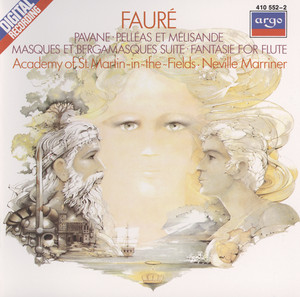 | Pelléas et Mélisande, Op. 80, Suite: I. Prélude | Gabriel Fauré, Academy of St. Martin in the Fields, Sir Neville Marriner | G Major | 1 | 9B | 134 BPM | |
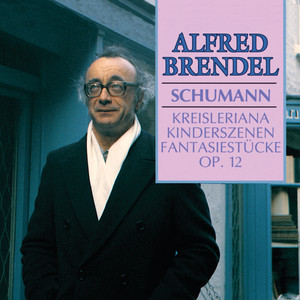 | Kinderszenen, Op. 15: VII. Träumerei | Robert Schumann, Alfred Brendel | F Major | 0 | 7B | 135 BPM | |
 | Fauré: Pavane, Op. 50 (Instrumental Version) | Gabriel Fauré, Sir Neville Marriner, Academy of St. Martin in the Fields | F♯ Minor | 1 | 11A | 70 BPM |
- ISRC
- This song does not have an ISRC.
- Label
- L-M Records/RCA Records