- BPM
- 125
- Key
- G Major
- Camelot
- 9B
Tu es Petrus by Gabriel Fauré, Traditional, Daniel Roth, Ronan Chouinard, Bernhard Schmidt Song Details
Gabriel Fauré, Traditional, Daniel Roth, Ronan Chouinard, Bernhard Schmidt's ' "Tu es Petrus" was released on its scheduled release date, October 1, 2019. With This song being less than two minutes long, at 1:44, we are fairly confident that this song is not explicit and is safe for all ages. Based on the duration of this song, this song duration is much smaller than the average song duration. The track order of this song in Traditional, Daniel Roth, Ronan Chouinard, Bernhard Schmidt's "Musique à Saint-Sulpice" album is number 2 out of 17. On top of that, Germany appears to be the country where this track was created. Based on our statistics, Tu es Petrus's popularity is not that popular right now. Even with the track produces more of a neutral energy, it is pretty danceable compared to others.
BPM and Tempo
We consider the tempo marking of Tu es Petrus by Gabriel Fauré, Traditional, Daniel Roth, Ronan Chouinard, Bernhard Schmidt to be Allegro (fast, quick, and bright) because the track has a tempo of 125 BPM, a half-time of 62BPM, and a double-time of 250 BPM. Based on that, the speed of the song's tempo is fast. Activities such as, walking, can go well with this song. The time signature for this track is 4/4.
Music Key
This song is in the music key of G Major. This also means that this song has a camelot key of 9B. So, the perfect camelot match for 9B would be either 9B or 10A. While, 10B can give you a low energy boost. For moderate energy boost, you would use 6B and a high energy boost can either be 11B or 4B. Though, if you want a low energy drop, you should looking for songs with either a camelot key of 9A or 8B will give you a low energy drop, 12B would be a moderate one, and 7B or 2B would be a high energy drop. Lastly, 6A allows you to change the mood.
Want to find the BPM and music key for other songs? Check out our BPM and Key Finder page!
- Popularity
- 1%
- Loudness
- -11.303 dB
- Acousticness
- 1%
- Danceability
- 81%
- Energy
- 64%
- Instrumentalness
- 90%
- Liveness
- 9%
- Loudness
- 81%
- Speechiness
- 5%
- Valence
- 48%
Recommendations
| Track | Artist | Key | Energy | Camelot | BPM | ||
|---|---|---|---|---|---|---|---|
 | Enigma Variations, Op. 36: Theme. Andante | Edward Elgar, BBC Symphony Orchestra, Leonard Bernstein | G Minor | 0 | 6A | 113 BPM | |
 | Méditation from Thais: Méditation from Thaïs | Jules Massenet, Johan Dalene, Peter Friis Johansson | E♭ Minor | 2 | 2A | 81 BPM | |
 | Lyric Pieces, Book 5, Op. 54: Nocturne | Edvard Grieg, Alessio Bax | C Major | 0 | 8B | 72 BPM | |
 | Andante Festivo | Jean Sibelius, Gothenburg Symphony Orchestra, Neeme Järvi | G Major | 1 | 9B | 86 BPM | |
 | 7 Preludes, Op. 17: No. 3 in D-Flat Major | Alexander Scriabin, Maria Lettberg | B Major | 0 | 1B | 72 BPM | |
 | Kinderszenen, Op. 15: I. Von fremden Ländern und Menschen | Robert Schumann, Martha Argerich | G Major | 0 | 9B | 128 BPM | |
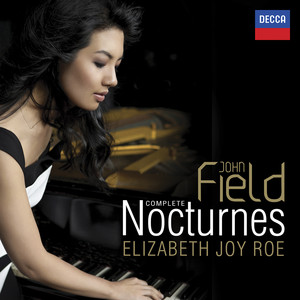 | Nocturne No. 2 in C Minor, H.25 | John Field, Elizabeth Joy Roe | C Minor | 1 | 5A | 80 BPM | |
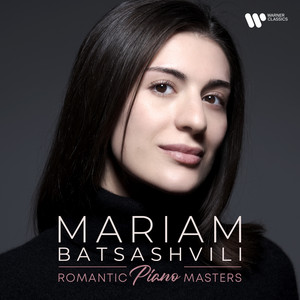 | Liszt: Lieder aus Franz Schubert's "Schwanengesang", S. 560: No. 7 Ständchen | Franz Liszt, Mariam Batsashvili | A Minor | 1 | 8A | 120 BPM | |
 | An Unwelcome Friend (Arr. M. Riesman & N. Muhly for Solo Piano) | Philip Glass, Nicolas Horvath | B♭ Major | 0 | 6B | 74 BPM | |
 | Prelude in G Major | Víkingur Ólafsson | G Major | 0 | 9B | 102 BPM | |
 | Rosa Mundi | Paul Lewis, Royal Ballet Sinfonia, Gavin Sutherland | E Major | 0 | 12B | 81 BPM | |
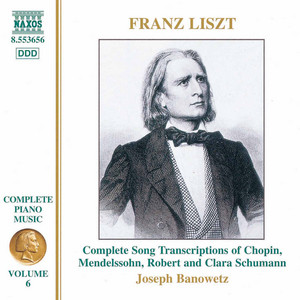 | Chopin - 6 Chants Polonais, S480/R145: No. 2. Fruhling(Wiosna, Spring) | Joseph Banowetz, Franz Liszt | G Major | 1 | 9B | 108 BPM | |
 | 5 Pieces for Violin and Piano: I. Elegia. Andante larghetto | Valentin Silvestrov, Duo Gazzana | E♭ Major | 0 | 5B | 74 BPM | |
 | Ma mère l'oye, M. 62: Apothéose. Le jardin féerique | Maurice Ravel, Orchestre National De Lyon, Leonard Slatkin | C Major | 0 | 8B | 62 BPM | |
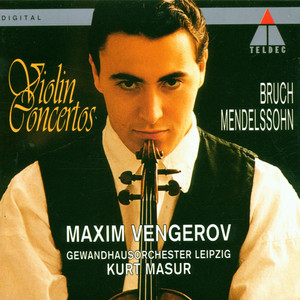 | Mendelssohn: Violin Concerto in E Minor, Op. 64, MWV O14: II. Andante | Felix Mendelssohn, Maxim Vengerov, Kurt Masur, Gewandhausorchester | C Major | 1 | 8B | 96 BPM | |
 | Nocturne No. 10 In E Minor | Benjamin Frith, John Field | E Minor | 0 | 9A | 65 BPM | |
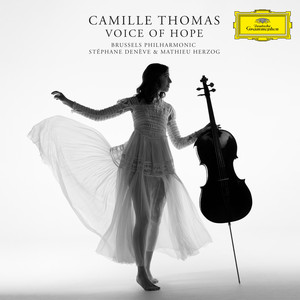 | Dido and Aeneas, Z. 626 / Act III: "When I Am Laid in Earth" Dido's Lamento (Arr. by Mathieu Herzog for Cello and Strings) | Henry Purcell, Camille Thomas, Brussels Philharmonic, Mathieu Herzog | G Minor | 1 | 6A | 77 BPM | |
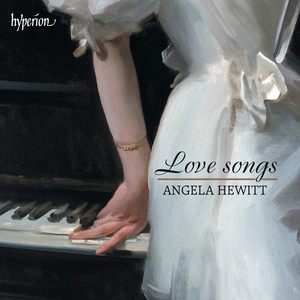 | Morgen, Op. 27 No. 4 (Arr. Reger for Piano) | Richard Strauss, Angela Hewitt | A Major | 2 | 11B | 143 BPM | |
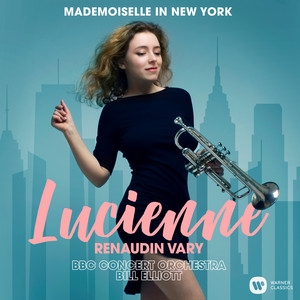 | Pavane pour une infante défunte, M. 19 | Maurice Ravel, Lucienne Renaudin Vary, Bill Elliott, BBC Concert Orchestra | E Minor | 1 | 9A | 87 BPM | |
 | Elegy, Op. 58 | Edward Elgar, English Northern Philharmonia, David Lloyd-Jones | F Minor | 0 | 4A | 84 BPM | |
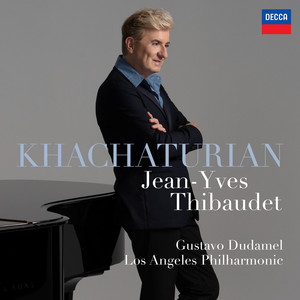 | Adagio of Spartacus and Phrygia (Transcr. E. Khachaturian for Solo Piano) - Excerpt | Aram Khachaturian, Jean-Yves Thibaudet | F Minor | 0 | 4A | 67 BPM | |
 | Requiem, Op. 48: IV. Sanctus | Gabriel Fauré, Laurence Equilbey, Accentus, Orchestre National De France | E♭ Major | 1 | 5B | 64 BPM | |
 | 6 Pieces for Piano, P. 44: No. 3. Notturno. Lento (Version for Harp) | Ottorino Respighi, Magdalena Hoffmann | F♯ Major | 0 | 2B | 88 BPM | |
 | Jocelyn, Op. 100: Berceuse (Arr. for Piano 4 Hands) | Benjamin Godard, Zeynep Ucbasaran, Sergio Gallo | F Major | 0 | 7B | 134 BPM | |
 | Bach: Adagio (After Violin Concerto No. 2, BWV 1042) | Johann Sebastian Bach, Gabriela Montero | F♯ Minor | 0 | 11A | 73 BPM |
- ISRC
- DEGF91917302
- Label
- L-M Records/RCA Records