- BPM
- 64
- Key
- D Minor
- Camelot
- 7A
Variations And Fugue On A Theme By Ludwig van Beethoven, Op. 86: 8. Var. VII: Poco vivace by Max Reger, Bamberg Symphony, Horst Stein Song Details
"Variations And Fugue On A Theme By Ludwig van Beethoven, Op. 86: 8. Var. VII: Poco vivace" by Max Reger, Bamberg Symphony, Horst Stein had its release date on June 29, 2018. With This song being less than two minutes long, at 1:42, we are fairly confident that this song is not explicit and is safe for all ages. Based on the duration of this song, this song duration is much smaller than the average song duration. The track order of this song in Max Reger, Various Artists's "Max Reger - Orchestral Edition - Variations, Suites, Romances" album is number 47 out of 56. On top of that, Germany appears to be the country where this track was created. Variations And Fugue On A Theme By Ludwig van Beethoven, Op. 86: 8. Var. VII: Poco vivace is unknown right now. In our opinion, the overall tone is not very danceable and projects negative sounds, such as being sad, depressed, or angry.
BPM and Tempo
We consider the tempo marking of Variations And Fugue On A Theme By Ludwig van Beethoven, Op. 86: 8. Var. VII: Poco vivace by Max Reger, Bamberg Symphony, Horst Stein to be Larghetto (rather broadly) because the track has a tempo of 64 BPM, a half-time of 32BPM, and a double-time of 128 BPM. Based on that, the speed of the song's tempo is slow. The time signature for this track is 4/4.
Music Key
This song is in the music key of D Minor. Because this track belongs in the D Minor key, the camelot key is 7A. So, the perfect camelot match for 7A would be either 7A or 6B. While, a low energy boost can consist of either 7B or 8A. For moderate energy boost, you would use 4A and a high energy boost can either be 9A or 2A. However, if you are looking for a low energy drop, finding a song with a camelot key of 6A would be a great choice. Where 10A would give you a moderate drop, and 5A or 12A would be a high energy drop. Lastly, 10B allows you to change the mood.
Want to find the BPM and music key for other songs? Check out our BPM and Key Finder page!
- Popularity
- 0%
- Loudness
- -24.171 dB
- Acousticness
- 97%
- Danceability
- 16%
- Energy
- 8%
- Instrumentalness
- 92%
- Liveness
- 11%
- Loudness
- 60%
- Speechiness
- 3%
- Valence
- 4%
Recommendations
| Track | Artist | Key | Energy | Camelot | BPM | ||
|---|---|---|---|---|---|---|---|
 | Requiem, Op. 9: IV. Sanctus | Maurice Duruflé, Maîtrise de Saint-Christophe de Javel, Yves Castagnet, Henri Chalet | B♭ Major | 0 | 6B | 131 BPM | |
 | Fünf Skizzen, Op. 114: II. Winterbild | Jean Sibelius, Leif Ove Andsnes | A Major | 0 | 11B | 73 BPM | |
 | Bagatelles, Op. 47, B. 79: No. 2 in G Major, Tempo di minuetto. Grazioso | Antonín Dvořák, Josef Suk, Miroslav Ambroš, Jiří Bárta, Jan Simon | G Major | 1 | 9B | 101 BPM | |
 | Scherzino For Horn And String Orchestra, WoO I/6 | Max Reger, Marie Luise Neunecker, Bamberg Symphony, Horst Stein | E♭ Major | 0 | 5B | 84 BPM | |
 | Le roi d'Ys, Act III: Vainement, ma bien-aimiee, "Aubade" (arr. J. Szigeti for violin) | Joseph Szigeti, Édouard Lalo, Livia Sohn, Benjamin Loeb | D Major | 0 | 10B | 82 BPM | |
 | Neon Waves | Lumi Risto | D Major | 1 | 10B | 130 BPM | |
 | Petite messe solennelle: XIV. Prélude religieux | Gioachino Rossini, Philip Mayers, Phillip Moll | F♯ Minor | 0 | 11A | 146 BPM | |
 | Violin Sonata in E Minor, P. 85: IV. Giga. Vivace assai (After J.S. Bach's BWV 1023) | Ottorino Respighi, Ilkka Talvi, Seattle Symphony Orchestra, Gerard Schwarz | E Minor | 0 | 9A | 121 BPM | |
 | Piano Sonata in G Minor: II. Adagio | Clara Schumann, Gabriela Montero, Alexander Shelley, Canada's National Arts Centre Orchestra | B♭ Major | 0 | 6B | 71 BPM | |
 | Concerto for Violin and Cello, Op. 102 in A Minor: II. Andante | Johannes Brahms, Leoš Čepický, Michal Kaňka, Stanislav Vavřínek, Komorní filharmonie Pardubice | D Major | 1 | 10B | 96 BPM | |
 | 3 Romances, Op. 22: I. Andante molto | Clara Schumann, Cédric Tiberghien, Alina Ibragimova | A Major | 1 | 11B | 87 BPM | |
 | Clarinet Quintet in A Major, Op. 146: III. Largo | Max Reger, Kilian Herold, Armida Quartett | F♯ Minor | 0 | 11A | 76 BPM | |
 | Paulus: I. Teil: Ouvertüre | Felix Mendelssohn, Philippe Herreweghe, Orchestre des Champs-Élysées | G Major | 2 | 9B | 116 BPM | |
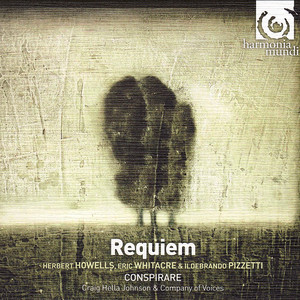 | Messa di Requiem: Requiem | Ildebrando Pizzetti, Conspirare, Craig Hella Johnson | D Minor | 0 | 7A | 81 BPM | |
 | Petite messe solennelle: XIV. Credo. Et vitam venturi sæculi | Gioachino Rossini, Giulio Prandi, Coro Ghislieri, Sandrine Piau, José Maria Lo Monaco, Edgardo Rocha, Christian Senn, Francesco Corti, Deniel Perer | E Major | 2 | 12B | 128 BPM | |
 | Christus factus est | Anton Bruckner, Collegium Vocale Gent, La Chapelle Royale, Philippe Herreweghe, Ensemble Musique Oblique | D Minor | 0 | 7A | 173 BPM | |
 | Variations & Fugue on a Theme by J.S. Bach, Op. 81: Var. 5. Vivace | Max Reger, Marc-André Hamelin | B♭ Major | 2 | 6B | 169 BPM | |
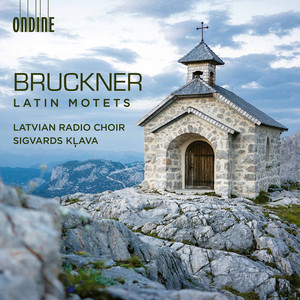 | Tantum ergo, WAB 32 | Anton Bruckner, Latvian Radio Choir, Sigvards Kļava | D Major | 1 | 10B | 86 BPM | |
| Vexilla regis, WAB 51 | Anton Bruckner, Latvian Radio Choir, Sigvards Kļava | F Major | 0 | 7B | 130 BPM | |
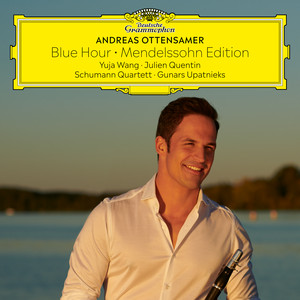 | Lieder ohne Worte, Op. 67: No. 4 Presto "Spinnerlied" (Arr. Ottensamer for Clarinet and Strings) | Felix Mendelssohn, Andreas Ottensamer, Schumann Quartett, Gunars Upatnieks | C Major | 3 | 8B | 159 BPM | |
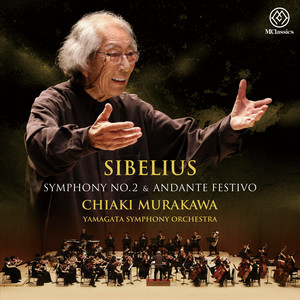 | Andante Festivo JS 34b - Live | Jean Sibelius, Yamagata Symphony Orchestra, Chiaki Murakawa | G Major | 1 | 9B | 77 BPM | |
 | Vier ernste Gesänge: Ich wandte mich und sahe an alle, Op. 121/2 | Johannes Brahms, Max Reger, Igor Levit | G Minor | 0 | 6A | 71 BPM | |
 | Trauermusik | Paul Hindemith, Kim Kashkashian, Dennis Russell Davies, Stuttgart Chamber Orchestra | E Minor | 1 | 9A | 99 BPM | |
 | Barcarolle, Op. 44, No. 4 | Gabriel Fauré, Andrés Navarro | A♭ Major | 0 | 4B | 67 BPM | |
 | Am Meer, S. 560/4 (After Schubert, D. 957/12) | Franz Liszt, Alexandre Kantorow | C Major | 0 | 8B | 128 BPM |
- ISRC
- DEN120504470
- Label
- L-M Records/RCA Records