- BPM
- 105
- Key
- A♭ Major
- Camelot
- 4B
Francesca da Rimini, Act I: O Donella, Donella (Garesenda) by Riccardo Zandonai, Orchestra Sinfonica Nazionale della RAI di Roma, Licia Rossini, Antonio Guarnieri Song Details
"Francesca da Rimini, Act I: O Donella, Donella (Garesenda)" by Riccardo Zandonai, Orchestra Sinfonica Nazionale della RAI di Roma, Licia Rossini, Antonio Guarnieri had its release date on August 5, 2014. Since This song is still less than 10 minute long, it is still considered a pretty long duration song compared to the average song length. This song does not appear to be explicit due to the lack of the "E" tag. This song is part of Zandonai: Francesca da Rimini by Riccardo Zandonai, Antonio Guarnieri, Maria Caniglia, Orchestra Sinfonica Nazionale della RAI di Roma, Giacinto Prandelli, Carlo Tagliabue, Mario Carlin, Ornella Rovero, Mario Tommasini. The song's track number on the album is #1 out of 24 tracks. Based on our data, Italy was the country where this track was produced or recorded. In terms of popularity, Francesca da Rimini, Act I: O Donella, Donella (Garesenda) is currently unknown. Although the tone can be danceable to some, this track does projects more of a negative sound rather than a postive one.
BPM and Tempo
Since Francesca da Rimini, Act I: O Donella, Donella (Garesenda) by Riccardo Zandonai, Orchestra Sinfonica Nazionale della RAI di Roma, Licia Rossini, Antonio Guarnieri has a tempo of 105 beats per a minute, the tempo markings of this song would be Andante (at a walking pace). With Francesca da Rimini, Act I: O Donella, Donella (Garesenda) being at 105 BPM, the half-time would be 52 BPM with a double-time of 210 BPM.In addition, we consider the tempo speed to be pretty slow for this song. The time signature for this track is 3/4.
Music Key
This song has a musical key of A♭ Major. Or for those who are familiar with the camelot wheel, this song has a camelot key of 4B. So, the perfect camelot match for 4B would be either 4B or 5A. While, 5B can give you a low energy boost. For moderate energy boost, you would use 1B and a high energy boost can either be 6B or 11B. Though, if you want a low energy drop, you should looking for songs with either a camelot key of 4A or 3B will give you a low energy drop, 7B would be a moderate one, and 2B or 9B would be a high energy drop. Lastly, 1A allows you to change the mood.
Want to find the BPM and music key for other songs? Check out our BPM and Key Finder page!
- Popularity
- 0%
- Loudness
- -10.815 dB
- Acousticness
- 99%
- Danceability
- 41%
- Energy
- 30%
- Instrumentalness
- 5%
- Liveness
- 54%
- Loudness
- 82%
- Speechiness
- 6%
- Valence
- 8%
Recommendations
| Track | Artist | Key | Energy | Camelot | BPM | ||
|---|---|---|---|---|---|---|---|
 | Lucia di Lammermoor / Act 3: "Si tragga altrove" | Gaetano Donizetti, Pier Francesco Poli, Sherrill Milnes, Nicolai Ghiaurov, Orchestra of the Royal Opera House, Covent Garden, Richard Bonynge | F Minor | 3 | 4A | 133 BPM | |
 | Bellini: I puritani: "Ah, tu sorridi" (Elvira, Riccardo, Giorgio) | Vincenzo Bellini, Dresdner Philharmonie, Riccardo Frizza | D Major | 5 | 10B | 136 BPM | |
 | Un ballo in maschera / Act 1: "La rivedrà nell'estasi...Il cenno mio" | Giuseppe Verdi, Luciano Pavarotti, Helen Donath, Leonardo Monreale, Nicolas Christou, Sherrill Milnes, Coro dell'Accademia Nazionale Di Santa Cecilia, Orchestra dell'Accademia Nazionale di Santa Cecilia, Bruno Bartoletti | B♭ Minor | 3 | 3A | 87 BPM | |
 | Simon Boccanegra: Act I: Plebe! Patrizi! (Doge, Amelia, Fiesco, Gabriele, Paolo, Pietro, Coro) | Giuseppe Verdi, Ludovic Tezier, Marina Rebeka, Michele Pertusi, Francesco Meli, Mattia Olivieri, Andrea Pellegrini, Coro del Teatro di San Carlo di Napoli, Michele Spotti, Orchestra del Teatro San Carlo di Napoli | C Major | 3 | 8B | 134 BPM | |
 | Francesca da Rimini, Op. 4, Act II, Scene 7: Orsù, bisogna manganare una botte grande (Gianciotto, Francesca, Paolo) | Riccardo Zandonai, Wiener Symphoniker, Fabio Luisi, Elena Filipova, Frederic Kalt, Philippe Roillon | D Minor | 1 | 7A | 80 BPM | |
 | La Bohème, Act II: Quando me’n vo’ | Giacomo Puccini, Luigi Illica, Giuseppe Giacosa, Marina Rebeka, Marco Boemi, Wrocław Opera Orchestra | E Major | 2 | 12B | 88 BPM | |
 | Giulietta e Romeo, Act II: Aiuto! Aiuto!... Pel tuo Dio! (Isabella, Romeo) | Riccardo Zandonai, Orchestra di Milano della RAI, Angelo Questa, Ornella Rovero, Renato Capecchi | F Minor | 3 | 4A | 76 BPM | |
 | I cavalieri di Ekebu: Vi går tillsammans | Lars Cleveman, Malena Karlsson, Riccardo Zandonai, A. Rossato, M. Lindman | A Major | 1 | 11B | 100 BPM | |
 | Adriana Lecouvreur: La dolcissima effigie | Francesco Cilea, Jonathan Tetelman, Orquesta Filarmónica de Gran Canaria, Karel Mark Chichon | A Minor | 3 | 8A | 112 BPM | |
 | Tosca, Act I: Or tutto è chiaro – Mario! Mario! | Giacomo Puccini, Eleonora Buratto, Ludovic Tezier, Davide Giangregorio, Orchestra dell'Accademia Nazionale di Santa Cecilia, Daniel Harding | E♭ Minor | 3 | 2A | 135 BPM | |
 | La Sonnambula / Act 1: D'un pensiero e d'un accento | Vincenzo Bellini, Dame Joan Sutherland, Sylvia Stahlman, Margreta Elkins, Nicola Monti, Coro del Maggio Musicale Fiorentino, Orchestra del Maggio Musicale Fiorentino, Richard Bonynge | E♭ Major | 3 | 5B | 82 BPM | |
 | Giulietta e Romeo: Done piansite | Riccardo Zandonai, William Matteuzzi, Minsk Philharmonic Orchestra, Alain Guingal | A Minor | 0 | 8A | 170 BPM | |
 | La Gioconda / Act 1: E cantan su lor tombe! | Amilcare Ponchielli, Sherrill Milnes, Montserrat Caballé, Alfreda Hodgson, National Philharmonic Orchestra, Bruno Bartoletti | D Major | 0 | 10B | 165 BPM | |
| La Gioconda / Act 1: Voce di donna ... a te questo rosario | Amilcare Ponchielli, Alfreda Hodgson, Montserrat Caballé, Agnes Baltsa, Regolo Romani, John del Carlo, Nicolai Ghiaurov, Luciano Pavarotti, National Philharmonic Orchestra, Bruno Bartoletti | E♭ Major | 1 | 5B | 89 BPM | |
 | Don Pasquale: Tornami a dir che m'ami | Gaetano Donizetti, Erin Morley, Lawrence Brownlee, Munich Radio Orchestra, Ivan Repusic | A Major | 1 | 11B | 82 BPM | |
| Tosca, Act I: Te Deum | Giacomo Puccini, Ludovic Tezier, Coro dell'Accademia Nazionale Di Santa Cecilia, Orchestra dell'Accademia Nazionale di Santa Cecilia, Daniel Harding | E♭ Minor | 3 | 2A | 135 BPM | |
 | Emigrantes: "Adiós, Granada" (Tordiyo) | Rafael Calleja, Tomás Barrera, Orquesta Juvenil Sinfonía por el Perú, Guillermo García Calvo, Juan Diego Flórez | D Major | 1 | 10B | 68 BPM | |
 | Rossini: Petite messe solennelle, Part 2: Credo - XIV. Agnus Dei (Contralto, Chorus) | Gioachino Rossini, Antonio Pappano, Sara Mingardo, Orchestra dell'Accademia Nazionale di Santa Cecilia | A Minor | 0 | 8A | 76 BPM | |
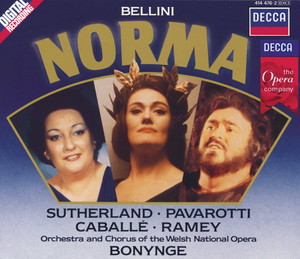 | Norma / Act 1: Ah! bello a me ritorna | Vincenzo Bellini, Dame Joan Sutherland, Samuel Ramey, Welsh National Opera Chorus, Welsh National Opera Orchestra, Richard Bonynge | F Major | 2 | 7B | 78 BPM | |
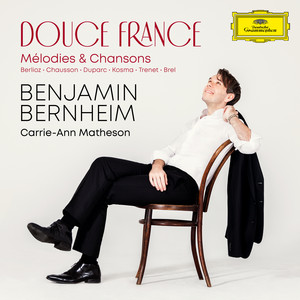 | Les nuits d'été, H. 81 (Transcr. Matheson for Tenor and Piano): II. Le spectre de la rose | Hector Berlioz, Benjamin Bernheim, Carrie-Ann Matheson | B♭ Major | 1 | 6B | 78 BPM | |
 | Il barbiere di Siviglia (The Barber of Seville): Act I: Seguito dell' Introduzione: Ehi, Fiorello | Gioachino Rossini, Roberto Servile, Sonia Ganassi, Ramón Vargas, Angelo Romero, Franco de Grandis, Ingrid Kertesi, Kazmer Sarkany, Laszlo Orban, Ferenc Korpas, Hungarian Radio Chorus, Budapest Failoni Chamber Orchestra, Will Humburg | D Major | 2 | 10B | 139 BPM | |
 | La traviata / Act 2: "Non sapete quale affetto" | Giuseppe Verdi, Cheryl Studer, Juan Pons, Metropolitan Opera Orchestra, James Levine | B♭ Minor | 1 | 3A | 119 BPM | |
 | Donizetti: Lucia di Lammermoor, Act I Scene 2: Quando rapito in estasi (Lucia, Alisa) | Gaetano Donizetti, Orchestra del Teatro Bellini di Catania, Fabrizio Maria Carminati, Lisette Oropesa, Irene Savignano | D Major | 2 | 10B | 141 BPM | |
| Lucia di Lammermoor / Act 2: "Soffriva nel pianto" | Gaetano Donizetti, Dame Joan Sutherland, Sherrill Milnes, Orchestra of the Royal Opera House, Covent Garden, Richard Bonynge | D Major | 4 | 10B | 108 BPM | |
 | Pagliacci, Act I: Prologue: Si puo? Si puo? | Ruggero Leoncavallo, Dmitri Hvorostovsky, Russia Spiritual Revival Choir, Philharmonia of Russia, Constantine Orbelian | G Minor | 1 | 6A | 93 BPM |
- ISRC
- ITCC51102421
- Label
- L-M Records/RCA Records