- BPM
- 75
- Key
- G Major
- Camelot
- 9B
Strauss, R: 4 Lieder, Op. 27: No. 4, Morgen! (Version with Orchestra) by Richard Strauss, Elisabeth Schwarzkopf, George Szell, London Symphony Orchestra Song Details
"Strauss, R: 4 Lieder, Op. 27: No. 4, Morgen! (Version with Orchestra)" by Richard Strauss, Elisabeth Schwarzkopf, George Szell, London Symphony Orchestra had its release date on 1997. With this song being around four minutes long, at 3:50, the duration of this song is pretty average compared to other songs. This track is safe for children and doesn't appear to contain any foul language, since the "Explicit" tag was not present in this track. There are a total of 16 in the song's album "R. Strauss: Four Last Songs". In this album, this song's track order is #13. Furthermore, we believe that the track originated from United Kingdom. Strauss, R: 4 Lieder, Op. 27: No. 4, Morgen! (Version with Orchestra) is below average in popularity right now. In our opinion, the overall tone is not very danceable and projects negative sounds, such as being sad, depressed, or angry.
BPM and Tempo
With Strauss, R: 4 Lieder, Op. 27: No. 4, Morgen! (Version with Orchestra) by Richard Strauss, Elisabeth Schwarzkopf, George Szell, London Symphony Orchestra having a BPM of 75 with a half-time of 38 BPM and a double-time of 150 BPM, we would consider this track to have a Adagio (slowly with great expression) tempo marking. Because of this, we believe that the song has an overall slow tempo. The time signature for this track is 3/4.
Music Key
This song has a musical key of G Major. Or for those who are familiar with the camelot wheel, this song has a camelot key of 9B. So, the perfect camelot match for 9B would be either 9B or 10A. While, 10B can give you a low energy boost. For moderate energy boost, you would use 6B and a high energy boost can either be 11B or 4B. Though, if you want a low energy drop, you should looking for songs with either a camelot key of 9A or 8B will give you a low energy drop, 12B would be a moderate one, and 7B or 2B would be a high energy drop. Lastly, 6A allows you to change the mood.
Want to find the BPM and music key for other songs? Check out our BPM and Key Finder page!
- Popularity
- 23%
- Loudness
- -28.722 dB
- Acousticness
- 96%
- Danceability
- 11%
- Energy
- 6%
- Instrumentalness
- 1%
- Liveness
- 10%
- Loudness
- 52%
- Speechiness
- 5%
- Valence
- 4%
Recommendations
| Track | Artist | Key | Energy | Camelot | BPM | ||
|---|---|---|---|---|---|---|---|
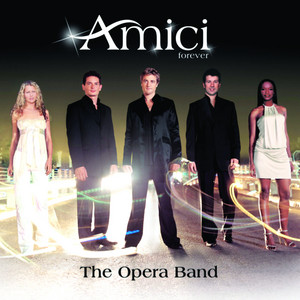 | Soave sia il vento | Wolfgang Amadeus Mozart, Amici forever, Nick Ingman | E Major | 3 | 12B | 116 BPM | |
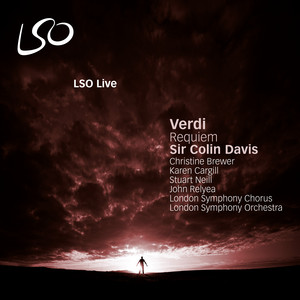 | Requiem: XIV. Agnus Dei | Giuseppe Verdi, Sir Colin Davis, Christine Brewer, Karen Cargill, London Symphony Orchestra | C Major | 0 | 8B | 173 BPM | |
 | La fille du régiment: Il faut partir | Gaetano Donizetti, Julie Fuchs, Orchestre national d'île-de-France, Enrique Mazzola | F Minor | 1 | 4A | 70 BPM | |
 | Myrthen, Op. 25: No. 1, Widmung | Robert Schumann, Margaret Price, James Lockhart | A♭ Major | 1 | 4B | 192 BPM | |
 | Symphony No. 5: IV. Adagietto. Sehr langsam | Gustav Mahler, Valery Gergiev, London Symphony Orchestra | F Major | 0 | 7B | 66 BPM | |
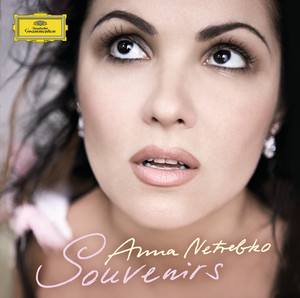 | "Depuis le jour" | Gustave Charpentier, Anna Netrebko | G Major | 1 | 9B | 87 BPM | |
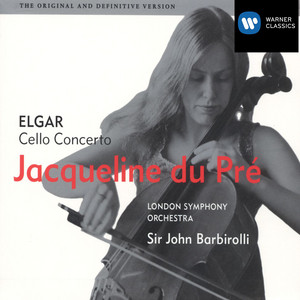 | Elgar: Sea Pictures, Op. 37: IV. Where Corals Lie, "The deeps have music" (Allegretto ma non troppo) | Edward Elgar, Dame Janet Baker, London Symphony Orchestra, Sir John Barbirolli | B Minor | 1 | 10A | 66 BPM | |
 | Kol Nidrei, Op. 47 | Max Bruch, Jan Vogler, Helmut Branny | D Major | 1 | 10B | 136 BPM | |
 | Mahler: Kindertotenlieder: No. 2, Nun seh' ich wohl, warum so dunkle Flammen | Gustav Mahler, Sir John Barbirolli, Janet Baker, Hallé | C Major | 4 | 8B | 49 BPM | |
 | Mozart: Mass in C minor, K. 427: "Et incarnatus est" | Wolfgang Amadeus Mozart, Sabine Devieilhe, Raphael Pichon, Ensemble Pygmalion | C Major | 1 | 8B | 130 BPM | |
 | Kindertotenlieder (Rückert) (1999 Digital Remaster): I: Nun will die Sonn' so hell aufgeh'n | Gustav Mahler, Dame Janet Baker, Hallé, Sir John Barbirolli | G Minor | 0 | 6A | 88 BPM | |
 | Bizet: Les pêcheurs de perles, WD 13, Act 1: "Je crois entendre encore" (Nadir) | Georges Bizet, Pierre Dervaux, Nicolai Gedda, Orchestre du Theatre National de IOpera-Comique | A Minor | 1 | 8A | 88 BPM | |
 | Carmina Burana: In trutina | Carl Orff, Lucia Popp, Kurt Eichhorn | E♭ Minor | 1 | 2A | 62 BPM | |
 | Turandot: Tu, che di gel sei cinta | Mirella Freni, Vienna Volksoper Orchestra, Argeo Quadri | B Major | 2 | 1B | 87 BPM | |
 | Orontea: Intorno all'idol mio | Antonio Cesti, Cecilia Bartoli, György Fischer | E Minor | 0 | 9A | 104 BPM | |
 | Lorsque vous n'aurez rien à faire | Dawn Upshaw | G Major | 2 | 9B | 87 BPM | |
 | The Bohemian Girl - Arr. by Karel Mark Chichon: I Dreamt I Dwelt in Marble Halls | Michael William Balfe, Elina Garanca, Orchestra Sinfonica Nazionale Della RAI, Karel Mark Chichon | D Major | 1 | 10B | 87 BPM | |
 | Vier letzte Lieder: 1. Frühling | Richard Strauss, Renée Fleming, Munich Philharmonic Orchestra, Christian Thielemann | D Major | 0 | 10B | 98 BPM | |
 | Locus iste, WAB 23 | Anton Bruckner, Collegium Vocale Gent, Philippe Herreweghe | C Major | 0 | 8B | 66 BPM | |
 | Vaga luna, che inargenti | Vincenzo Bellini, Rolando Villazón, Orchestra del Maggio Musicale Fiorentino, Marco Armiliato | B♭ Major | 1 | 6B | 73 BPM | |
 | La Bohème / Act 1: "O soave fanciulla" | Giacomo Puccini, Anna Netrebko, Rolando Villazón, Boaz Daniel, Bavarian Radio Symphony Orchestra, Bertrand de Billy | G Major | 1 | 9B | 72 BPM | |
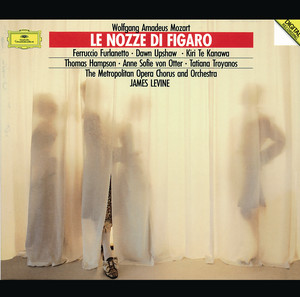 | Le nozze di Figaro, K.492 / Act 4: "Deh vieni, non tardar" | Wolfgang Amadeus Mozart, Dawn Upshaw, Metropolitan Opera Orchestra, James Levine | F Major | 0 | 7B | 97 BPM | |
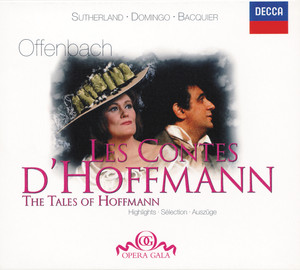 | Les Contes d'Hoffmann / Act 1: Les oiseaux dans la charmille | Jacques Offenbach, Dame Joan Sutherland, Jacques Charon, Chorus Pro Arte Lausanne Du Brassus, Radio Suisse Romande Chorus, Orchestre de la Suisse Romande, Richard Bonynge | A♭ Major | 1 | 4B | 136 BPM | |
 | Chants d'Auvergne, Vol. 1: No. 1, La Pastoura Als Camps (the Shepherdess in the Fields) | Joseph Canteloube, Véronique Gens, Orchestre National de Lille, Jean-Claude Casadesus | C Minor | 1 | 5A | 98 BPM | |
 | Samson et Dalila, Op. 47, R. 288 / Act 2: "Mon coeur s'ouvre à ta voix" | Camille Saint-Saëns, Olga Borodina, Welsh National Opera Orchestra, Carlo Rizzi | D♭ Major | 1 | 3B | 86 BPM |
- ISRC
- GBAYC9702369
- Label
- L-M Records/RCA Records