- BPM
- 95
- Key
- G Major
- Camelot
- 9B
Lungi Dal Caro Bene by Eva Lind Song Details
"Lungi Dal Caro Bene" by Eva Lind had its release date on January 1, 2001. The duration of This song is about 3 minutes long, at 3:07. Based on our data, This song appears to be safe for all ages and is not considered explicit. This track is about the average length of a typical track. There are a total of 13 in the song's album "Sentimento". In this album, this song's track order is #5. Furthermore, we believe that the track originated from Germany. In terms of popularity, Lungi Dal Caro Bene is currently not that popular. In our opinion, the overall tone is not very danceable and projects negative sounds, such as being sad, depressed, or angry.
BPM and Tempo
With Lungi Dal Caro Bene by Eva Lind having a BPM of 95 with a half-time of 48 BPM and a double-time of 190 BPM, we would consider this track to have a Andante (at a walking pace) tempo marking. Because of this, we believe that the song has an overall slow tempo. Looking at the BPM of this song, this song might go great with yoga or pilates. The time signature for this track is 3/4.
Music Key
G Major is the music key of this track. Or for those who are familiar with the camelot wheel, this song has a camelot key of 9B. So, the perfect camelot match for 9B would be either 9B or 10A. While, 10B can give you a low energy boost. For moderate energy boost, you would use 6B and a high energy boost can either be 11B or 4B. Though, if you want a low energy drop, you should looking for songs with either a camelot key of 9A or 8B will give you a low energy drop, 12B would be a moderate one, and 7B or 2B would be a high energy drop. Lastly, 6A allows you to change the mood.
Want to find the BPM and music key for other songs? Check out our BPM and Key Finder page!
- Popularity
- 1%
- Loudness
- -7.427 dB
- Acousticness
- 94%
- Danceability
- 36%
- Energy
- 42%
- Instrumentalness
- 0%
- Liveness
- 9%
- Loudness
- 88%
- Speechiness
- 3%
- Valence
- 8%
Recommendations
| Track | Artist | Key | Energy | Camelot | BPM | ||
|---|---|---|---|---|---|---|---|
 | Echoes of Day | Nuit | G Major | 5 | 9B | 104 BPM | |
 | Libiamo | Kevin Pabst, Die jungen Tenöre, Eva Lind | B♭ Major | 5 | 6B | 211 BPM | |
 | The Merry Widow (Die lustige Witwe) / Act 2: Vilja-Lied | Franz Lehár, Ingeborg Hallstein, Grosses Operetten Orchester, Franz Marszalek | G Major | 3 | 9B | 77 BPM | |
 | Im weissen Rossl, RSWV 421: Mein Liebeslied muss ein Walzer sein | Robert Stolz, Erich Becht, Eva Lind, Cologne Symphony Orchestra, Berlin Babelsberg Film Orchestra | E♭ Major | 4 | 5B | 81 BPM | |
 | Don Pasquale: Tornami a dir che m'ami | Angela Gheorghiu, Richard Armstrong, Roberto Alagna | A Major | 0 | 11B | 90 BPM | |
 | Messa di Gloria for tenor, baritone, chorus & orchestra (op. posthuma), Gloria: Qui tollis peccata mundi | Giacomo Puccini, Michel Corboz, Orquestra Gulbenkian, Coro Gulbenkian | G Major | 1 | 9B | 103 BPM | |
 | Les Contes d'Hoffmann / Act 2: "Non, aucun hôte vraiment" | Jacques Offenbach, Anne Sofie von Otter, Ricardo Cassinelli, Francisco Araiza, Georges Gautier, Eva Lind, MDR Leipzig Radio Chorus, Staatskapelle Dresden, Jeffrey Tate | D Major | 2 | 10B | 70 BPM | |
 | Lungi dal caro bene | Giuseppe Sarti, Pumeza Matshikiza, Aarhus Symfoniorkester, Tobias Ringborg | A♭ Major | 1 | 4B | 96 BPM | |
 | Casanova: Nuns' Chorus | Johann Strauss II, Dame Joan Sutherland, Ambrosian Opera Chorus, New Philharmonia Orchestra, Richard Bonynge | A♭ Major | 1 | 4B | 91 BPM | |
 | 7. b) Invasion des Sauterelles | Jean Françaix, Eva Lind, Christian Simonis, Göttinger Symphonie Orchester | B Major | 1 | 1B | 105 BPM | |
 | Ombra mai fu (from Xerxes) | Fritz Wunderlich, Radio Sinfonie-Orchester Stuttgart, Alfons Rischner | G Major | 3 | 9B | 73 BPM | |
 | Bellini: I puritani: Introduzione (Orchestra) | Vincenzo Bellini, Dresdner Philharmonie, Riccardo Frizza | D Major | 5 | 10B | 136 BPM | |
| Im Prater bluh'n wieder die Baume, Op. 247, RSWV 166 (Arr. E. Becht) | Robert Stolz, Eva Lind, WDR Sinfonieorchester Köln, Berlin Babelsberg Film Orchestra | F Major | 4 | 7B | 126 BPM | |
 | Wer hat dich, du schöner Wald, aufgebaut so hoch da droben | Der Montanara Chor | E♭ Major | 2 | 5B | 112 BPM | |
 | Viktoria und ihr Husar: Reich' mir zum Abschied noch einmal die Hände | Paul Abraham, Sandor Konya, Herta Talmar, Grosses Operetten Orchester, Franz Marszalek | B♭ Major | 3 | 6B | 110 BPM | |
 | Die Csardasfürstin: Tanzen möcht' ich | Emmerich Kálmán, Angelika Kirchschlager, Simon Keenlyside, Alfred Eschwe, Tonkünstler-Orchester | C Major | 2 | 8B | 95 BPM | |
 | Il mondo (Bonustrack Englisch, Italienisch) | Eva Lind, Tobey Wilson | D♭ Major | 6 | 3B | 83 BPM | |
 | Laudaste Dóminum, monedas gentes (salmo 116) | Orfeón de Miravalles | A♭ Major | 2 | 4B | 82 BPM | |
 | Nonnenkoor Uit Casanova | Koor en Orkest o.l.v. Benedict Silberman | F Major | 3 | 7B | 87 BPM | |
| Waldandacht - Frühmorgens, wenn die Hähne kräh'n | Der Montanara Chor | F♯ Major | 1 | 2B | 70 BPM | |
 | The Bohemian Girl - Arr. by Karel Mark Chichon: I Dreamt I Dwelt in Marble Halls | Michael William Balfe, Elina Garanca, Orchestra Sinfonica Nazionale Della RAI, Karel Mark Chichon | D Major | 1 | 10B | 87 BPM | |
 | Buon giorno, amore! | Dmitri Hvorostovsky | B♭ Major | 7 | 6B | 92 BPM | |
 | Wiener Blut (operetta): Stoß an! | Johann Strauss II, Rita Bartos, Sandor Konya, Herta Talmar, Willy Hofmann, Peter Alexander, Chor, Franz Marszalek, Kölner Rundfunkorchester | E♭ Major | 4 | 5B | 175 BPM | |
 | Tosca | Renata Tebaldi | E♭ Major | 2 | 5B | 84 BPM | |
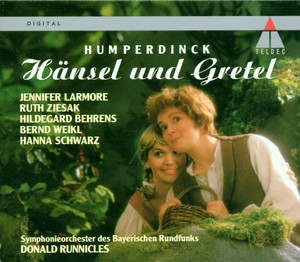 | Humperdinck : Hänsel und Gretel : Act 1 "So recht! Und willst du nun nicht mehr klagen" [Gretel, Hänsel] | Engelbert Humperdinck, Donald Runnicles, Bavarian Radio Symphony Orchestra | G Minor | 1 | 6A | 127 BPM |
- ISRC
- DEC980100295
- Label
- L-M Records/RCA Records