- BPM
- 78
- Key
- C Minor
- Camelot
- 5A
Messiah, HWV 56: Part I: Comfort ye, comfort ye my people (Recit) by George Frideric Handel, John Aler, Richard Westenburg Song Details
George Frideric Handel, John Aler, Richard Westenburg's ' "Messiah, HWV 56: Part I: Comfort ye, comfort ye my people (Recit)" was released on its scheduled release date, 1982. The duration of This song is about 3 minutes long, at 3:01. Based on our data, This song appears to be safe for all ages and is not considered explicit. This track is about the average length of a typical track. The track order of this song in George Frideric Handel, Richard Westenburg's "Handel: Messiah" album is number 2 out of 53. On top of that, United States appears to be the country where this track was created. Messiah, HWV 56: Part I: Comfort ye, comfort ye my people (Recit) is unknown right now. Based on the vibe, this track doesn't seem to be that danceable, however its valence properties can make this some somewhat danceable.
BPM and Tempo
We consider the tempo marking of Messiah, HWV 56: Part I: Comfort ye, comfort ye my people (Recit) by George Frideric Handel, John Aler, Richard Westenburg to be Andante (at a walking pace) because the track has a tempo of 78 BPM, a half-time of 39BPM, and a double-time of 156 BPM. Based on that, the speed of the song's tempo is slow. The time signature for this track is 4/4.
Music Key
This song is in the music key of C Minor. Because this track belongs in the C Minor key, the camelot key is 5A. So, the perfect camelot match for 5A would be either 5A or 4B. While, a low energy boost can consist of either 5B or 6A. For moderate energy boost, you would use 2A and a high energy boost can either be 7A or 12A. However, if you are looking for a low energy drop, finding a song with a camelot key of 4A would be a great choice. Where 8A would give you a moderate drop, and 3A or 10A would be a high energy drop. Lastly, 8B allows you to change the mood.
Want to find the BPM and music key for other songs? Check out our BPM and Key Finder page!
- Popularity
- 0%
- Loudness
- -15.078 dB
- Acousticness
- 90%
- Danceability
- 39%
- Energy
- 32%
- Instrumentalness
- 0%
- Liveness
- 58%
- Loudness
- 75%
- Speechiness
- 4%
- Valence
- 44%
Recommendations
| Track | Artist | Key | Energy | Camelot | BPM | ||
|---|---|---|---|---|---|---|---|
 | Capriol Suite: 2. Pavane | Peter Warlock, Academy of St. Martin in the Fields, Sir Neville Marriner | B♭ Major | 0 | 6B | 160 BPM | |
 | L'Aria | Heinrich Ignaz Franz von Biber, Christina Pluhar | D Minor | 1 | 7A | 86 BPM | |
 | Armide: Passacaille | Jean-Baptiste Lully, Véronique Gens/Les Talens Lyriques/Christophe Rousset, Christophe Rousset, Les Talens Lyriques | F Minor | 1 | 4A | 122 BPM | |
![Brandenburg Concerto No. 3 in G Major, BWV 1048: I. [Allegro] by Johann Sebastian Bach, Trevor Pinnock, European Brandenburg Ensemble](https://i.scdn.co/image/ab67616d00001e024747d8d612db02dd7791a699) | Brandenburg Concerto No. 3 in G Major, BWV 1048: I. [Allegro] | Johann Sebastian Bach, Trevor Pinnock, European Brandenburg Ensemble | F♯ Major | 4 | 2B | 101 BPM | |
 | Harmonia Artificioso Ariosa, Partia V in G Minor, C. 66: Passacaglia | Heinrich Ignaz Franz von Biber, Lautten Compagney, Wolfgang Katschner | F♯ Minor | 1 | 11A | 94 BPM | |
 | Monteverdi: L'incoronazione di Poppea, SV 308, Act 3: "Pur ti miro" (Nerone, Poppea) | Claudio Monteverdi, Philippe Jaroussky, L'Arpeggiata, Núria Rial, Christina Pluhar | G Major | 1 | 9B | 77 BPM | |
 | Concerto in F Major, S. 234: III. Un poco allegro | Johann David Heinichen, Musica Antiqua Köln, Reinhard Goebel | D♭ Major | 2 | 3B | 76 BPM | |
 | Symphony in D Major, Op. 2 No. 5 "St. Cecilia's Day Ode": II. Tempo di gavotta | William Boyce, Academy of St. Martin in the Fields, Sir Neville Marriner | D Major | 1 | 10B | 101 BPM | |
 | Concerto Per Oboe, Archi E Continuo In Re Minore: I. Andante Spiccato | Alessandro Marcello, Venice Baroque Orchestra | D♭ Minor | 0 | 12A | 79 BPM | |
 | 6 Sonates en symphonies, Op. 3, Sonata No. 6: IIa. Larghetto | Jean-Joseph Cassanéa De Mondonville, Les Musiciens du Louvre, Marc Minkowski | A♭ Minor | 0 | 1A | 133 BPM | |
 | Dolly Suite, Op. 56: I. Berceuse | Gabriel Fauré, Katia Labèque, Marielle Labèque | E Major | 0 | 12B | 63 BPM | |
 | Symphony in C Major, Op. 1, No. 6 (Callen 6): I. Allegro | Franz Ignaz Beck, New Zealand Chamber Orchestra, Donald Armstrong | G Major | 2 | 9B | 143 BPM | |
 | Andante in F Minor (Arr. L. Lencses) | Gaetano Donizetti, Lajos Lencsés, Stuttgart Arcata Chamber Orchestra, Patrick Strub | F Minor | 1 | 4A | 63 BPM | |
 | Lieder ohne Worte, Op. 19: No. 6 in G Minor (Andante sostenuto) "Venetian Gondola Song", MWV U78 | Felix Mendelssohn, Jan Lisiecki | G Minor | 0 | 6A | 168 BPM | |
 | Oboe Concerto in C: 1. Introduzione (Larghetto) | Domenico Cimarosa, Heinz Holliger, I Musici | C Minor | 1 | 5A | 172 BPM | |
| Concerto Per Oboe, Archi E Continuo In Re Minore: II. Adagio | Alessandro Marcello, Venice Baroque Orchestra | D♭ Minor | 0 | 12A | 79 BPM | |
 | Schwanengesang, D. 957: Ständchen | Franz Schubert, Mischa Maisky, Daria Hovora | D Minor | 0 | 7A | 179 BPM | |
 | Lieder ohne Worte (Songs without Words), Book 2, Op. 30: No. 7 in E-Flat Major, Op. 30, No. 1, MWV U103 | Felix Mendelssohn, Péter Nagy | E♭ Major | 0 | 5B | 65 BPM | |
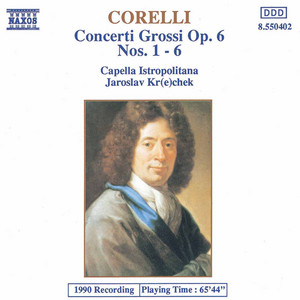 | Concerto Grosso In D Major, Op. 6, No. 1 : III. Largo | Arcangelo Corelli, Daniela Ruso, Anna Holbling, Ludovit Kanta, Quido Holbling, Capella Istropolitana | D Major | 1 | 10B | 78 BPM | |
 | Andante Cantabile | Pyotr Ilyich Tchaikovsky, St. Lawrence String Quartet | B♭ Major | 0 | 6B | 90 BPM | |
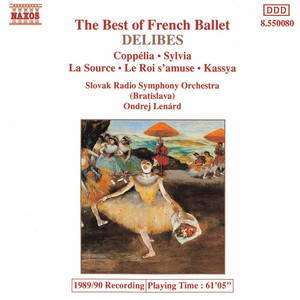 | Le roi s'amuse: Pavane | Léo Delibes, Slovak Philharmonic, Ondrej Lenard | B♭ Major | 0 | 6B | 91 BPM | |
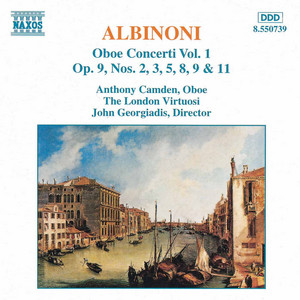 | Oboe Concerto in C Major, Op. 9, No. 5: II. Adagio (non troppo) | Tomaso Albinoni, Anthony Camden, London Virtuosi, John Georgiadis | A Minor | 1 | 8A | 79 BPM | |
 | Concerto Grosso in D Major, Op. 6 No. 4: IV. Allegro | Arcangelo Corelli, Concerto Köln, Evgeny Sviridov | D♭ Major | 2 | 3B | 76 BPM | |
 | Oboe Concerto in C Major: II. Allegro (Arr. by Benjamin) | Domenico Cimarosa, Heinz Holliger, Bamberg Symphony, Peter Maag | C Major | 2 | 8B | 114 BPM | |
 | Keyboard Sonata in B Minor, Wq. 55/3, H. 245: Cantabile | Carl Philipp Emanuel Bach, Christopher Hinterhuber | E Minor | 1 | 9A | 106 BPM |
- ISRC
- USBC19900665
- Label
- L-M Records/RCA Records