- BPM
- 81
- Key
- D♭ Major
- Camelot
- 3B
Bevenuto Cellini, Op. 23 (Weimar version): Act III Scene 8: Recitative: Ah! Maitre (Teresa, Ascanio, Cellini) by Hector Berlioz, Bruce Ford, Laura Claycomb, Franz Hawlata, Monica Groop, Christopher Maltman, Ralf Lukas, Johannes Chum, Reinhard Mayr, Ekkehard Wagner, Ekkehard Vogler, Matthias Hoffmann, MDR Leipzig Radio Chorus, Stuttgart Radio Symphony Orchestra, Sir Roger Norrington Song Details
Hector Berlioz, Bruce Ford, Laura Claycomb, Franz Hawlata, Monica Groop, Christopher Maltman, Ralf Lukas, Johannes Chum, Reinhard Mayr, Ekkehard Wagner, Ekkehard Vogler, Matthias Hoffmann, MDR Leipzig Radio Chorus, Stuttgart Radio Symphony Orchestra, Sir Roger Norrington's 'Bevenuto Cellini, Op. 23 (Weimar version): Act III Scene 8: Recitative: Ah! Maitre (Teresa, Ascanio, Cellini)' had a release date set for January 1, 2006. With This song being less than a minute long, we are pretty confident that this song does not contain any foul language. That being said, this song is pretty short compared to other songs. The song is number 14 out of 33 in Berlioz: Benvenuto Cellini by Hector Berlioz, Sir Roger Norrington. Going off of the ISRC code of this track, we detected that the origin of this track is from Germany. Bevenuto Cellini, Op. 23 (Weimar version): Act III Scene 8: Recitative: Ah! Maitre (Teresa, Ascanio, Cellini) is unknown right now. In our opinion, the overall tone is not very danceable and projects negative sounds, such as being sad, depressed, or angry.
BPM and Tempo
The tempo marking of Bevenuto Cellini, Op. 23 (Weimar version): Act III Scene 8: Recitative: Ah! Maitre (Teresa, Ascanio, Cellini) by Hector Berlioz, Bruce Ford, Laura Claycomb, Franz Hawlata, Monica Groop, Christopher Maltman, Ralf Lukas, Johannes Chum, Reinhard Mayr, Ekkehard Wagner, Ekkehard Vogler, Matthias Hoffmann, MDR Leipzig Radio Chorus, Stuttgart Radio Symphony Orchestra, Sir Roger Norrington is Andante (at a walking pace), since this song has a tempo of 81 BPM. With that information, we can conclude that the song has a slow tempo. The time signature for this track is 4/4.
Music Key
This song is in the music key of D♭ Major. This also means that this song has a camelot key of 3B. So, the perfect camelot match for 3B would be either 3B or 4A. While, 4B can give you a low energy boost. For moderate energy boost, you would use 12B and a high energy boost can either be 5B or 10B. Though, if you want a low energy drop, you should looking for songs with either a camelot key of 3A or 2B will give you a low energy drop, 6B would be a moderate one, and 1B or 8B would be a high energy drop. Lastly, 12A allows you to change the mood.
Want to find the BPM and music key for other songs? Check out our BPM and Key Finder page!
- Popularity
- 0%
- Loudness
- -19.169 dB
- Acousticness
- 98%
- Danceability
- 31%
- Energy
- 17%
- Instrumentalness
- 0%
- Liveness
- 13%
- Loudness
- 68%
- Speechiness
- 7%
- Valence
- 23%
Recommendations
| Track | Artist | Key | Energy | Camelot | BPM | ||
|---|---|---|---|---|---|---|---|
 | Concerto for Organ, Strings and Percussion in G minor, FP 93: Allegro giocoso | Francis Poulenc, Peter Hurford, Philharmonia Orchestra, Charles Dutoit | D Major | 1 | 10B | 110 BPM | |
 | Symphony No. 8 in G Minor, Op. 88, B. 163: III. Allegretto grazioso - Molto vivace | Antonín Dvořák, London Symphony Orchestra, Sir Colin Davis | G Major | 1 | 9B | 130 BPM | |
 | Gayane Suite No. 3: V. Solo - Love Duet | Aram Khachaturian, St. Petersburg State Symphony Orchestra, Andre Anichanov | D Major | 3 | 10B | 175 BPM | |
 | Prince Igor (Knyaz Igor): Overture | Alexander Borodin, Ukraine National Radio Symphony Orchestra, Theodore Kuchar | G Minor | 1 | 6A | 73 BPM | |
 | Ein deutsches Requiem, Op.45: 4. Chor: "Wie lieblich sind deine Wohnungen, Herr Zebaoth!" | Johannes Brahms, Rudolf Scholz, Wiener Philharmoniker, Herbert von Karajan, Wiener Singverein | E♭ Major | 1 | 5B | 130 BPM | |
 | Eine Alpensinfonie, Op. 64, TrV 233: IV. Eintritt in den Wald | Richard Strauss, David Bell, Berliner Philharmoniker, Herbert von Karajan | F Minor | 2 | 4A | 71 BPM | |
 | 21 Hungarian Dances, WoO 1: No. 1 in G Minor. Allegro molto (Version for Orchestra) | Johannes Brahms, Wiener Philharmoniker, Claudio Abbado | G Minor | 2 | 6A | 142 BPM | |
 | Ruslan and Ludmila: Overture | Mikhail Glinka, The USSR Bolshoy Theatre Orchestra, Yevgeny Svetlanov | F Major | 3 | 7B | 81 BPM | |
 | Serenade for Strings in E Major, Op. 22, B. 52: I. Moderato | Antonín Dvořák, Prague Chamber Orchestra, Petr Skvor | E Major | 1 | 12B | 83 BPM | |
 | Concerto for Orchestra, Sz. 116: IV. Intermezzo interrotto (Allegretto) | Béla Bartók, Chicago Symphony Orchestra, Pierre Boulez | D Major | 1 | 10B | 73 BPM | |
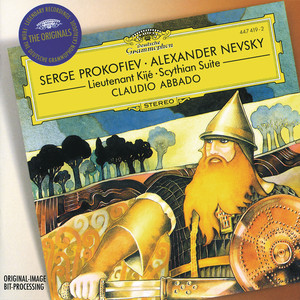 | Alexander Nevsky, Op. 78: VI. Field Of The Dead | Sergei Prokofiev, Elena Obraztsova, London Symphony Orchestra, Claudio Abbado | C Minor | 0 | 5A | 77 BPM | |
 | Symphony No. 1 in C Minor, Op. 68: II. Andante sostenuto | Johannes Brahms, Berliner Philharmoniker, Herbert von Karajan | E Major | 1 | 12B | 85 BPM | |
 | Symphony No. 1 in D Major "Titan" in D Major: II. Kraftig bewegt, doch nicht zu schnell | Gustav Mahler, Polish National Radio Symphony Orchestra, Michael Halasz | B♭ Major | 4 | 6B | 124 BPM | |
 | Sibelius: Symphony No. 5 in E-Flat Major, Op. 82: III. Allegro molto (1915 Version) | Jean Sibelius, San Francisco Symphony, Esa-Pekka Salonen | E♭ Major | 1 | 5B | 76 BPM | |
 | Wagner: Tristan und Isolde, Act III: Isoldes Liebestod. "Mild und leise" (Instrumental Version) | Richard Wagner, Oslo Philharmonic Orchestra, Mariss Jansons | B Major | 1 | 1B | 77 BPM | |
 | Symphony No. 5 in D Minor, Op. 107, MWV N15 "Reformation": III. Andante | Felix Mendelssohn, London Symphony Orchestra, Claudio Abbado | G Minor | 0 | 6A | 67 BPM | |
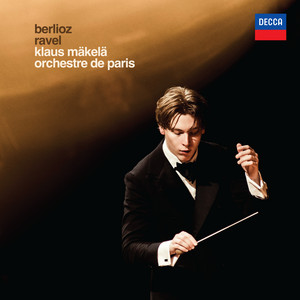 | Symphonie fantastique, H. 48: IV. Marche au supplice | Hector Berlioz, Orchestre de Paris, Klaus Mäkelä | G Minor | 3 | 6A | 77 BPM | |
| Symphony No. 5 in D Minor, Op. 107, MWV N15 "Reformation": IV. Andante con moto (Chorale "Ein feste Burg") | Felix Mendelssohn, London Symphony Orchestra, Claudio Abbado | D Major | 2 | 10B | 76 BPM | |
 | The Rite of Spring, K15, Pt. 2: XIII. Ritual of the Ancestors | Igor Stravinsky, Berliner Philharmoniker, Herbert von Karajan | F Minor | 5 | 4A | 164 BPM | |
 | The Firebird (L'oiseau De Feu) - Suite (1919): Infernal Dance Of King Kaschei | Igor Stravinsky, Orchestre de l'Opéra National de Paris, Myung-Whun Chung | A Minor | 3 | 8A | 162 BPM | |
 | Grande messe des morts, H 75: III. Quid sum miser | Hector Berlioz, London Symphony Orchestra, Sir Colin Davis, London Philharmonic Choir, London Symphony Chorus | A♭ Minor | 0 | 1A | 76 BPM | |
 | Poulenc: Concerto for Two Pianos in D Minor, FP 61: I. Allegro ma non troppo | Francis Poulenc, James Conlon, Rotterdam Philharmonic Orchestra | E♭ Major | 1 | 5B | 103 BPM | |
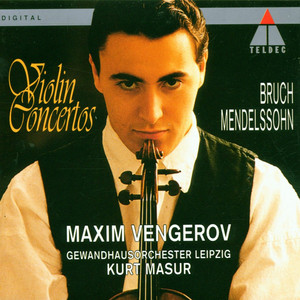 | Bruch : Violin Concerto No.1 in G minor Op.26 : III Finale - Allegro energico | Max Bruch, Maxim Vengerov, Kurt Masur, Gewandhausorchester Leipzig | G Major | 2 | 9B | 90 BPM | |
 | Benvenuto Cellini, Op. 23, H 76, Act I, Scene 13: Vous Voyez, J'espère | Hector Berlioz, Darren Jeffery, Gregory Kunde, Laura Claycomb, London Symphony Chorus, Isabelle Cals, Sir Colin Davis, London Symphony Orchestra | C Major | 2 | 8B | 63 BPM | |
| Benvenuto Cellini, Op. 23, H 76, Act I, Scene 4: Ciel! Nous Sommes Perdus! | Hector Berlioz, Laura Claycomb, Gregory Kunde, Darren Jeffery, Peter Coleman-Wright, Sir Colin Davis, London Symphony Orchestra | C Major | 2 | 8B | 63 BPM |
- ISRC
- DEA550312310
- Label
- L-M Records/RCA Records