- BPM
- 84
- Key
- C Major
- Camelot
- 8B
To Thee, O Victorious Leader by Sergei Rachmaninoff, Tenebrae, Nigel Short Song Details
"To Thee, O Victorious Leader" by Sergei Rachmaninoff, Tenebrae, Nigel Short had its release date on January 6, 2014. With This song being less than two minutes long, at 1:46, we are fairly confident that this song is not explicit and is safe for all ages. Based on the duration of this song, this song duration is much smaller than the average song duration. There are a total of 18 in the song's album "Russian Treasures". In this album, this song's track order is #18. Furthermore, we believe that the track originated from United Kingdom. To Thee, O Victorious Leader is not that popular right now. In our opinion, the overall tone is not very danceable and projects negative sounds, such as being sad, depressed, or angry.
BPM and Tempo
With To Thee, O Victorious Leader by Sergei Rachmaninoff, Tenebrae, Nigel Short having a BPM of 84 with a half-time of 42 BPM and a double-time of 168 BPM, we would consider this track to have a Andante (at a walking pace) tempo marking. Because of this, we believe that the song has an overall slow tempo. The time signature for this track is 3/4.
Music Key
This song has a musical key of C Major. Or for those who are familiar with the camelot wheel, this song has a camelot key of 8B. So, the perfect camelot match for 8B would be either 8B or 9A. While, 9B can give you a low energy boost. For moderate energy boost, you would use 5B and a high energy boost can either be 10B or 3B. Though, if you want a low energy drop, you should looking for songs with either a camelot key of 8A or 7B will give you a low energy drop, 11B would be a moderate one, and 6B or 1B would be a high energy drop. Lastly, 5A allows you to change the mood.
Want to find the BPM and music key for other songs? Check out our BPM and Key Finder page!
- Popularity
- 10%
- Loudness
- -19.604 dB
- Acousticness
- 99%
- Danceability
- 14%
- Energy
- 21%
- Instrumentalness
- 5%
- Liveness
- 7%
- Loudness
- 67%
- Speechiness
- 4%
- Valence
- 12%
Recommendations
| Track | Artist | Key | Energy | Camelot | BPM | ||
|---|---|---|---|---|---|---|---|
 | Elgar: Serenade for Strings, Op. 20: I. Allegro piacevole | Edward Elgar, London Philharmonic Orchestra, Sir Adrian Boult | E Minor | 1 | 9A | 125 BPM | |
 | Violin Concerto No. 1 in G Minor, Op. 26: II. Adagio | Max Bruch, Itzhak Perlman, Bernard Haitink, Royal Concertgebouw Orchestra | E♭ Major | 1 | 5B | 87 BPM | |
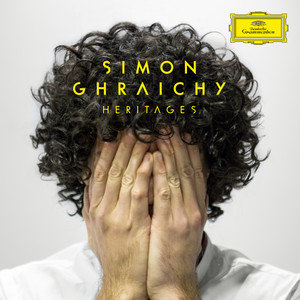 | Intermezzo No. 1 | Manuel Ponce, Simon Ghraichy | E Minor | 1 | 9A | 67 BPM | |
 | Piano Concerto No.2 In B Flat, Op.83: 4. Allegretto grazioso - Un poco più presto | Johannes Brahms, Krystian Zimerman, Wiener Philharmoniker, Leonard Bernstein | B♭ Major | 2 | 6B | 107 BPM | |
 | Piano Concerto in C-Sharp Minor, FP 146: I. Allegretto commodo - Live | Francis Poulenc, Yannick Nézet-Séguin, London Philharmonic Orchestra, Alexandre Tharaud | A♭ Major | 1 | 4B | 86 BPM | |
 | Chamber Symphony No. 5 in A-Flat Major, Op. 118a: I. Andante | Dmitri Shostakovich, Yuli Turovsky, I Musici de Montréal | D♭ Major | 0 | 3B | 106 BPM | |
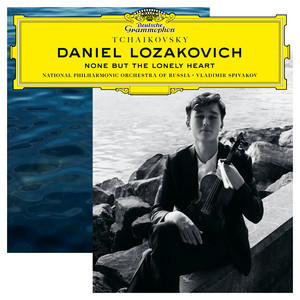 | Six Pieces, Op. 51, TH 143: VI. Valse sentimentale. Tempo di Valse | Pyotr Ilyich Tchaikovsky, Daniel Lozakovich, Stanislav Soloviev | D♭ Major | 1 | 3B | 108 BPM | |
 | Etude in F Minor | Felix Mendelssohn, Benjamin Frith | B♭ Major | 0 | 6B | 75 BPM | |
 | Symphony No. 3 In C Minor, Op. 78 "Organ Symphony": 1. Adagio - Allegro moderato - Poco adagio | Camille Saint-Saëns, Simon Preston, Berliner Philharmoniker, James Levine | A♭ Major | 1 | 4B | 118 BPM | |
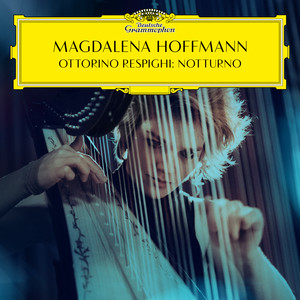 | 6 Pieces for Piano, P. 44: No. 3. Notturno. Lento (Version for Harp) | Ottorino Respighi, Magdalena Hoffmann | F♯ Major | 0 | 2B | 88 BPM | |
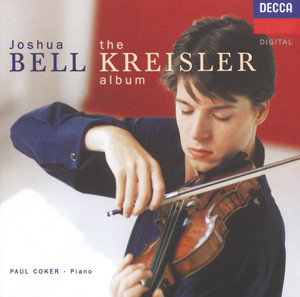 | Praeludium & Allegro "by Gaetano Pugnani" | Fritz Kreisler, Joshua Bell, Paul Coker | E Minor | 2 | 9A | 103 BPM | |
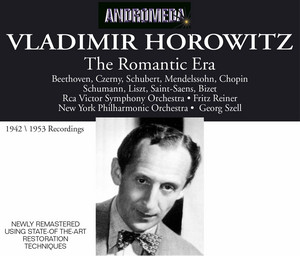 | Träumerei | Robert Schumann, Vladimir Horowitz | A♭ Major | 1 | 4B | 128 BPM | |
 | Cello Sonata in G Minor, Op. 65: III. Largo | Frédéric Chopin, Emmanuelle Bertrand, Pascal Amoyel | B♭ Major | 0 | 6B | 89 BPM | |
 | Elegy No. 1 in D Major | Giovanni Bottesini, Andrew Burashko, Joel Quarrington | D Major | 0 | 10B | 89 BPM | |
 | 4 Piano Pieces, Op. 119: No. 1, Intermezzo in B Minor | Johannes Brahms, Radu Lupu | B Minor | 0 | 10A | 69 BPM | |
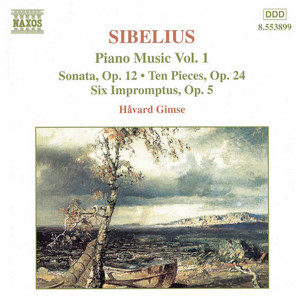 | 6 Impromptus, Op. 5: Impromptu No. 5 in B Minor | Jean Sibelius, Håvard Gimse | B Minor | 0 | 10A | 84 BPM | |
 | Piano Concerto No. 2 in F Major, Op. 102: II. Andante | Dmitri Shostakovich, Yuja Wang, Boston Symphony Orchestra, Andris Nelsons | F Major | 1 | 7B | 104 BPM | |
 | Carmen Suite No. 1 (Arr. E. Guiraud): III. Intermezzo | Georges Bizet, Orquestra Simfònica de Barcelona i Nacional de Catalunya, Pablo González | E♭ Major | 0 | 5B | 81 BPM | |
| Intermezzi, Op. 117: 3. In C-Sharp Minor | Johannes Brahms, Radu Lupu | C Major | 1 | 8B | 140 BPM | |
 | Rachmaninov: Symphony No. 3 in A Minor, Op. 44: II. Adagio ma non troppo - Allegro vivace | Sergei Rachmaninoff, Mariss Jansons, St. Petersburg Philharmonic Orchestra | E♭ Minor | 0 | 2A | 117 BPM | |
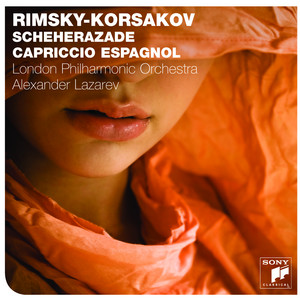 | Scheherazade: The Sea & Sinbad's Ship | Nikolai Rimsky-Korsakov, Lars Hjalmar Joakim | E Major | 1 | 12B | 82 BPM | |
 | Carnaval, Op. 9: No. 12, Chopin | Robert Schumann, Boris Giltburg | B♭ Minor | 0 | 3A | 92 BPM | |
 | 6 Moments musicaux, Op. 16: No. 3, Andante cantabile | Sergei Rachmaninoff, Boris Giltburg | B Minor | 0 | 10A | 103 BPM | |
![Symphony No. 2, Op. 27 (Arr. for Piano by Georgy Kirkor): III. Adagio [Excerpt] by Katya Kramer-Lapin](https://i.scdn.co/image/ab67616d00001e025f481bd4813c3b3fc2c6f3e4) | Symphony No. 2, Op. 27 (Arr. for Piano by Georgy Kirkor): III. Adagio [Excerpt] | Katya Kramer-Lapin | A Major | 0 | 11B | 130 BPM | |
 | Consolation No. 3 in D-Flat Major, S. 172/3 | Franz Liszt, Vladimir Horowitz | D♭ Major | 0 | 3B | 70 BPM |
- ISRC
- GBLLH1490018
- Label
- L-M Records/RCA Records