- BPM
- 88
- Key
- A Major
- Camelot
- 11B
Variations And Fugue On A Theme by Johann Adam Hiller, Op. 100: 6. Var. V: Andante sostenuto by Max Reger, Bamberg Symphony, Horst Stein Song Details
"Variations And Fugue On A Theme by Johann Adam Hiller, Op. 100: 6. Var. V: Andante sostenuto" by Max Reger, Bamberg Symphony, Horst Stein had its release date on June 29, 2018. With this song being around four minutes long, at 4:21, the duration of this song is pretty average compared to other songs. This track is safe for children and doesn't appear to contain any foul language, since the "Explicit" tag was not present in this track. The track order of this song in Max Reger, Various Artists's "Max Reger - Orchestral Edition - Variations, Suites, Romances" album is number 16 out of 56. On top of that, Germany appears to be the country where this track was created. Variations And Fugue On A Theme by Johann Adam Hiller, Op. 100: 6. Var. V: Andante sostenuto is unknown right now. In our opinion, the overall tone is not very danceable and projects negative sounds, such as being sad, depressed, or angry.
BPM and Tempo
We consider the tempo marking of Variations And Fugue On A Theme by Johann Adam Hiller, Op. 100: 6. Var. V: Andante sostenuto by Max Reger, Bamberg Symphony, Horst Stein to be Andante (at a walking pace) because the track has a tempo of 88 BPM, a half-time of 44BPM, and a double-time of 176 BPM. Based on that, the speed of the song's tempo is slow. Activities such as, yoga or pilates, can go well with this song. The time signature for this track is 4/4.
Music Key
This song is in the music key of A Major. This also means that this song has a camelot key of 11B. So, the perfect camelot match for 11B would be either 11B or 12A. While, 12B can give you a low energy boost. For moderate energy boost, you would use 8B and a high energy boost can either be 1B or 6B. Though, if you want a low energy drop, you should looking for songs with either a camelot key of 11A or 10B will give you a low energy drop, 2B would be a moderate one, and 9B or 4B would be a high energy drop. Lastly, 8A allows you to change the mood.
Want to find the BPM and music key for other songs? Check out our BPM and Key Finder page!
- Popularity
- 0%
- Loudness
- -30.99 dB
- Acousticness
- 96%
- Danceability
- 10%
- Energy
- 2%
- Instrumentalness
- 85%
- Liveness
- 10%
- Loudness
- 48%
- Speechiness
- 4%
- Valence
- 4%
Recommendations
| Track | Artist | Key | Energy | Camelot | BPM | ||
|---|---|---|---|---|---|---|---|
 | Les Danses de Ravel (After Le Tombeau de Couperin): I. Prélude | Franck Tortiller, Quatuor Debussy | E Minor | 2 | 9A | 75 BPM | |
 | Requiem in C Minor: VI. Pie Jesu | Luigi Cherubini, Filharmonie Brno, Czech Philharmonic Chorus Brno, Petr Fiala | F Minor | 0 | 4A | 76 BPM | |
 | Organoedia ad missam lectam, K. 186: V. Sanctus | Zoltán Kodály, Iain Quinn | A Major | 0 | 11B | 68 BPM | |
 | 10 Pieces, Op. 24: 5. Valse | Jean Sibelius, Håvard Gimse | B♭ Minor | 0 | 3A | 126 BPM | |
 | V. Pieds-en-l'air | Peter Warlock, Metamorphosen Berlin, Wolfgang Emanuel Schmidt | G Major | 0 | 9B | 85 BPM | |
 | Poeme in D-Flat Major, Op. 39a | Zdeněk Fibich, Deutsche Streicherphilharmonie, Wolfgang Hentrich | D Major | 1 | 10B | 89 BPM | |
 | Piano Trio in G Minor, Op. 17: IV. Allegretto | Clara Schumann, Ragna Schirmer, Iason Keramidis, Benedict Kloeckner | G Minor | 1 | 6A | 86 BPM | |
 | Autumn Gardens: II. Tranquillo | Einojuhani Rautavaara, Helsinki Philharmonic Orchestra, Vladimir Ashkenazy | C Major | 0 | 8B | 78 BPM | |
 | Vier ernste Gesänge: Denn es gehet dem Menschen wie dem Vieh, Op. 121/1 | Johannes Brahms, Max Reger, Igor Levit | A Major | 0 | 11B | 89 BPM | |
 | Symphony No. 3 in A Minor, MWV N 18 "Scottish" (London Version, 1842): II. Scherzo. Vivace non troppo | Felix Mendelssohn, Les Ambassadeurs ~ La Grande Écurie, Alexis Kossenko | F Major | 2 | 7B | 122 BPM | |
 | Franck: Violin Sonata in A Major, FWV 8: I. Allegretto ben moderato (Transcr. Delsart for Cello and Piano) | César Franck, Daniel Müller-Schott, Robert Kulek | F♯ Minor | 0 | 11A | 63 BPM | |
 | No. 2, Choral. Poco più lento | César Franck, Jean-Pierre Armengaud | D♭ Minor | 0 | 12A | 126 BPM | |
 | Variations & Fugue on a Theme by J.S. Bach, Op. 81: Var. 12. Andante sostenuto | Max Reger, Marc-André Hamelin | E♭ Major | 0 | 5B | 92 BPM | |
 | Requiem, Op. 9: VI. Agnus Dei | Maurice Duruflé, Maîtrise de Saint-Christophe de Javel, Yves Castagnet, Henri Chalet | B♭ Major | 0 | 6B | 131 BPM | |
 | Variations & Fugue on a Theme by Mozart, Op. 132: Var. 2. Poco agitato | Max Reger, Berliner Philharmoniker, Karl Böhm | F Major | 2 | 7B | 122 BPM | |
 | Keyboard Sonata in F Major, Kk. 446 (Arr. for Piano by Ignaz Friedman) | Domenico Scarlatti, Joseph Banowetz | A Major | 0 | 11B | 72 BPM | |
 | Lieder ohne Worte, Op. 67: No. 4 Presto "Spinnerlied" (Arr. Ottensamer for Clarinet and Strings) | Felix Mendelssohn, Andreas Ottensamer, Schumann Quartett, Gunars Upatnieks | C Major | 3 | 8B | 159 BPM | |
 | Du bist die Ruh, D 776 | Nils Mönkemeyer | E♭ Major | 0 | 5B | 68 BPM | |
 | 3 Romanzen, Op. 94: III. Nicht schnell | Robert Schumann, Céline Moinet, Florian Uhlig | D Major | 0 | 10B | 169 BPM | |
 | 12 Pieces, Op. 59: No. 9, Benedictus in D-Flat Major | Max Reger, Martin Souter | D♭ Major | 0 | 3B | 71 BPM | |
 | 6 Romances sans paroles: No. 4, Le calme, CG 2e | Charles Gounod, Warren Lee | D♭ Major | 1 | 3B | 73 BPM | |
 | Lobgesang. Symphony no. 2 op. 52: Allegretto un poco agitato | Felix Mendelssohn, Jan Willem de Vriend, Netherlands Symphony Orchestra | B♭ Major | 1 | 6B | 90 BPM | |
 | Harpsichord Sonata No. 48: Allegro (arr. for Harp) | Antonio Soler, Godelieve Schrama | C Minor | 1 | 5A | 106 BPM | |
 | 12 Lieder von Robert Franz, S. 489: No. 12, Frühling und Liebe (After Op. 3/3) | Franz Liszt, Leslie Howard | G Major | 0 | 9B | 83 BPM | |
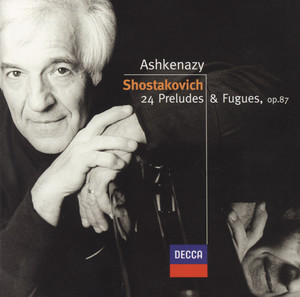 | Preludes and Fugues for Piano, Op.87: Prelude & Fugue No.1 in C major: Fugue | Dmitri Shostakovich, Vladimir Ashkenazy | A Minor | 0 | 8A | 92 BPM |
- ISRC
- DEF059132206
- Label
- L-M Records/RCA Records