- BPM
- 114
- Key
- E Major
- Camelot
- 12B
Cello Concerto No. 2: V. Allegro non troppo, ma con fuoco by Julius Röntgen, Gregor Horsch, Netherlands Symphony Orchestra, David Porcelijn Song Details
Julius Röntgen, Gregor Horsch, Netherlands Symphony Orchestra, David Porcelijn's 'Cello Concerto No. 2: V. Allegro non troppo, ma con fuoco' had a release date set for August 27, 2013. With this song being about 5 minutes long, at This song is fairly a long song compared to the average song length. This song does not have an "Explicit" tag, making it safe for all ages. There are a total of 11 in the song's album "Rontgen: Cello Concertos (Complete)". In this album, this song's track order is #8. Furthermore, we believe that the track originated from Germany. In terms of popularity, Cello Concerto No. 2: V. Allegro non troppo, ma con fuoco is currently unknown. In our opinion, the overall tone is not very danceable and projects negative sounds, such as being sad, depressed, or angry.
BPM and Tempo
With Cello Concerto No. 2: V. Allegro non troppo, ma con fuoco by Julius Röntgen, Gregor Horsch, Netherlands Symphony Orchestra, David Porcelijn having a BPM of 114 with a half-time of 57 BPM and a double-time of 228 BPM, we would consider this track to have a Moderato (at a moderate speed) tempo marking. Because of this, we believe that the song has an overall moderate tempo. The time signature for this track is 3/4.
Music Key
This song is in the music key of E Major. Or for those who are familiar with the camelot wheel, this song has a camelot key of 12B. So, the perfect camelot match for 12B would be either 12B or 1A. While, 1B can give you a low energy boost. For moderate energy boost, you would use 9B and a high energy boost can either be 2B or 7B. Though, if you want a low energy drop, you should looking for songs with either a camelot key of 12A or 11B will give you a low energy drop, 3B would be a moderate one, and 10B or 5B would be a high energy drop. Lastly, 9A allows you to change the mood.
Want to find the BPM and music key for other songs? Check out our BPM and Key Finder page!
- Popularity
- 0%
- Loudness
- -19.225 dB
- Acousticness
- 97%
- Danceability
- 38%
- Energy
- 9%
- Instrumentalness
- 80%
- Liveness
- 9%
- Loudness
- 68%
- Speechiness
- 4%
- Valence
- 20%
Recommendations
| Track | Artist | Key | Energy | Camelot | BPM | ||
|---|---|---|---|---|---|---|---|
 | Ein Cyclus von Phantasiestücken, Op. 5: II. Andante con espressione | Julius Röntgen, Mark Anderson | D Minor | 0 | 7A | 122 BPM | |
 | I. Adagio ma non troppo | Fanny Mendelssohn, Minguet Quartett | G Major | 1 | 9B | 66 BPM | |
 | Piano Quartet No. 1 in C Minor, Op. 15: I. Allegro molto moderato | Gabriel Fauré, Trio Wanderer, Antoine Tamestit | F♯ Minor | 0 | 11A | 84 BPM | |
 | 6 Variations for Violin and Piano on "Hélas, j'ai perdu mon amant", K. 360: Var. 2 | Wolfgang Amadeus Mozart, Cédric Tiberghien, Alina Ibragimova | D Minor | 1 | 7A | 114 BPM | |
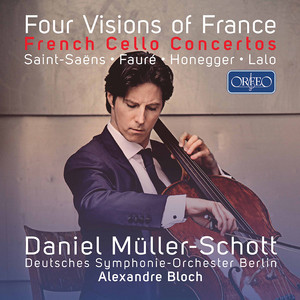 | Cello Concerto No. 1 in A Minor, Op. 33, R. 193: III. Allegro non troppo | Camille Saint-Saëns, Daniel Müller-Schott, Deutsches Symphonie-Orchester Berlin, Alexandre Bloch | F Major | 0 | 7B | 78 BPM | |
 | Galuppi: Concerto a quattro No. 1 in G Minor: I. Grave e adagio | Baldassare Galuppi, Quartetto Italiano | B♭ Major | 2 | 6B | 92 BPM | |
 | Cello Sonata No. 13 in C-Sharp Minor: III. Andante tranquillo | Julius Röntgen, Jean Decroos, Danielle Dechenne | B Major | 0 | 1B | 86 BPM | |
 | Rhapsody on a Theme of Paganini, Op. 43: Variation 17. — | Sergei Rachmaninoff, Boris Giltburg, Brussels Philharmonic, Vassily Sinaisky | F♯ Major | 0 | 2B | 172 BPM | |
 | Bach, JS: Sonata for Violin & Keyboard No. 6 in G Major, BWV 1019: II. Largo | Johann Sebastian Bach, Renaud Capuçon, David Fray | E Minor | 0 | 9A | 70 BPM | |
 | Shostakovich: Cello Sonata in D minor, Op. 40: I. Allegro non troppo | Dmitri Shostakovich, Truls Mørk, Lars Vogt | E♭ Major | 0 | 5B | 76 BPM | |
 | Larghetto in G Major, Op. 11: I. Larghetto espressivo | Louis Ferdinand Von Preußen, Trio Parnassus, Thomas Selditz, Stanislau Anishchanka | B Major | 2 | 1B | 100 BPM | |
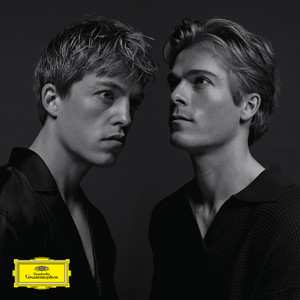 | Peer Gynt Suite No. 1, Op. 46 (Version for Piano 4 Hands): III. Anitra's Dance | Edvard Grieg, Lucas Jussen, Arthur Jussen | A Minor | 0 | 8A | 104 BPM | |
 | Chant Sans Paroles. Op. 2, No. 3 - Duo-Art 7154 | Pyotr Ilyich Tchaikovsky, Shura Cherkassky, Peter Phillips | F Major | 1 | 7B | 73 BPM | |
 | Piano Trio in G Minor, Op. 15, JB 1:64: III. Finale. Presto | Bedřich Smetana, Smetana Trio | A Major | 0 | 11B | 88 BPM | |
 | 12 Klavierstücke für kleine und große Kinder, Op. 85: No. 12, Abendlied (Arr. for Violin and Piano by Amanda Maier) | Robert Schumann, Trio Ernest | D♭ Major | 0 | 3B | 87 BPM | |
 | Cello Sonata in A Minor: III. Adagio | Henriette Bosmans, Raphaela Gromes, Julian Riem | C Major | 1 | 8B | 69 BPM | |
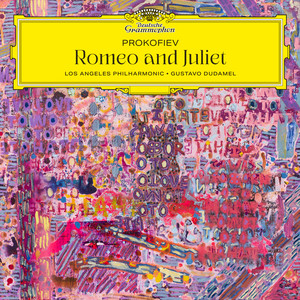 | Romeo and Juliet, Op. 64, Act I: No. 16, Madrigal | Sergei Prokofiev, Los Angeles Philharmonic, Gustavo Dudamel | G Major | 1 | 9B | 66 BPM | |
 | Beau soir | Claude Debussy, Wolfgang Emanuel Schmidt | D Minor | 0 | 7A | 112 BPM | |
 | Schubert / Arr. Kreisler: Ballet Music (From Rosamunde, Op. 26, D. 797) | Franz Schubert, Vilde Frang | G Major | 1 | 9B | 86 BPM | |
 | Bagatelles, Op. 47, B. 79: No. 2 in G Major, Tempo di minuetto. Grazioso | Antonín Dvořák, Josef Suk, Miroslav Ambroš, Jiří Bárta, Jan Simon | G Major | 1 | 9B | 101 BPM | |
 | Prélude, Choral et Fugue, FWV 21: I. Prélude | César Franck, Charles Owen | G Major | 1 | 9B | 66 BPM | |
 | Serenade in C Major, Op. 10: Romanza: Adagio non troppo, quasi andante | Ernst von Dohnányi, Spectrum Concerts Berlin | F Major | 1 | 7B | 64 BPM | |
 | La Cinquième Saison, Op. 15: I. Le Secret des feuilles: L'arbre aux légendes 2 | Corentin Apparailly, Julien Martineau, Orchestre Victor Hugo, Jean-François Verdier | G Major | 1 | 9B | 66 BPM | |
 | Piano Concerto No. 1: III. Allegro non troppo | Vittorio Rieti, Alessandro Marangoni, Orchestra Sinfonica Di Milano, Giuseppe Grazioli | C Major | 3 | 8B | 131 BPM | |
 | Violin Sonata No. 3 in C Minor, Op. 45: III. Allegro animato | Edvard Grieg, Frederic Chiu, Pierre Amoyal | D Minor | 2 | 7A | 148 BPM |
- ISRC
- DEB200623408
- Label
- L-M Records/RCA Records