- BPM
- 99
- Key
- A Major
- Camelot
- 11B
The Rake's Progress, Act II Scene 3: Baba's Song (Baba) by Igor Stravinsky, Jayne West, Jon Garrison, Arthur Woodley, John Cheek, Shirley Love, Wendy White, Melvin Lowery, Jeffrey Johnson, Gregg Smith Singers, Orchestra of St. Luke's, Robert Craft Song Details
Igor Stravinsky, Jayne West, Jon Garrison, Arthur Woodley, John Cheek, Shirley Love, Wendy White, Melvin Lowery, Jeffrey Johnson, Gregg Smith Singers, Orchestra of St. Luke's, Robert Craft's ' "The Rake's Progress, Act II Scene 3: Baba's Song (Baba)" was released on its scheduled release date, May 26, 2009. With This song being less than a minute long, we are pretty confident that this song does not contain any foul language. That being said, this song is pretty short compared to other songs. There are a total of 73 in the song's album "Stravinsky, I.: Rake's Progress (The) [Opera]". In this album, this song's track order is #40. Furthermore, we believe that the track originated from Hong Kong. In terms of popularity, The Rake's Progress, Act II Scene 3: Baba's Song (Baba) is currently unknown. Since there is more of a neutral sound being played, this makes the track somewhat danceable.
BPM and Tempo
With The Rake's Progress, Act II Scene 3: Baba's Song (Baba) by Igor Stravinsky, Jayne West, Jon Garrison, Arthur Woodley, John Cheek, Shirley Love, Wendy White, Melvin Lowery, Jeffrey Johnson, Gregg Smith Singers, Orchestra of St. Luke's, Robert Craft having a BPM of 99 with a half-time of 50 BPM and a double-time of 198 BPM, we would consider this track to have a Andante (at a walking pace) tempo marking. Because of this, we believe that the song has an overall slow tempo. The time signature for this track is 4/4.
Music Key
This song is in the music key of A Major. Or for those who are familiar with the camelot wheel, this song has a camelot key of 11B. So, the perfect camelot match for 11B would be either 11B or 12A. While, 12B can give you a low energy boost. For moderate energy boost, you would use 8B and a high energy boost can either be 1B or 6B. Though, if you want a low energy drop, you should looking for songs with either a camelot key of 11A or 10B will give you a low energy drop, 2B would be a moderate one, and 9B or 4B would be a high energy drop. Lastly, 8A allows you to change the mood.
Want to find the BPM and music key for other songs? Check out our BPM and Key Finder page!
- Popularity
- 0%
- Loudness
- -21.165 dB
- Acousticness
- 97%
- Danceability
- 41%
- Energy
- 18%
- Instrumentalness
- 0%
- Liveness
- 43%
- Loudness
- 65%
- Speechiness
- 6%
- Valence
- 54%
Recommendations
| Track | Artist | Key | Energy | Camelot | BPM | ||
|---|---|---|---|---|---|---|---|
 | Also sprach Zarathustra, Op. 30: III. Von der großen Sehnsucht | Richard Strauss, Berliner Philharmoniker, Herbert von Karajan | G Major | 1 | 9B | 105 BPM | |
![Les Noces, Scene 1: The Tresses (At the Bride's House) [the Wedding] by Susan Bickley, Martyn Hill, Alan Ewing, Alison Wells, Simon Joly Chorale, International Piano Quartet, Tristan Fry Percussion Ensemble, Robert Craft](https://i.scdn.co/image/ab67616d00001e02946bbad1fa051db2cacde94d) | Les Noces, Scene 1: The Tresses (At the Bride's House) [the Wedding] | Susan Bickley, Martyn Hill, Alan Ewing, Alison Wells, Simon Joly Chorale, International Piano Quartet, Tristan Fry Percussion Ensemble, Robert Craft | E Major | 2 | 12B | 118 BPM | |
 | Saint-Saëns: Piano Concerto No. 2 in G Minor, Op. 22: I. Andante sostenuto | Camille Saint-Saëns, Bertrand Chamayou, Emmanuel Krivine, Orchestre National De France | G Minor | 2 | 6A | 94 BPM | |
 | Variations on a Hungarian Folksong "The Peacock": Moderato | Zoltán Kodály, Neeme Järvi, Chicago Symphony Orchestra | C Minor | 0 | 5A | 69 BPM | |
 | Hungarian Dance No.1 in G minor - Orchestrated by Brahms: Allegro molto | Johannes Brahms, Chicago Symphony Orchestra, Daniel Barenboim | G Minor | 2 | 6A | 65 BPM | |
 | Korngold: Violin Concerto in D Major, Op. 35: I. Moderato nobile | Erich Wolfgang Korngold, Itzhak Perlman, André Previn, Pittsburgh Symphony Orchestra | D Major | 1 | 10B | 83 BPM | |
 | Elgar: Cello Concerto in E Minor, Op. 85: II. Lento - Allegro molto | Edward Elgar, Sir John Barbirolli, London Symphony Orchestra | G Major | 2 | 9B | 82 BPM | |
 | Overture to "A Midsummer Night's Dream", Op. 21: Allegro di molto | Felix Mendelssohn, London Symphony Orchestra, John Eliot Gardiner | E Major | 1 | 12B | 137 BPM | |
 | Gurrelieder, Pt. 1: No. 1, Orchestral Prelude | Arnold Schoenberg, Wiener Philharmoniker, Claudio Abbado | E♭ Major | 0 | 5B | 83 BPM | |
 | Le rouet d'Omphale, Op. 31: Le Rouet d'Omphale | Camille Saint-Saëns, Slovak Radio Symphony Orchestra, Stephen Gunzenhauser | D Major | 0 | 10B | 121 BPM | |
 | 2 Elegiac Melodies, Op. 34: No. 1, The Wounded Heart | Edvard Grieg, Malmö Symphony Orchestra, Bjarte Engeset | G Major | 2 | 9B | 72 BPM | |
 | Symphony No. 9 in E Minor, Op. 95, B. 178 "From the New World": I. Adagio – Allegro molto | Antonín Dvořák, Wiener Philharmoniker, Herbert von Karajan | E Minor | 1 | 9A | 115 BPM | |
 | The Planets, Op. 32: VI. Uranus, the Magician | Gustav Holst, Berliner Philharmoniker, Herbert von Karajan | C Major | 3 | 8B | 110 BPM | |
 | L'Arlésienne Suite No. 1, WD 40: II. Minuetto | Georges Bizet, Daniel Deffayet, Berliner Philharmoniker, Herbert von Karajan | A♭ Major | 0 | 4B | 175 BPM | |
 | Tchaikovsky: Symphony No. 4 in F Minor, Op. 36: II. Andantino in moto di canzone | Pyotr Ilyich Tchaikovsky, San Francisco Symphony, Michael Tilson Thomas | B♭ Minor | 0 | 3A | 82 BPM | |
 | Miroirs, M. 43: No. 3, Une barque sur l'ocean (Version for Orchestra) | Maurice Ravel, Orchestre Philharmonique Du Luxembourg, Gustavo Gimeno | A Major | 0 | 11B | 134 BPM | |
 | D'un matin de printemps | Lili Boulanger, Yan Pascal Tortelier, BBC Philharmonic | C Major | 1 | 8B | 130 BPM | |
 | Prince Igor (Knyaz Igor): Overture | Alexander Borodin, Ukraine National Radio Symphony Orchestra, Theodore Kuchar | G Minor | 1 | 6A | 73 BPM | |
 | The Planets, Op. 32: III. Mercury, the Winged Messenger | Gustav Holst, Orchestre Symphonique de Montréal, Charles Dutoit | G Major | 0 | 9B | 76 BPM | |
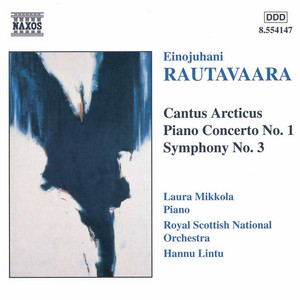 | Piano Concerto No. 1, Op. 45: I. Con grandezza | Einojuhani Rautavaara, Laura Mikkola, Royal Scottish National Orchestra, Hannu Lintu | G Major | 1 | 9B | 70 BPM | |
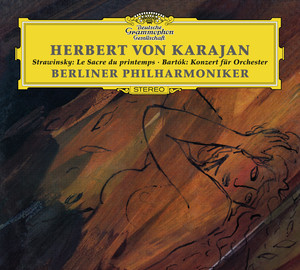 | The Rite of Spring, K15, Pt. 1: III. Ritual of Abduction | Igor Stravinsky, Berliner Philharmoniker, Herbert von Karajan | D Minor | 6 | 7A | 103 BPM | |
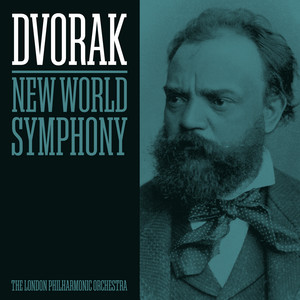 | 1st Movement: Adaggio / Allegro Molto | London Philharmonic Orchestra | E Minor | 1 | 9A | 116 BPM | |
 | Symphony in E Minor, Op. 32, "Gaelic Symphony": I. Allegro con fuoco | Amy Beach, Nashville Symphony Orchestra, Kenneth Schermerhorn | E Minor | 1 | 9A | 111 BPM | |
 | Transfigured Night, Op. 4 (Version for String Orchestra): Pesante - Grave | Arnold Schoenberg, Berliner Philharmoniker, Kirill Petrenko | E Major | 0 | 12B | 73 BPM | |
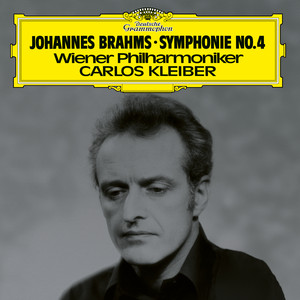 | Symphony No. 4 in E Minor, Op. 98: IV. Allegro energico e passionato - Più allegro | Johannes Brahms, Wiener Philharmoniker, Carlos Kleiber | F♯ Major | 7 | 2B | 129 BPM |
- ISRC
- HKI190908240
- Label
- L-M Records/RCA Records