- BPM
- 116
- Key
- C Major
- Camelot
- 8B
12. Oh why am I moody and sad? by Arthur Sullivan, Kenneth Sandford, Chorus of the Royal Opera House, Covent Garden, Orchestra of the Royal Opera House, Covent Garden, Isidore Godfrey Song Details
"12. Oh why am I moody and sad?" by Arthur Sullivan, Kenneth Sandford, Chorus of the Royal Opera House, Covent Garden, Orchestra of the Royal Opera House, Covent Garden, Isidore Godfrey had its release date on January 1, 2011. The duration of This song is about two minutes long, specifically at 2:15. This song does not appear to have any foul language. 12. Oh why am I moody and sad?'s duration is considered a little bit shorter than the average duration of a typical track. The track order of this song in Arthur Sullivan, The D'Oyly Carte Opera Company's "Gilbert & Sullivan Collection" album is number 13 out of 456. On top of that, United Kingdom appears to be the country where this track was created. In terms of popularity, 12. Oh why am I moody and sad? is currently not that popular. Although the tone can be danceable to some, this track does projects more of a negative sound rather than a postive one.
BPM and Tempo
We consider the tempo marking of 12. Oh why am I moody and sad? by Arthur Sullivan, Kenneth Sandford, Chorus of the Royal Opera House, Covent Garden, Orchestra of the Royal Opera House, Covent Garden, Isidore Godfrey to be Moderato (at a moderate speed) because the track has a tempo of 116 BPM, a half-time of 58BPM, and a double-time of 232 BPM. Based on that, the speed of the song's tempo is moderate. Activities such as, walking, can go well with this song. The time signature for this track is 4/4.
Music Key
C Major is the music key of this track. This also means that this song has a camelot key of 8B. So, the perfect camelot match for 8B would be either 8B or 9A. While, 9B can give you a low energy boost. For moderate energy boost, you would use 5B and a high energy boost can either be 10B or 3B. Though, if you want a low energy drop, you should looking for songs with either a camelot key of 8A or 7B will give you a low energy drop, 11B would be a moderate one, and 6B or 1B would be a high energy drop. Lastly, 5A allows you to change the mood.
Want to find the BPM and music key for other songs? Check out our BPM and Key Finder page!
- Popularity
- 1%
- Loudness
- -20.519 dB
- Acousticness
- 96%
- Danceability
- 51%
- Energy
- 18%
- Instrumentalness
- 0%
- Liveness
- 21%
- Loudness
- 66%
- Speechiness
- 10%
- Valence
- 17%
Recommendations
| Track | Artist | Key | Energy | Camelot | BPM | ||
|---|---|---|---|---|---|---|---|
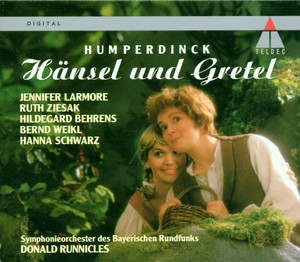 | Humperdinck : Hänsel und Gretel : Act 1 "Eine Hex', steinalt" [Father, Stepmother] | Engelbert Humperdinck, Donald Runnicles, Bavarian Radio Symphony Orchestra | C Major | 1 | 8B | 83 BPM | |
| Humperdinck : Hänsel und Gretel : Act 3 "Halt! Hokuspokus, Hexenschuss!" [The Nibblewitch, Gretel, Hänsel] | Engelbert Humperdinck, Donald Runnicles, Bavarian Radio Symphony Orchestra | B♭ Major | 1 | 6B | 103 BPM | |
 | Sullivan: The Mikado or The Town of Titipu, Act 2: No. 24, Finale, "For he's gone and married Yum-Yum … The threatened cloud" (Pitti-Sing, Ko-Ko, Nanki-Poo, Yum-Yum, Others) | Arthur Sullivan, Marjorie Thomas/Sir Geraint Evans/Richard Lewis/Elsie Morison/Owen Brannigan/Ian Wallace/John Cameron/Jeannette Sinclair/Monica Sinclair/Glyndebourne Chorus/Pro Arte Orchestra/Sir Malcolm Sargent, Sir Malcolm Sargent, Pro Arte Orchestra | E♭ Major | 3 | 5B | 110 BPM | |
 | Wagner: Lohengrin, Act 2: "Des Königs Wort und Will' tu ich euch kund" (Herald, Frederick, Chorus) | Richard Wagner, Daniel Barenboim, Chor der Deutschen Staatsoper Berlin, Falk Struckmann, Roman Trekel, Staatskapelle Berlin | D Major | 3 | 10B | 93 BPM | |
 | Bellini: I puritani: "All’erta!" (Bruno, Coro) | Vincenzo Bellini, Dresdner Philharmonie, Riccardo Frizza | D Major | 5 | 10B | 136 BPM | |
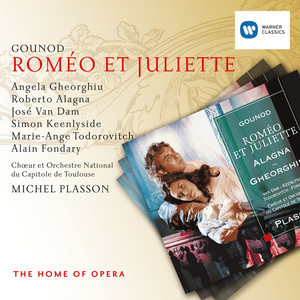 | Gounod: Roméo et Juliette, Act 1: Introduction. "L'heure s'envole" (Chœur) | Charles Gounod, Michel Plasson, Choeur Du Capitole De Toulouse, Orchestre Du Capitole De Toulouse | G Major | 0 | 9B | 111 BPM | |
 | Ciléa: Adriana Lecouvreur, Act 1 Scene 3: "Ecco, respiro appena - lo son l'umile ancella" (Adriana) | Kiri Te Kanawa, Myung-Whun Chung | A♭ Major | 2 | 4B | 98 BPM | |
 | Peter and the Wolf, Op. 67: XIII. The Procession to the Zoo | Wiener Opernorchester | B♭ Major | 1 | 6B | 105 BPM | |
 | Bizet: Carmen, Act 1: "Sur la place, chacun passe, chacun vient, chacun va" (Moralès, Dragons) | Georges Bizet, Sir Simon Rattle, Andrè Schuen, Berliner Philharmoniker, Chor des Deutschen Staatsoper | B♭ Major | 1 | 6B | 109 BPM | |
 | Gloria del' Egitto (from Aida) | Singverein der Gesellschaft der Musikfreunde, Herbert von Karajan, Vienna Philharmonic Orchestra | G Major | 3 | 9B | 66 BPM | |
 | Acte III - Tableau IV : Salve Regina | Francis Poulenc, Jean-Pierre Marty | G Major | 2 | 9B | 69 BPM | |
 | Puccini : La bohème : Act 2 "Quando me'n vo soletta" [Musetta, Marcello, Alcindoro, Mimì] | Giacomo Puccini, James Conlon, Orchestre National De France | E Major | 1 | 12B | 87 BPM | |
 | The Dream of Gerontius, Op. 38, Pt.2: Dispossessed, aside thrust | Edward Elgar, Hallé, Sir Mark Elder | C Minor | 2 | 5A | 116 BPM | |
 | Don Pasquale - What an Interminable Coming and Going | Gaetano Donizetti, Chor der Deutschen Staatsoper Berlin, Staatskapelle Berlin, Otmar Suitner | B♭ Major | 1 | 6B | 139 BPM | |
 | H.M.S. Pinafore / Act 2: Carefully on tip-toe...He is an Englishman | Arthur Sullivan, The D'Oyly Carte Opera Company, Donald Adams, Jean Hindmarsh, Jeffrey Skitch, Thomas Round, George Cook, Joyce Wright, John Reed, The D'Oyly Carte Opera Chorus, The New Symphony Orchestra Of London, Isidore Godfrey | D Major | 1 | 10B | 94 BPM | |
 | Rossini: Petite messe solennelle: II. Gloria, 1. Gloria in excelsis Deo - 2. Et in terra pax (Chorus, Soprano, Alto, Tenor, Bass, Chorus). Allegro maestoso - Andantino mosso | Gioachino Rossini, Antonio Pappano, Serge Koussevitzky, Boston Symphony Orchestra | A Major | 0 | 11B | 82 BPM | |
 | Songs of the Fleet, Op. 117: II. The Song of the Sou'Wester | Charles Villiers Stanford, Richard Hickox, BBC National Orchestra Of Wales, Gerald Finley, BBC National Chorus of Wales | C Major | 2 | 8B | 89 BPM | |
 | Orff: Carmina Burana, Pt. 2, In Taberna: Olim lacus colueram | Carl Orff, Sir Simon Rattle, Lawrence Brownlee, Rundfunkchor Berlin, Berliner Philharmoniker | E Minor | 2 | 9A | 99 BPM | |
 | Trial by Jury: Recitative and Chorus. Where is the Plaintiff… Comes the Broken Flower | Arthur Sullivan, Sir Charles Mackerras, Welsh National Opera Chorus, Welsh National Opera Orchestra, Donald Adams, Peter Savidge, Rebecca Evans | D Major | 2 | 10B | 70 BPM | |
 | Hativkah | London Festival Orchestra, The London Festival Chorus, Stanley Black | E Minor | 2 | 9A | 80 BPM | |
 | Don Pasquale, Act III Quinta Scena: Aspetta, aspetta, cara sposina (Pasquale/Malatesta) | Gaetano Donizetti, Sesto Bruscantini, Riccardo Muti, Philharmonia Orchestra | F Major | 3 | 7B | 84 BPM | |
 | Nonnenkoor Uit Casanova | Koor en Orkest o.l.v. Benedict Silberman | F Major | 3 | 7B | 87 BPM | |
| H.M.S. Pinafore / Act 2: A joy! Oh rapture unforseen | Arthur Sullivan, The D'Oyly Carte Opera Company, Joyce Wright, Thomas Round, Donald Adams, Jeffrey Skitch, Gillian Knight, The D'Oyly Carte Opera Chorus, The New Symphony Orchestra Of London, Isidore Godfrey | F Major | 3 | 7B | 200 BPM | |
 | Trial by Jury: When I, Good Friends, Was Called to the Bar | Gilbert & Sullivan Society of Houston | G Major | 4 | 9B | 116 BPM | |
 | Linda di Chamounix, A. 62, Act I Scene 3: Ah! Tardai troppo | Gaetano Donizetti, Jessica Pratt, Orchestra del Maggio Musicale Fiorentino, Michele Gamba | D♭ Major | 0 | 3B | 141 BPM |
- ISRC
- GBF076241113
- Label
- L-M Records/RCA Records