- BPM
- 64
- Key
- F♯ Minor
- Camelot
- 11A
2 poèmes d'Apollinaire, Op. 94: II. Allons plus vite by Francis Poulenc, Roderick Williams, Roger Vignoles Song Details
"2 poèmes d'Apollinaire, Op. 94: II. Allons plus vite" by Francis Poulenc, Roderick Williams, Roger Vignoles had its release date on January 21, 2022. The duration of This song is about two minutes long, specifically at 2:57. This song does not appear to have any foul language. 2 poèmes d'Apollinaire, Op. 94: II. Allons plus vite's duration is considered a little bit shorter than the average duration of a typical track. The track order of this song in Roderick Williams, Roger Vignoles's "Mirages: The Art of French Song" album is number 29 out of 32. On top of that, United Kingdom appears to be the country where this track was created. 2 poèmes d'Apollinaire, Op. 94: II. Allons plus vite is unknown right now. In our opinion, the overall tone is not very danceable and projects negative sounds, such as being sad, depressed, or angry.
BPM and Tempo
We consider the tempo marking of 2 poèmes d'Apollinaire, Op. 94: II. Allons plus vite by Francis Poulenc, Roderick Williams, Roger Vignoles to be Larghetto (rather broadly) because the track has a tempo of 64 BPM, a half-time of 32BPM, and a double-time of 128 BPM. Based on that, the speed of the song's tempo is slow. The time signature for this track is 5/4.
Music Key
F♯ Minor is the music key of this track. This also means that this song has a camelot key of 11A. So, the perfect camelot match for 11A would be either 11A or 10B. While, a low energy boost can consist of either 11B or 12A. For moderate energy boost, you would use 8A and a high energy boost can either be 1A or 6A. However, if you are looking for a low energy drop, finding a song with a camelot key of 10A would be a great choice. Where 2A would give you a moderate drop, and 9A or 4A would be a high energy drop. Lastly, 2B allows you to change the mood.
Want to find the BPM and music key for other songs? Check out our BPM and Key Finder page!
- Popularity
- 0%
- Loudness
- -22.946 dB
- Acousticness
- 99%
- Danceability
- 31%
- Energy
- 3%
- Instrumentalness
- 0%
- Liveness
- 7%
- Loudness
- 62%
- Speechiness
- 5%
- Valence
- 4%
Recommendations
| Track | Artist | Key | Energy | Camelot | BPM | ||
|---|---|---|---|---|---|---|---|
 | Petite Suite: Nocturne | Alexander Borodin, Alexander Krichel | E Minor | 1 | 9A | 66 BPM | |
 | Préludes: I. La colombe | Olivier Messiaen, Jan Lisiecki | E Major | 0 | 12B | 68 BPM | |
 | Mendelssohn: Song Without Words in D Major, Op. 109, MWV Q34 | Felix Mendelssohn, Jacqueline du Pré, Gerald Moore | D Major | 0 | 10B | 93 BPM | |
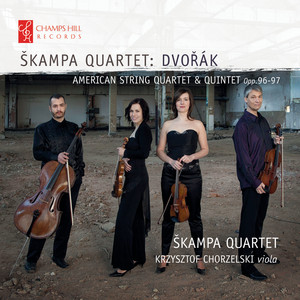 | String Quartet No. 12 in F Major, Op. 96 'The American': II. Lento | Antonín Dvořák, Škampa Quartet | D Minor | 0 | 7A | 87 BPM | |
 | Schoenberg: Verklärte Nacht, Op. 4: IV. Adagio (1943 Version) | Arnold Schoenberg, Daniel Barenboim, Chicago Symphony Orchestra | D Major | 1 | 10B | 82 BPM | |
 | 2 Novelettes, FP 47: Novelette No. 3 in E Minor: Andantino tranquillo | Francis Poulenc, Olivier Cazal | D Major | 1 | 10B | 128 BPM | |
 | L'Oiseau de feu, K10: X. Khorovod (Ronde) des princesses | Igor Stravinsky, Orchestre de Paris, Klaus Mäkelä | F Minor | 0 | 4A | 68 BPM | |
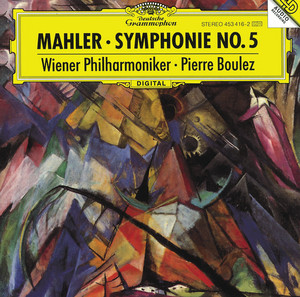 | Symphony No. 5: IV. Adagietto. Sehr langsam | Gustav Mahler, Wiener Philharmoniker, Pierre Boulez | F Major | 0 | 7B | 87 BPM | |
 | Chopin: Cello Sonata in G Minor, Op. 65: III. Largo | Frédéric Chopin, Jacqueline du Pré, Daniel Barenboim | B♭ Minor | 2 | 3A | 94 BPM | |
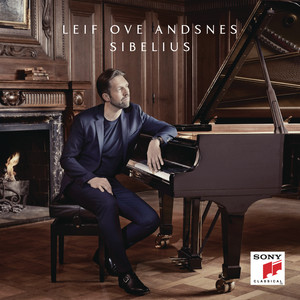 | 10 Pieces for Piano, Op. 58: Der Hirt, No. 4 | Jean Sibelius, Leif Ove Andsnes | D♭ Major | 1 | 3B | 121 BPM | |
 | 4 Preludes for Piano, Op. 61: No. 1, Pensieroso | Ignaz Friedman, Joseph Banowetz | B Major | 0 | 1B | 73 BPM | |
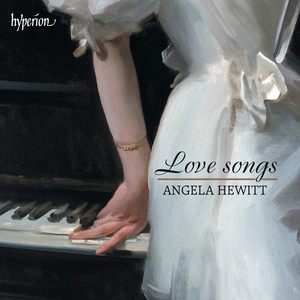 | Liebeslied "Widmung, von Robert Schumann", S. 566 (After Myrthen, Op. 25/1) | Franz Liszt, Angela Hewitt | G Major | 0 | 9B | 63 BPM | |
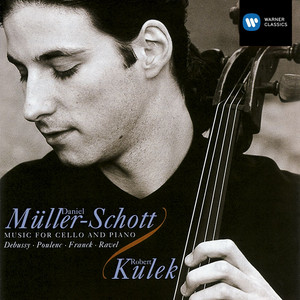 | Poulenc: Cello Sonata, FP 143: III. Ballabile | Francis Poulenc, Daniel Müller-Schott, Robert Kulek | F Minor | 1 | 4A | 78 BPM | |
 | 4 Klavierstücke, Op. 119: No. 1, Intermezzo in B Minor | Johannes Brahms, Stephen Hough | E♭ Major | 1 | 5B | 125 BPM | |
 | Piano Concerto No. 3, Sz. 119: II. Adagio religioso | Béla Bartók, Géza Anda, Deutsches Symphonie-Orchester Berlin, Ferenc Fricsay | B Major | 2 | 1B | 150 BPM | |
 | Sérénade, Op. 29 | Cécile Chaminade, Eric Parkin | D Major | 0 | 10B | 70 BPM | |
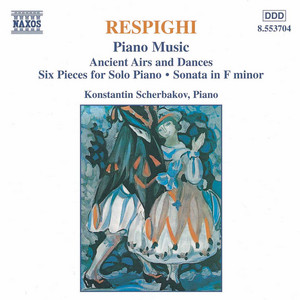 | 6 Pezzi, P. 44: No. 1. Valse Caressante | Ottorino Respighi, Konstantin Scherbakov | E♭ Major | 1 | 5B | 70 BPM | |
 | Piano Sonata in G Minor: I. Allegro molto agitato | Fanny Mendelssohn, Heather Schmidt | B Minor | 3 | 10A | 87 BPM | |
| Morgen, Op. 27 No. 4 (Arr. Reger for Piano) | Richard Strauss, Angela Hewitt | A Major | 2 | 11B | 143 BPM | |
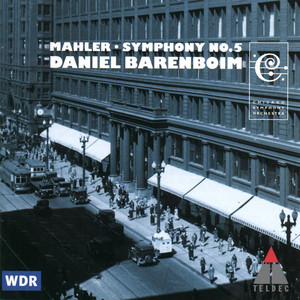 | Mahler: Symphony No. 5 in C-Sharp Minor: IV. Adagietto. Sehr langsam | Gustav Mahler, Daniel Barenboim, Chicago Symphony Orchestra | F Major | 1 | 7B | 82 BPM | |
 | Poulenc: 2 Improvisations, FP 170: No. 1 in A Minor | Francis Poulenc, Gabriel Tacchino | F Major | 1 | 7B | 178 BPM | |
 | Warsaw Concerto | Richard Addinsell, Jean-Yves Thibaudet, BBC Symphony Orchestra, Hugh Wolff | B Major | 1 | 1B | 76 BPM | |
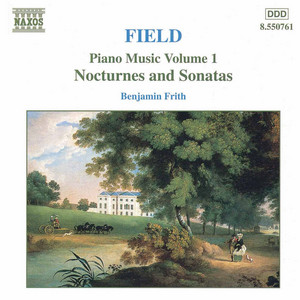 | Nocturne No. 1 in E-Flat Major, H. 24 | John Field, Benjamin Frith | E♭ Major | 0 | 5B | 73 BPM | |
 | Poulenc: Concerto for Two Pianos in D Minor, FP 61: I. Allegro ma non troppo | Francis Poulenc, James Conlon, Rotterdam Philharmonic Orchestra | E♭ Major | 1 | 5B | 103 BPM | |
 | 3 Intermezzi, Op. 117: No. 2 in B-Flat Minor. Andante non troppo e con molto espressione | Johannes Brahms, Radu Lupu | B♭ Minor | 0 | 3A | 70 BPM |
- ISRC
- GB4ZK2115929
- Label
- L-M Records/RCA Records