- BPM
- 94
- Key
- G Major
- Camelot
- 9B
Lullaby for string orchestra by George Gershwin, The Cleveland Orchestra, Riccardo Chailly Song Details
"Lullaby for string orchestra" by George Gershwin, The Cleveland Orchestra, Riccardo Chailly had its release date on January 1, 1987. Since This song is still less than 10 minute long, it is still considered a pretty long duration song compared to the average song length. This song does not appear to be explicit due to the lack of the "E" tag. The track order of this song in George Gershwin, Katia Labèque, Marielle Labèque, Cleveland Orchestra, Riccardo Chailly's "Gershwin: Rhapsody in Blue / An American in Paris / Cuban Overture / Lullaby" album is number 2 out of 4. On top of that, United Kingdom appears to be the country where this track was created. In terms of popularity, Lullaby for string orchestra is currently below average in popularity. In our opinion, the overall tone is not very danceable and projects negative sounds, such as being sad, depressed, or angry.
BPM and Tempo
We consider the tempo marking of Lullaby for string orchestra by George Gershwin, The Cleveland Orchestra, Riccardo Chailly to be Andante (at a walking pace) because the track has a tempo of 94 BPM, a half-time of 47BPM, and a double-time of 188 BPM. Based on that, the speed of the song's tempo is slow. Activities such as, yoga or pilates, can go well with this song. The time signature for this track is 4/4.
Music Key
This song is in the music key of G Major. This also means that this song has a camelot key of 9B. So, the perfect camelot match for 9B would be either 9B or 10A. While, 10B can give you a low energy boost. For moderate energy boost, you would use 6B and a high energy boost can either be 11B or 4B. Though, if you want a low energy drop, you should looking for songs with either a camelot key of 9A or 8B will give you a low energy drop, 12B would be a moderate one, and 7B or 2B would be a high energy drop. Lastly, 6A allows you to change the mood.
Want to find the BPM and music key for other songs? Check out our BPM and Key Finder page!
- Popularity
- 21%
- Loudness
- -37.234 dB
- Acousticness
- 90%
- Danceability
- 12%
- Energy
- 1%
- Instrumentalness
- 4%
- Liveness
- 5%
- Loudness
- 38%
- Speechiness
- 4%
- Valence
- 9%
Recommendations
| Track | Artist | Key | Energy | Camelot | BPM | ||
|---|---|---|---|---|---|---|---|
 | Symphony No. 2 in A Minor, Op. 55: II. Adagio | Camille Saint-Saëns, Orchestre de la Suisse Romande, Marek Janowski | E Minor | 1 | 9A | 135 BPM | |
 | Tahiti Trot | Vincent Youmans, Concertgebouworkest, Riccardo Chailly | A♭ Major | 1 | 4B | 85 BPM | |
 | Pictures at an Exhibition: The Old Castle | Modest Mussorgsky, George Szell, The Cleveland Orchestra | D♭ Major | 0 | 3B | 79 BPM | |
 | London Suite: 3. Knightsbridge (March) | Eric Coates, BBC Concert Orchestra, Barry Wordsworth | C Major | 3 | 8B | 124 BPM | |
 | Symphony No. 9 in E Minor, Op. 95, B. 178, "From the New World": IV. Largo. Goin' Home (Arr. Koncz For Solo Cello and Cello Ensemble) | Antonín Dvořák, Kian Soltani, Staatskapelle Berlin, Cellists | D♭ Major | 0 | 3B | 94 BPM | |
 | English Suite: Meditation | Paul Lewis, Royal Northern Sinfonia, David Lloyd-Jones | A Minor | 0 | 8A | 61 BPM | |
 | Symphony No. 3 in C Minor, Op. 78 "Organ": Maestoso | Camille Saint-Saëns, Eugene Ormandy, E. Power Biggs, Philadelphia Orchestra | C Major | 1 | 8B | 49 BPM | |
 | Love's Labour's Lost, Op. 28: 1. Soliloquy 1: So sweet a kiss the golden sun gives not - Instrumental | Gerald Finzi, Aurora Orchestra, Nicholas Collon | C Minor | 1 | 5A | 99 BPM | |
 | Symphony No. 3 in C Minor, Op. 78 "Organ": Allegro moderato | Camille Saint-Saëns, Eugene Ormandy, Philadelphia Orchestra | A♭ Major | 1 | 4B | 109 BPM | |
 | 5 Bagatelles, Op. 23a (Arr. L. Ashmore for Clarinet & Strings): No. 3, Carol. Andante semplice | Gerald Finzi, Robert Plane, Royal Northern Sinfonia, Howard Griffiths | B♭ Major | 0 | 6B | 78 BPM | |
 | Litolff: Concerto symphonique No. 4 in D Minor, Op. 102: II. Scherzo | Henry Litolff, San Francisco Symphony, Michael Tilson Thomas | D Minor | 3 | 7A | 122 BPM | |
 | 3 Preludes for Piano Solo - Arr. Jascha Heifetz: 3. Allegro ben ritmato e deciso | George Gershwin, Gil Shaham, André Previn | A♭ Minor | 3 | 1A | 98 BPM | |
| Piano Concerto No. 1 in C Minor, Op. 35: IV. Allegro con brio | Dmitri Shostakovich, Ronald Brautigam, Peter Masseurs, Royal Concertgebouw Orchestra, Riccardo Chailly | A♭ Major | 4 | 4B | 82 BPM | |
![Fra Holbergs tid, Op. 40: IV. Air (From Holberg's Time) [Version for Orchestra] by Edvard Grieg, Malmö Symphony Orchestra, Bjarte Engeset](https://i.scdn.co/image/ab67616d00001e02209b553c5165f53a4a26f5be) | Fra Holbergs tid, Op. 40: IV. Air (From Holberg's Time) [Version for Orchestra] | Edvard Grieg, Malmö Symphony Orchestra, Bjarte Engeset | A♭ Major | 1 | 4B | 102 BPM | |
 | Scheherazade, Op. 35: The Young Prince and the Young Princess | Nikolai Rimsky-Korsakov, Royal Concertgebouw Orchestra, Herman Krebbers, Kirill Kondrashin | G Major | 0 | 9B | 134 BPM | |
| Jazz Suite No.2: 7. Dance II | Dmitri Shostakovich, Concertgebouworkest, Riccardo Chailly | D Major | 1 | 10B | 84 BPM | |
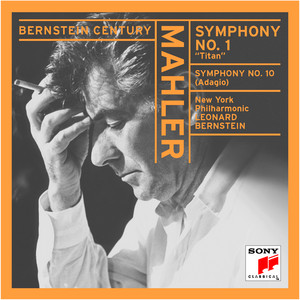 | Symphony No. 1 in D Major "Titan": Ib. Immer sehr gemächlich | Gustav Mahler, Leonard Bernstein, New York Philharmonic | A Major | 1 | 11B | 67 BPM | |
 | The Gadfly, Op. 97: No. 4, Youth (Romance) | Dmitri Shostakovich, Erez Ofer, Philadelphia Orchestra, Riccardo Chailly | C Minor | 1 | 5A | 95 BPM | |
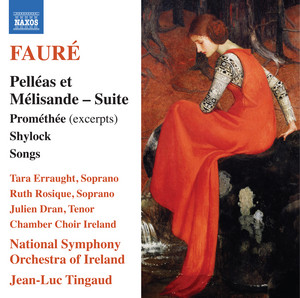 | Pelléas et Mélisande Suite, Op. 80: III. Sicilienne | Gabriel Fauré, RTÉ National Symphony Orchestra, Jean-Luc Tingaud | E♭ Major | 0 | 5B | 94 BPM | |
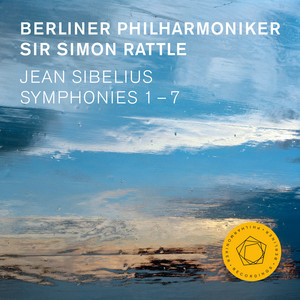 | Symphony No. 5 in E-Flat Major, Op. 82: III. Allegro molto - Misterioso - Largamente assai - Un pochettino stretto | Jean Sibelius, Berliner Philharmoniker, Sir Simon Rattle | A♭ Major | 1 | 4B | 77 BPM | |
 | Violin Concerto, Op. 14: II. Andante - Instrumental | Samuel Barber, Hilary Hahn, Hugh Wolff, Saint Paul Chamber Orchestra | E Major | 1 | 12B | 102 BPM | |
 | Götterdämmerung: Dawn and Siegfried's Rhine Journey | Richard Wagner, George Szell, The Cleveland Orchestra | G Minor | 0 | 6A | 68 BPM | |
 | Piano Concerto No. 2 in F Major, Op. 102: II. Andante | Dmitri Shostakovich, Yuja Wang, Boston Symphony Orchestra, Andris Nelsons | F Major | 1 | 7B | 104 BPM | |
| Siegfried: Forest Murmurs | Richard Wagner, George Szell, The Cleveland Orchestra | A Major | 0 | 11B | 67 BPM | |
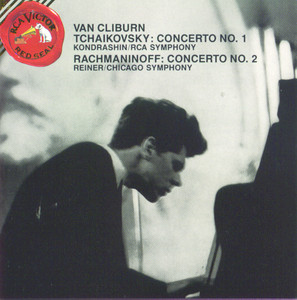 | Piano Concerto No. 1 in B-Flat Minor, Op. 23: Allegro con fuoco | Pyotr Ilyich Tchaikovsky, Van Cliburn, Kirill Kondrashin | B♭ Minor | 2 | 3A | 149 BPM |
- ISRC
- GBF078510451
- Label
- L-M Records/RCA Records