- BPM
- 114
- Key
- E Major
- Camelot
- 12B
Cello Concerto No. 3: I. Allegro non troppo by Julius Röntgen, Gregor Horsch, Netherlands Symphony Orchestra, David Porcelijn Song Details
Julius Röntgen, Gregor Horsch, Netherlands Symphony Orchestra, David Porcelijn's 'Cello Concerto No. 3: I. Allegro non troppo' had a release date set for August 27, 2013. With this song being about 5 minutes long, at This song is fairly a long song compared to the average song length. This song does not have an "Explicit" tag, making it safe for all ages. There are a total of 11 in the song's album "Rontgen: Cello Concertos (Complete)". In this album, this song's track order is #1. Furthermore, we believe that the track originated from Germany. In terms of popularity, Cello Concerto No. 3: I. Allegro non troppo is currently not that popular. In our opinion, the overall tone is not very danceable and projects negative sounds, such as being sad, depressed, or angry.
BPM and Tempo
With Cello Concerto No. 3: I. Allegro non troppo by Julius Röntgen, Gregor Horsch, Netherlands Symphony Orchestra, David Porcelijn having a BPM of 114 with a half-time of 57 BPM and a double-time of 228 BPM, we would consider this track to have a Moderato (at a moderate speed) tempo marking. Because of this, we believe that the song has an overall moderate tempo. The time signature for this track is 3/4.
Music Key
This song is in the music key of E Major. Or for those who are familiar with the camelot wheel, this song has a camelot key of 12B. So, the perfect camelot match for 12B would be either 12B or 1A. While, 1B can give you a low energy boost. For moderate energy boost, you would use 9B and a high energy boost can either be 2B or 7B. Though, if you want a low energy drop, you should looking for songs with either a camelot key of 12A or 11B will give you a low energy drop, 3B would be a moderate one, and 10B or 5B would be a high energy drop. Lastly, 9A allows you to change the mood.
Want to find the BPM and music key for other songs? Check out our BPM and Key Finder page!
- Popularity
- 2%
- Loudness
- -19.225 dB
- Acousticness
- 97%
- Danceability
- 38%
- Energy
- 9%
- Instrumentalness
- 80%
- Liveness
- 9%
- Loudness
- 68%
- Speechiness
- 4%
- Valence
- 20%
Recommendations
| Track | Artist | Key | Energy | Camelot | BPM | ||
|---|---|---|---|---|---|---|---|
 | Bagatellen Op. 47: I. Allegretto scherzando | Antonín Dvořák, NOG Ensemble | G Minor | 1 | 6A | 96 BPM | |
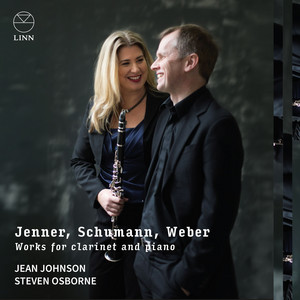 | Grand duo concertant, Op. 48: I. Allegro con fuoco | Carl Maria von Weber, Jean Johnson, Steven Osborne | B Major | 1 | 1B | 69 BPM | |
 | Bagatelles, Op. 47, B. 79: No. 5 in E Minor, Poco allegro | Antonín Dvořák, Josef Suk, Miroslav Ambroš, Jiří Bárta, Jan Simon | F♯ Minor | 8 | 11A | 130 BPM | |
 | Cello Concerto in C Minor, Op. 43: I. Adagio | Mieczysław Weinberg, Kristina Reiko Cooper, Constantine Orbelian, Kaunas City Symphony Orchestra | B Major | 1 | 1B | 69 BPM | |
 | Piano Trio No. 2, Op. 67: 2. Allegro con brio | Dmitri Shostakovich, Vladimir Ashkenazy, Zsolt-Tihamér Visontay, Mats Lidström | E♭ Major | 1 | 5B | 79 BPM | |
 | Piano Quartet No. 2 in G Minor, Op. 45: II. Scherzo (Allegro molto) | Gabriel Fauré, Trio Wanderer, Antoine Tamestit | B♭ Major | 2 | 6B | 104 BPM | |
 | Piano Concerto No. 2, Op. 28: IV. Allegro vivo | Sergei Bortkiewicz, David Porcelijn, Stefan Doniga, Janáček Philharmonic Orchestra | E♭ Major | 1 | 5B | 185 BPM | |
 | Quintet for Piano and Strings in A Minor, Op. 100 (1927): Lento e mesto | Julius Röntgen, Artists of the Royal Conservatory | A♭ Minor | 0 | 1A | 168 BPM | |
 | Oboe Sonata No. 1 in F-Sharp Minor: IV. Moderato | Julius Röntgen, Maarten Karres, Ariane Karres | F♯ Major | 1 | 2B | 133 BPM | |
 | Terzetto in C Major, op. 74: I. Introduzione: Allegro ma non troppo - Live | Antonín Dvořák, Paul Neubauer, Arnaud Sussmann, Erin Keefe | C Minor | 2 | 5A | 132 BPM | |
 | Andante in F Major, P. 6 | Ottorino Respighi, Pietro Beltrani | A♭ Major | 1 | 4B | 73 BPM | |
 | Piano Quartet in E-Flat Major, Op. 47: II. Scherzo (Molto vivace) | Robert Schumann, Alexander Melnikov, Jerusalem Quartet | A♭ Major | 1 | 4B | 82 BPM | |
 | Symphony No. 1, GMW 11: Ic. Sehr gemächlich | Gustav Mahler, Tonhalle-Orchester Zürich, Paavo Järvi | D Major | 4 | 10B | 87 BPM | |
 | Fairy Tale - 3 Mov | Josef Karlicek, Petr Karlicek | B Major | 1 | 1B | 69 BPM | |
 | Shostakovich: String Quartet No. 10 in A-Flat Major, Op. 118: III. Adagio | Dmitri Shostakovich, Brodsky Quartet | A Major | 1 | 11B | 78 BPM | |
 | String Quartet No. 2 Op.13 in A minor: I Adagio - Allegro vivace | Felix Mendelssohn, Quatuor Ébène | A Minor | 3 | 8A | 70 BPM | |
 | Dittersdorf: Symphony concertante for Viola and Double Bass in D Major: III. Menuetto e Trio | Carl Ditters von Dittersdorf, Sir Neville Marriner, Rodney Slatford, Stephen Shingles, Academy of St. Martin in the Fields | D Major | 1 | 10B | 108 BPM | |
 | Concerto per tastiera e archi in F Major: I. Allegro | Andrea Luchesi, Roberto Plano, Massimo Belli, Orchestra Ferruccio Busoni | G Minor | 1 | 6A | 81 BPM | |
| Symphony No. 1, GMW 11: IIa. Kräftig bewegt, doch nicht zu schnel | Gustav Mahler, Tonhalle-Orchester Zürich, Paavo Järvi | B Minor | 1 | 10A | 68 BPM | |
 | 5 Pieces for 2 Violins & Piano (Arr. for 2 Violas & Piano by Lev Atovmyan & Mamiko Kobayakawa): No. 3, Elegy. Andantino | Dmitri Shostakovich, Veit Hertenstein, Peijun Xu, Ah Ruem Ahn | D Major | 1 | 10B | 169 BPM | |
 | Piano Concerto in A Minor, Op. 7: II. Romanze | Clara Schumann, Claire Huangci, Tristan Cornut | B Major | 1 | 1B | 69 BPM | |
 | Britten: Soirées musicales, Op. 9: I. March | Benjamin Britten, English Chamber Orchestra, Alexander Gibson | B Major | 1 | 1B | 69 BPM | |
 | Moderato in A Minor | Dmitri Shostakovich, Olli Mustonen, Steven Isserlis | F Major | 0 | 7B | 86 BPM | |
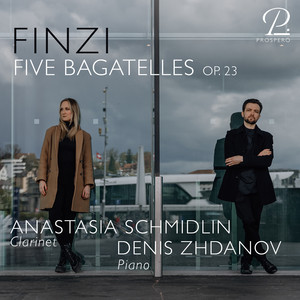 | 5 Bagatelles, Op. 23: No. 2, Romance | Gerald Finzi, Anastasia Schmidlin, Denis Zhdanov | B Major | 1 | 1B | 69 BPM | |
 | Swedish Tunes & Dances: No. 2, Allegro non troppo | Amanda Rontgen-Maier, Julius Röntgen, Gregory Maytan, Ann-Sofi Klingberg | F Major | 2 | 7B | 145 BPM |
- ISRC
- DEB200623401
- Label
- L-M Records/RCA Records