- BPM
- 140
- Key
- D♭ Major
- Camelot
- 3B
From Jewish Folk Poetry, Op. 79: III. Lullaby (Arr. for Cello and String Orchestra) by Dmitri Shostakovich, Sol Gabetta Song Details
"From Jewish Folk Poetry, Op. 79: III. Lullaby (Arr. for Cello and String Orchestra)" by Dmitri Shostakovich, Sol Gabetta had its release date on October 17, 2014. The duration of This song is about 3 minutes long, at 3:22. Based on our data, This song appears to be safe for all ages and is not considered explicit. This track is about the average length of a typical track. There are a total of 11 in the song's album "Prayer". In this album, this song's track order is #6. Furthermore, we believe that the track originated from Germany. Based on our statistics, From Jewish Folk Poetry, Op. 79: III. Lullaby (Arr. for Cello and String Orchestra)'s popularity is not that popular right now. In our opinion, the overall tone is not very danceable and projects negative sounds, such as being sad, depressed, or angry.
BPM and Tempo
With From Jewish Folk Poetry, Op. 79: III. Lullaby (Arr. for Cello and String Orchestra) by Dmitri Shostakovich, Sol Gabetta having a BPM of 140 with a half-time of 70 BPM and a double-time of 280 BPM, we would consider this track to have a Allegro (fast, quick, and bright) tempo marking. Because of this, we believe that the song has an overall fast tempo. Looking at the BPM of this song, this song might go great with jogging or cycling. The time signature for this track is 1/4.
Music Key
D♭ Major is the music key of this track. Or for those who are familiar with the camelot wheel, this song has a camelot key of 3B. So, the perfect camelot match for 3B would be either 3B or 4A. While, 4B can give you a low energy boost. For moderate energy boost, you would use 12B and a high energy boost can either be 5B or 10B. Though, if you want a low energy drop, you should looking for songs with either a camelot key of 3A or 2B will give you a low energy drop, 6B would be a moderate one, and 1B or 8B would be a high energy drop. Lastly, 12A allows you to change the mood.
Want to find the BPM and music key for other songs? Check out our BPM and Key Finder page!
- Popularity
- 19%
- Loudness
- -22.762 dB
- Acousticness
- 93%
- Danceability
- 14%
- Energy
- 8%
- Instrumentalness
- 80%
- Liveness
- 11%
- Loudness
- 62%
- Speechiness
- 5%
- Valence
- 3%
Recommendations
| Track | Artist | Key | Energy | Camelot | BPM | ||
|---|---|---|---|---|---|---|---|
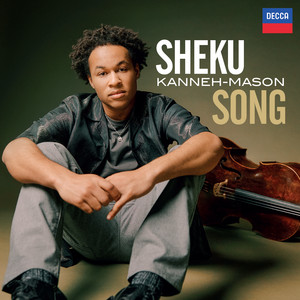 | Prelude III | Sheku Kanneh-Mason | C Major | 0 | 8B | 122 BPM | |
 | Cello Concerto: III. Radiant | Dobrinka Tabakova, Kristine Blaumane, Lithuanian Chamber Orchestra, Maxim Rysanov | D Major | 3 | 10B | 118 BPM | |
 | Élégie, Op. 24: Elegie, Op. 24 | Gabriel Fauré, Harriet Krijgh, Kamilla Isanbaeva | A♭ Major | 1 | 4B | 91 BPM | |
 | Grieg: Cello Sonata in A Minor, Op. 36: I. Allegro agitato | Edvard Grieg, Truls Mørk, Håvard Gimse | D♭ Major | 1 | 3B | 121 BPM | |
 | Concerto for 2 Cellos, Strings and Continuo in G Minor, RV 531: 2. Largo | Antonio Vivaldi, Harriet Krijgh, Kaori Yamagami, Amsterdam Sinfonietta, Candida Thompson | D Minor | 1 | 7A | 113 BPM | |
 | Violin Sonata in E Minor, P. 85: III. Allemanda. Allegro moderato (After J.S. Bach's BWV 1023) | Ottorino Respighi, Ilkka Talvi, Seattle Symphony Orchestra, Gerard Schwarz | E Minor | 0 | 9A | 77 BPM | |
 | Elegie | Jules Massenet, Christian-Pierre La Marca | E Minor | 0 | 9A | 73 BPM | |
 | Rachmaninov: Cello Sonata in G Minor, Op. 19: III. Andante | Sergei Rachmaninoff, Alexander Kniazev | A Minor | 0 | 8A | 91 BPM | |
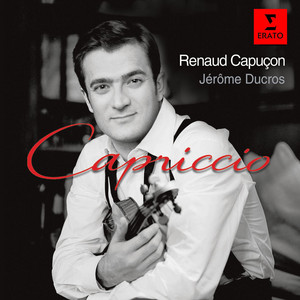 | Korngold: Incidental Music to "Much Ado About Nothing", Op. 11: Garden Scene | Erich Wolfgang Korngold, Renaud Capuçon, Jerome Ducros | C Major | 4 | 8B | 116 BPM | |
 | Cello Sonata, Op. 6: II. Adagio - Presto | Samuel Barber, Sheku Kanneh-Mason, Isata Kanneh-Mason | C Minor | 1 | 5A | 90 BPM | |
 | Le Carnaval des animaux, R. 125: No. 13, Le Cygne | Camille Saint-Saëns, Camille Thomas, Julien Libeer | G Major | 0 | 9B | 88 BPM | |
 | Mahler Adagietto Variation (From Symphony No. 5 in C-Sharp Minor, Arr. for Violin and Piano by Jan-Peter Klöpfel) | Gustav Mahler, Gabriele Bagnati, Esther Abrami | F Major | 2 | 7B | 82 BPM | |
 | Celos | Gidon Kremer | G Minor | 0 | 6A | 138 BPM | |
 | Canción y danza | Federico Mompou, Anja Lechner, François Couturier | E♭ Minor | 0 | 2A | 79 BPM | |
 | Elégie in C Minor, Op. 24 (Arr. Parkin) | Gabriel Fauré, Sheku Kanneh-Mason, Rowena Calvert, Ashok Klouda, Nicholas Trygstad, Caroline Dearnley, Desmond Neysmith, Josephine Knight, Hannah Roberts, Chris Murray, Robert Max | A♭ Major | 0 | 4B | 88 BPM | |
 | Vater Unser (Version for Cello and Piano) | Arvo Pärt, Camille Thomas, Julien Brocal | A Minor | 0 | 8A | 63 BPM | |
 | Mercy - Live | Max Richter, Hilary Hahn, Cory Smythe | B♭ Minor | 1 | 3A | 99 BPM | |
 | Concerto for Violoncello and Orchestra, RV 420: I. Andante | Antonio Vivaldi, Sol Gabetta, Andrés Gabetta | A Minor | 1 | 8A | 125 BPM | |
 | Trois Strophes sur le nom de Sacher: I. Un poco indeciso | Henri Dutilleux, Christian-Pierre La Marca | B♭ Major | 1 | 6B | 83 BPM | |
 | Cello Sonata in G Minor, Op. 19: III. Andante | Sergei Rachmaninoff, Anna Fedorova, Nordwestdeutsche Philharmonie, Laércio Diniz, Benedict Kloeckner | G Major | 1 | 9B | 79 BPM | |
 | The Secret Agent | Philip Glass, Cello Octet Conjunto Ibérico, Elias Arizcuren | C Minor | 1 | 5A | 112 BPM | |
 | 2 Pieces for Cello & Orchestra, Op. 20: No. 2, Sérénade espagnole | Alexander Glazunov, Daniel Müller-Schott, Deutsches Symphonie-Orchester Berlin, Aziz Shokhakimov | D Major | 2 | 10B | 133 BPM | |
 | Violin Concerto No. 2 in D Minor Op. 22: II. Romance. Andante ma non troppo | Henryk Wieniawski, Bomsori, Jacek Kaspszyk | B♭ Major | 1 | 6B | 96 BPM | |
 | Dido´s Lament | Henry Purcell, David Orlowsky, David Bergmüller | A♭ Minor | 1 | 1A | 79 BPM | |
 | Song V | Philip Glass, Wendy Sutter | B♭ Major | 1 | 6B | 111 BPM |
- ISRC
- DEE471400263
- Label
- L-M Records/RCA Records