- BPM
- 86
- Key
- D Minor
- Camelot
- 7A
Mathis Der Maler, 2nd Tableau, Scene 5: Was gibt's? - Eine Botschaft (Albrecht/Sylvester/Mathis) by Paul Hindemith, Rafael Kubelik, Bayerischer Rundfunk, Bavarian Radio Symphony Orchestra Song Details
Paul Hindemith, Rafael Kubelik, Bayerischer Rundfunk, Bavarian Radio Symphony Orchestra's 'Mathis Der Maler, 2nd Tableau, Scene 5: Was gibt's? - Eine Botschaft (Albrecht/Sylvester/Mathis)' had a release date set for April 1, 1995. The duration of This song is about 3 minutes long, at 3:11. Based on our data, This song appears to be safe for all ages and is not considered explicit. This track is about the average length of a typical track. The track order of this song in Paul Hindemith, Rafael Kubelik's "Hindemith: Mathis der Maler" album is number 18 out of 61. Mathis Der Maler, 2nd Tableau, Scene 5: Was gibt's? - Eine Botschaft (Albrecht/Sylvester/Mathis) is not that popular right now. Although the tone can be danceable to some, this track does projects more of a negative sound rather than a postive one.
BPM and Tempo
We consider the tempo marking of Mathis Der Maler, 2nd Tableau, Scene 5: Was gibt's? - Eine Botschaft (Albrecht/Sylvester/Mathis) by Paul Hindemith, Rafael Kubelik, Bayerischer Rundfunk, Bavarian Radio Symphony Orchestra to be Andante (at a walking pace) because the track has a tempo of 86 BPM, a half-time of 43BPM, and a double-time of 172 BPM. Based on that, the speed of the song's tempo is slow. Activities such as, yoga or pilates, can go well with this song. The time signature for this track is 4/4.
Music Key
This song has a musical key of D Minor. Because this track belongs in the D Minor key, the camelot key is 7A. So, the perfect camelot match for 7A would be either 7A or 6B. While, a low energy boost can consist of either 7B or 8A. For moderate energy boost, you would use 4A and a high energy boost can either be 9A or 2A. However, if you are looking for a low energy drop, finding a song with a camelot key of 6A would be a great choice. Where 10A would give you a moderate drop, and 5A or 12A would be a high energy drop. Lastly, 10B allows you to change the mood.
Want to find the BPM and music key for other songs? Check out our BPM and Key Finder page!
- Popularity
- 1%
- Loudness
- -14.6 dB
- Acousticness
- 95%
- Danceability
- 40%
- Energy
- 30%
- Instrumentalness
- 0%
- Liveness
- 40%
- Loudness
- 76%
- Speechiness
- 4%
- Valence
- 38%
Recommendations
| Track | Artist | Key | Energy | Camelot | BPM | ||
|---|---|---|---|---|---|---|---|
 | Cello Concerto in C Minor, Op. 43: I. Adagio | Mieczysław Weinberg, Kristina Reiko Cooper, Constantine Orbelian, Kaunas City Symphony Orchestra | G Major | 1 | 9B | 77 BPM | |
 | Marchenbilder (Fairy Tales), Op. 113: III. Rasch | Robert Schumann, Tabea Zimmermann, Hartmut Höll | F Major | 1 | 7B | 82 BPM | |
 | Martinu: Piano Quartet No. 1, H. 287: II. Adagio | Bohuslav Martinů, Domus | D Minor | 1 | 7A | 85 BPM | |
 | Le sacre du printemps / Pt. 1: L'Adoration de la terre: V. Jeux des cités rivales | Igor Stravinsky, Orchestre de Paris, Klaus Mäkelä | C Minor | 3 | 5A | 110 BPM | |
 | Symphony No. 1, Op. 9: III. Andante tranquillo | Samuel Barber, Leonard Slatkin, St. Louis Symphony | B♭ Major | 3 | 6B | 93 BPM | |
 | Viola Sonata, Op. 11, No. 5: I. Lebhaft, aber nicht geeilt | Paul Hindemith, Nobuko Imai | D♭ Major | 1 | 3B | 148 BPM | |
 | Les biches Suite, FP 36b: IV. Andantino | Francis Poulenc, RTÉ National Symphony Orchestra, Jean-Luc Tingaud | C Major | 0 | 8B | 105 BPM | |
 | Conus: Violin Concerto in E Minor: I. Allegro molto | Julius Conus, Itzhak Perlman, André Previn, Pittsburgh Symphony Orchestra | E Minor | 2 | 9A | 98 BPM | |
 | Danzas fantásticas, Op. 22: II. Ensueño | Joaquín Turina, Juanjo Mena, BBC Philharmonic | F Major | 1 | 7B | 128 BPM | |
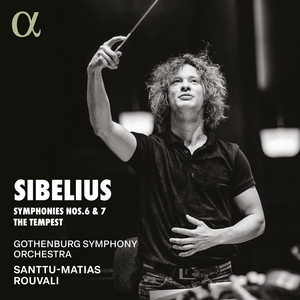 | Symphony No. 6 in D Major, Op. 104: IV. Allegro molto - Allegro assai - Doppio più lento | Jean Sibelius, Santtu-Matias Rouvali, Gothenburg Symphony Orchestra | G Major | 3 | 9B | 110 BPM | |
 | Simple Symphony, Op. 4: Sentimental Sarabande | Benjamin Britten, Royal Northern Sinfonia, Steuart Bedford | G Minor | 0 | 6A | 75 BPM | |
 | Adriana Lecouvreur, Act 2: Intermezzo | Francesco Cilea, Opera Australia Orchestra, Andrea Molino | F Major | 0 | 7B | 124 BPM | |
 | Schoenberg: Verklärte Nacht, Op. 4: V. Adagio, molto tranquilo | Arnold Schoenberg, Daniel Barenboim, Chicago Symphony Orchestra, Charles Pikler, John Sharp, Joseph Golan, Li-Kuo Chang, Ruben Gonzalez, Stephen Balderston | E Minor | 1 | 9A | 125 BPM | |
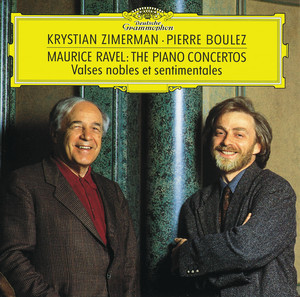 | Valses nobles et sentimentales, M.61: 7. Moins vif | Maurice Ravel, Cleveland Orchestra, Pierre Boulez | F♯ Minor | 1 | 11A | 168 BPM | |
 | Lied in F Minor | Sergei Rachmaninoff, Lynn Harrell, Vladimir Ashkenazy | F Minor | 0 | 4A | 131 BPM | |
 | Nielsen: Violin Sonata No. 2 in G Minor, Op. 35: II. Molto adagio | Carl Nielsen, Leif Ove Andsnes, Christian Tetzlaff | B♭ Minor | 0 | 3A | 80 BPM | |
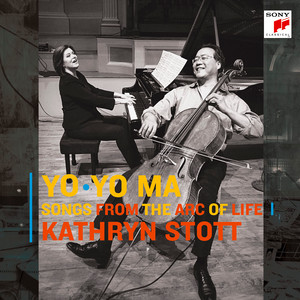 | Louange à l'Éternité de Jésus (From "Quartet for the End of Time") | Olivier Messiaen, Yo-Yo Ma, Kathryn Stott | E Major | 0 | 12B | 83 BPM | |
 | Copland: Symphony No. 3: III. Andantino quasi allegretto - | Aaron Copland, San Francisco Symphony, Michael Tilson Thomas | E Minor | 0 | 9A | 71 BPM | |
 | Poulenc: Clarinet Sonata, FP 184: II. Romanza | Francis Poulenc, Sabine Meyer | G Minor | 0 | 6A | 67 BPM | |
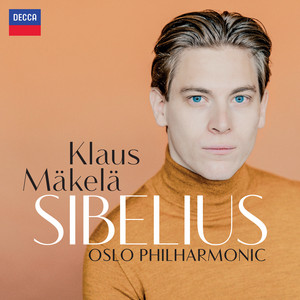 | Symphony No. 2 in D Major, Op. 43: III. Vivacissimo | Jean Sibelius, Oslo Philharmonic Orchestra, Klaus Mäkelä | F♯ Minor | 1 | 11A | 66 BPM | |
 | Poulenc: Sextet for Piano and Winds, FP 100: I. Allegro vivace | Francis Poulenc, Les Vents Français | E Minor | 1 | 9A | 76 BPM | |
| Viola Sonata, Op. 31, No. 4: II. Lied. Ruhig, mit wenig Ausdruck. Langsame Viertel | Paul Hindemith, Nobuko Imai | G Major | 1 | 9B | 87 BPM | |
 | Lyric Movement, H. 191 | Gustav Holst, Andriy Viytovych, English Sinfonia, Howard Griffiths | C Minor | 1 | 5A | 88 BPM | |
 | Abendstern, D. 806 (Arr. X. van Dijk for String Quartet) | Franz Schubert, Signum Quartet | G Minor | 0 | 6A | 85 BPM | |
 | Masques et bergamasques Suite, Op. 112: III. Gavotte. Allegro vivo | Gabriel Fauré, Seattle Symphony Orchestra, Ludovic Morlot | F♯ Minor | 0 | 11A | 80 BPM |
- ISRC
- This song does not have an ISRC.
- Label
- L-M Records/RCA Records