- BPM
- 84
- Key
- A♭ Major
- Camelot
- 4B
La mia canzone! - Version for Voice and Orchestra, Full Vocal Version by Francesco Paolo Tosti, Compagnia D'Opera Italiana, Antonello Gotta, Stefano Secco Song Details
Francesco Paolo Tosti, Compagnia D'Opera Italiana, Antonello Gotta, Stefano Secco's 'La mia canzone! - Version for Voice and Orchestra, Full Vocal Version' had a release date set for 2003. The duration of This song is about two minutes long, specifically at 2:43. This song does not appear to have any foul language. La mia canzone! - Version for Voice and Orchestra, Full Vocal Version's duration is considered a little bit shorter than the average duration of a typical track. The song is number 7 out of 22 in Cantolopera: Tosti's Famous Romances, Vol. 2 by Francesco Paolo Tosti, Stefano Secco, Antonello Gotta, Compagnia D'Opera Italiana. Going off of the ISRC code of this track, we detected that the origin of this track is from Italy. La mia canzone! - Version for Voice and Orchestra, Full Vocal Version is not that popular right now. In our opinion, the overall tone is not very danceable and projects negative sounds, such as being sad, depressed, or angry.
BPM and Tempo
The tempo marking of La mia canzone! - Version for Voice and Orchestra, Full Vocal Version by Francesco Paolo Tosti, Compagnia D'Opera Italiana, Antonello Gotta, Stefano Secco is Andante (at a walking pace), since this song has a tempo of 84 BPM. With that information, we can conclude that the song has a slow tempo. The time signature for this track is 4/4.
Music Key
A♭ Major is the music key of this track. This also means that this song has a camelot key of 4B. So, the perfect camelot match for 4B would be either 4B or 5A. While, 5B can give you a low energy boost. For moderate energy boost, you would use 1B and a high energy boost can either be 6B or 11B. Though, if you want a low energy drop, you should looking for songs with either a camelot key of 4A or 3B will give you a low energy drop, 7B would be a moderate one, and 2B or 9B would be a high energy drop. Lastly, 1A allows you to change the mood.
Want to find the BPM and music key for other songs? Check out our BPM and Key Finder page!
- Popularity
- 3%
- Loudness
- -13.662 dB
- Acousticness
- 96%
- Danceability
- 24%
- Energy
- 27%
- Instrumentalness
- 0%
- Liveness
- 9%
- Loudness
- 77%
- Speechiness
- 4%
- Valence
- 27%
Recommendations
| Track | Artist | Key | Energy | Camelot | BPM | ||
|---|---|---|---|---|---|---|---|
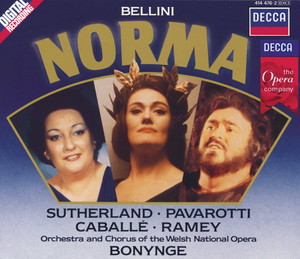 | Norma / Act 1: Casta Diva | Vincenzo Bellini, Dame Joan Sutherland, Samuel Ramey, Welsh National Opera Chorus, Welsh National Opera Orchestra, Richard Bonynge | F Major | 1 | 7B | 67 BPM | |
 | La Chulapona: "Ese Pañuelito Blanco" | Teresa Berganza, Pilar Lorengar, Carlos Fagoaga, Joaquin Portillo, Julio Uribe, Selicia Pérez, Mari Carmen Ramirez, Antonio Ayestaran, Charo Ornazabal | D♭ Major | 4 | 3B | 82 BPM | |
 | Amapola | Alfredo Kraus | A♭ Major | 1 | 4B | 164 BPM | |
 | La traviata / Act 3: "Parigi, o cara, noi lasceremo" | Giuseppe Verdi, Anna Netrebko, Rolando Villazón, Wiener Philharmoniker, Carlo Rizzi | A♭ Major | 1 | 4B | 164 BPM | |
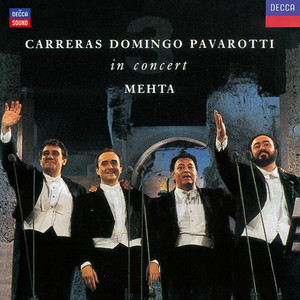 | Medley: Cats - Ochi tchorniye - Caminito - La vie en rose | Andrew Lloyd Webber, Traditional, Louiguy, Juan De Dios Filiberto, José Carreras, Plácido Domingo, Luciano Pavarotti, Zubin Mehta, Orchestra Del Teatro Dell'Opera Di Roma, Orchestra del Maggio Musicale Fiorentino | D Minor | 3 | 7A | 91 BPM | |
 | Brown / Arr Schifrin: A Tribute to Hollywood Part 4: Singin' in the Rain - Singin' In The Rain | The Three Tenors, Zubin Mehta, Los Angeles Philharmonic | B♭ Major | 6 | 6B | 140 BPM | |
 | Tosca, S. 69, Tosca, Act I: Tre sbirri, una carrozza, "Te Deum" | Giacomo Puccini, Dmitri Hvorostovsky, Russia Spiritual Revival Choir, Philharmonia of Russia, Constantine Orbelian | C Minor | 5 | 5A | 73 BPM | |
 | La Damnation de Faust, Part III, Scène 1: "Merci, doux crépuscule!" | Hector Berlioz, Jonas Kaufmann, Bavarian State Orchestra, Bertrand de Billy | F Major | 0 | 7B | 82 BPM | |
 | Gianni Schicchi: "O mio babbino caro" | Giacomo Puccini, Mirella Freni, Orchestra del Maggio Musicale Fiorentino, Bruno Bartoletti | A♭ Major | 1 | 4B | 171 BPM | |
 | Cavalleria rusticana: Voi lo sapete | Pietro Mascagni, Agnes Baltsa, Munich Radio Orchestra, Heinz Wallberg | F Major | 3 | 7B | 172 BPM | |
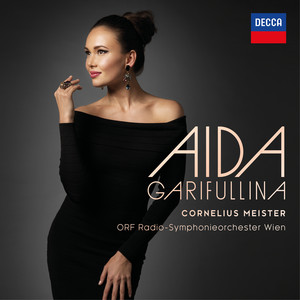 | Lakmé / Act 2: "Où va la jeune Indoue" (Bell song) | Léo Delibes, Aida Garifullina, Vienna Radio Symphony Orchestra, Cornelius Meister | D Minor | 1 | 7A | 168 BPM | |
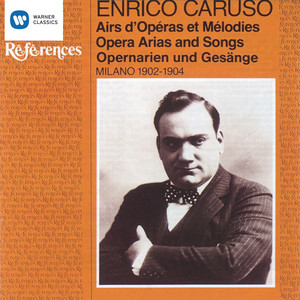 | La mia canzone - 1903 Remastered Version | Francesco Paolo Tosti, Enrico Caruso, Salvatore Cottone | A♭ Major | 2 | 4B | 66 BPM | |
 | Tosca: Act III: O dolci mani mansuete e pure (Cavaradossi) | Giacomo Puccini, Nelly Miricioiu, Giorgio Lamberti, Silvano Carroli, Andrea Piccinni, Miroslav Dvorský, Jan Durco, Stanislav Beňačka, Jozef Spacek, Slovak Philharmonic Chorus, Slovak Radio Symphony Orchestra, Raimo Sirkia, Slovak Chamber Choir, Alexander Rahbari, Markus Lehtinen | F Major | 0 | 7B | 86 BPM | |
 | Mozart: Le nozze di Figaro, K. 492, Act 2: "Voi, che sapete che cosa è amor" (Cherubino) | Wolfgang Amadeus Mozart, Daniel Barenboim, Cecilia Bartoli, Berliner Philharmoniker | B♭ Major | 2 | 6B | 110 BPM | |
 | Werther / Act 3: "Pourquoi me réveiller, ô souffle du printemps?" | Jules Massenet, Luciano Pavarotti, National Philharmonic Orchestra, Oliviero de Fabritiis | F♯ Minor | 2 | 11A | 80 BPM | |
 | Andrea Chénier / Act 3: Nemico della Patria? | Umberto Giordano, Leo Nucci, Piero de Palma, National Philharmonic Orchestra, Riccardo Chailly | E Minor | 2 | 9A | 72 BPM | |
 | Adriana Lecouvreur / Act 1: "Ecco: respiro appena ... Io son l'umile ancella" | Francesco Cilea, Anna Netrebko, Orchestra dell'Accademia Nazionale di Santa Cecilia, Antonio Pappano | A♭ Major | 1 | 4B | 82 BPM | |
 | L'elisir d'Amor: Una furtiva lagrima | Carlo Bergonzi | F Minor | 3 | 4A | 63 BPM | |
 | Ideale | Francesco Paolo Tosti, Carmelo Errico, Franco Vassallo, Giulio Zappa | A♭ Major | 2 | 4B | 69 BPM | |
 | Sei ariette da camera: No. 1, Malinconia, ninfa gentile | Vincenzo Bellini, Juan Diego Flórez, Vincenzo Scalera | A♭ Major | 1 | 4B | 164 BPM | |
 | Brodszky / Arr Schifrin: Around the World Part 6: Be My Love | Nicholas Brodszky, The Three Tenors, Zubin Mehta, Los Angeles Philharmonic | D Minor | 3 | 7A | 84 BPM | |
 | Gloria del' Egitto (from Aida) | Singverein der Gesellschaft der Musikfreunde, Herbert von Karajan, Vienna Philharmonic Orchestra | G Major | 3 | 9B | 66 BPM | |
 | Don Giovanni, K. 527, Act I: No. 4, Madamina "Catalogue Aria" | Wolfgang Amadeus Mozart, Bryn Terfel, Chamber Orchestra of Europe, Claudio Abbado | A♭ Major | 1 | 4B | 164 BPM | |
 | Ti voglio tanto bene | Ernesto de Curtis, Jonas Kaufmann, Jochen Rieder | D♭ Major | 1 | 3B | 116 BPM | |
 | Torna a Surriento | Ernesto de Curtis, Juan Diego Flórez, Filarmonica Gioachino Rossini, Carlo Tenan | E Major | 2 | 12B | 91 BPM |
- ISRC
- ITT261205235
- Label
- L-M Records/RCA Records