- BPM
- 155
- Key
- F Major
- Camelot
- 7B
String Quartet No. 11 in F Minor, Op. 122: II. Scherzo: Allegretto - Live by Dmitri Shostakovich, Emerson String Quartet Song Details
Dmitri Shostakovich, Emerson String Quartet's 'String Quartet No. 11 in F Minor, Op. 122: II. Scherzo: Allegretto - Live' had a release date set for January 1, 2000. The duration of This song is about two minutes long, specifically at 2:41. This song does not appear to have any foul language. String Quartet No. 11 in F Minor, Op. 122: II. Scherzo: Allegretto - Live's duration is considered a little bit shorter than the average duration of a typical track. There are a total of 62 in the song's album "Shostakovich: The String Quartets". In this album, this song's track order is #4. Furthermore, we believe that the track originated from Germany. Based on our statistics, String Quartet No. 11 in F Minor, Op. 122: II. Scherzo: Allegretto - Live's popularity is not that popular right now. Although the tone can be danceable to some, this track does projects more of a negative sound rather than a postive one.
BPM and Tempo
With String Quartet No. 11 in F Minor, Op. 122: II. Scherzo: Allegretto - Live by Dmitri Shostakovich, Emerson String Quartet having a BPM of 155 with a half-time of 78 BPM and a double-time of 310 BPM, we would consider this track to have a Allegro (fast, quick, and bright) tempo marking. Because of this, we believe that the song has an overall fast tempo. Looking at the BPM of this song, this song might go great with running. The time signature for this track is 4/4.
Music Key
F Major is the music key of this track. Or for those who are familiar with the camelot wheel, this song has a camelot key of 7B. So, the perfect camelot match for 7B would be either 7B or 8A. While, 8B can give you a low energy boost. For moderate energy boost, you would use 4B and a high energy boost can either be 9B or 2B. Though, if you want a low energy drop, you should looking for songs with either a camelot key of 7A or 6B will give you a low energy drop, 10B would be a moderate one, and 5B or 12B would be a high energy drop. Lastly, 4A allows you to change the mood.
Want to find the BPM and music key for other songs? Check out our BPM and Key Finder page!
- Popularity
- 9%
- Loudness
- -33.765 dB
- Acousticness
- 95%
- Danceability
- 44%
- Energy
- 7%
- Instrumentalness
- 39%
- Liveness
- 9%
- Loudness
- 44%
- Speechiness
- 7%
- Valence
- 27%
Recommendations
| Track | Artist | Key | Energy | Camelot | BPM | ||
|---|---|---|---|---|---|---|---|
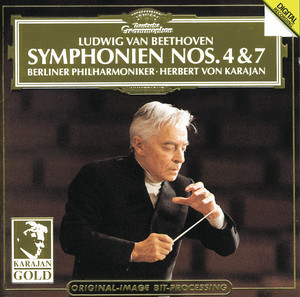 | Symphony No. 7 in A Major, Op. 92: II. Allegretto | Ludwig van Beethoven, Berliner Philharmoniker, Herbert von Karajan | E Minor | 0 | 9A | 77 BPM | |
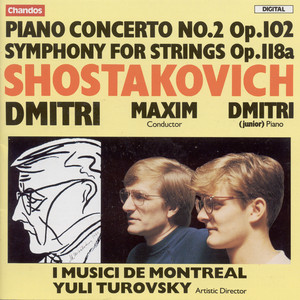 | Piano Concerto No. 2 in F Major, Op. 102: II. Andante | Dmitri Shostakovich, I Musici de Montréal, Maxim Shostakovich | C Minor | 0 | 5A | 177 BPM | |
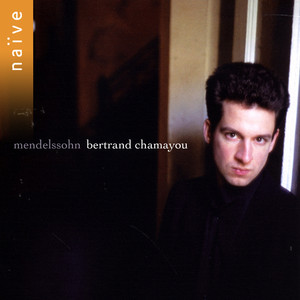 | Songs Without Words, Book VI Opus 67: No. 2 in F-Sharp Minor | Felix Mendelssohn, Bertrand Chamayou | F♯ Minor | 1 | 11A | 69 BPM | |
 | Concerto for 2 Pianos and Orchestra in D minor, FP 61: 1. Allegro ma non troppo | Francis Poulenc, Lucas Jussen, Arthur Jussen, Concertgebouworkest, Stéphane Denève | E♭ Major | 1 | 5B | 99 BPM | |
 | Violin Concerto No. 2 in B Minor, Op. 7, "La campanella": III. Rondo | Niccolò Paganini, Netherlands Symphony Orchestra, Rudolf Koelman, Jan Willem de Vriend | B Minor | 2 | 10A | 105 BPM | |
 | Brook Green Suite: II. Air | Gustav Holst, English Sinfonia, Howard Griffiths | E♭ Major | 0 | 5B | 128 BPM | |
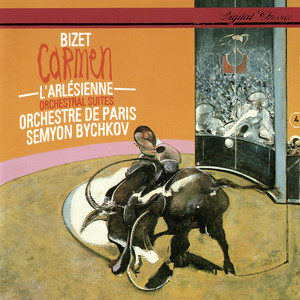 | Carmen Suite No. 1: 5. Les toréadors | Georges Bizet, Orchestre de Paris, Semyon Bychkov | F Major | 4 | 7B | 127 BPM | |
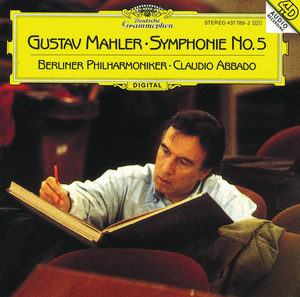 | Symphony No. 5: IV. Adagietto. Sehr langsam | Gustav Mahler, Berliner Philharmoniker, Claudio Abbado | F Major | 0 | 7B | 91 BPM | |
 | The Danube Waves: Donauwellen, Walzer | Ion Ivanovici, Budapest Strauss Ensemble, Istvan Bogar | C Major | 2 | 8B | 95 BPM | |
 | Mendelssohn: String Quartet No. 6 in F Minor, Op. 80, MWV R37: II. Allegro assai | Felix Mendelssohn, Quatuor Ébène | F Minor | 3 | 4A | 139 BPM | |
 | Violin Concerto in E Minor, Op. 64, MWV O14: I. Allegro molto appassionato | Felix Mendelssohn, Hilary Hahn, Hugh Wolff, Oslo Philharmonic Orchestra, Oslo-Filharmonien | A Minor | 2 | 8A | 63 BPM | |
 | A Little Birch Tree | Evgeny Dreizin, Nikolai Nazarov, Separate Exemplary Orchestra of USSR Defense Ministry | E♭ Minor | 2 | 2A | 65 BPM | |
 | Le Festin D'Esope Op. 39 No. 12 | Charles-Valentin Alkan, Igor Roma | E Minor | 2 | 9A | 138 BPM | |
 | Mahler: Symphony No. 5 in C-Sharp Minor: IV. Adagietto. Sehr langsam | Gustav Mahler, Daniel Barenboim, Chicago Symphony Orchestra | F Major | 1 | 7B | 82 BPM | |
 | Jazz Suite No. 1: I. Waltz | Dmitri Shostakovich, Royal Concertgebouw Orchestra, Riccardo Chailly | C Minor | 0 | 5A | 171 BPM | |
 | Voices of Spring, Op. 410 | Johann Strauss II, Leonard Bernstein | B♭ Major | 2 | 6B | 110 BPM | |
 | String Quartet No.2 in D Major | Alexander Borodin, Borodin Quartet | D Major | 1 | 10B | 174 BPM | |
 | Poulenc: Concerto for Two Pianos in D Minor, FP 61: I. Allegro ma non troppo | Francis Poulenc, James Conlon, Rotterdam Philharmonic Orchestra | E♭ Major | 1 | 5B | 103 BPM | |
 | Piazzolla: Oblivion | Julian Lloyd Webber, John Lenehan | D Minor | 0 | 7A | 81 BPM | |
 | VIII. Romance | Dmitri Shostakovich, Ukraine National Symphony Orchestra, Theodore Kuchar | D♭ Major | 0 | 3B | 138 BPM | |
 | Nocturne No. 2 in E-Flat Major, Op. 9 No. 2 | Frédéric Chopin, Daniel Barenboim | E♭ Major | 0 | 5B | 79 BPM | |
 | Pelléas et Mélisande Suite, Op. 80: III. Sicilienne. Allegretto molto moderato | Gabriel Fauré, Berliner Philharmoniker, Daniel Barenboim | E♭ Major | 0 | 5B | 56 BPM | |
 | Symphony No. 13 in B-Flat Minor for Bass, Chorus & Orchestra, Op. 113 "Babi Yar": II. Humour. Allegretto | Dmitri Shostakovich, WDR Sinfoniechor Köln, Rudolf Barshai, Sergei Aleksashkin, The Choral Academy Moscow | C Major | 5 | 8B | 116 BPM | |
 | Carmen Fantasy, Op. 25: III. Allegro moderato | Pablo de Sarasate, Hilary Hahn, Frankfurt Radio Symphony Orchestra, Andrés Orozco-Estrada | G Minor | 3 | 6A | 139 BPM | |
 | Mozart: Requiem in D Minor, K. 626: VIII. Lacrimosa | Wolfgang Amadeus Mozart, Pierre Génisson, Bruno Fontaine | D Minor | 0 | 7A | 121 BPM |
- ISRC
- DEF059405212
- Label
- L-M Records/RCA Records