- BPM
- 84
- Key
- F Major
- Camelot
- 7B
Sinfonia Concertante for 2 Cellos in E Major: II. Largo by Antoine Reicha, Reinhard Goebel, Deutsche Radio Philharmonie Saarbrücken und Kaiserslautern, Stephan Koncz, Bruno Delepelaire Song Details
"Sinfonia Concertante for 2 Cellos in E Major: II. Largo" by Antoine Reicha, Reinhard Goebel, Deutsche Radio Philharmonie Saarbrücken und Kaiserslautern, Stephan Koncz, Bruno Delepelaire had its release date on February 21, 2020. Since This song is still less than 10 minute long, it is still considered a pretty long duration song compared to the average song length. This song does not appear to be explicit due to the lack of the "E" tag. Since Sinfonia Concertante for 2 Cellos in E Major/II. Largo only contains only one song in the album, we like to consider this song as a single. Furthermore, we believe that the track originated from Germany. Sinfonia Concertante for 2 Cellos in E Major: II. Largo is not that popular right now. In our opinion, the overall tone is not very danceable and projects negative sounds, such as being sad, depressed, or angry.
BPM and Tempo
With Sinfonia Concertante for 2 Cellos in E Major: II. Largo by Antoine Reicha, Reinhard Goebel, Deutsche Radio Philharmonie Saarbrücken und Kaiserslautern, Stephan Koncz, Bruno Delepelaire having a BPM of 84 with a half-time of 42 BPM and a double-time of 168 BPM, we would consider this track to have a Andante (at a walking pace) tempo marking. Because of this, we believe that the song has an overall slow tempo. The time signature for this track is 4/4.
Music Key
F Major is the music key of this track. Or for those who are familiar with the camelot wheel, this song has a camelot key of 7B. So, the perfect camelot match for 7B would be either 7B or 8A. While, 8B can give you a low energy boost. For moderate energy boost, you would use 4B and a high energy boost can either be 9B or 2B. Though, if you want a low energy drop, you should looking for songs with either a camelot key of 7A or 6B will give you a low energy drop, 10B would be a moderate one, and 5B or 12B would be a high energy drop. Lastly, 4A allows you to change the mood.
Want to find the BPM and music key for other songs? Check out our BPM and Key Finder page!
- Popularity
- 14%
- Loudness
- -28.631 dB
- Acousticness
- 97%
- Danceability
- 13%
- Energy
- 3%
- Instrumentalness
- 91%
- Liveness
- 11%
- Loudness
- 52%
- Speechiness
- 4%
- Valence
- 15%
Recommendations
| Track | Artist | Key | Energy | Camelot | BPM | ||
|---|---|---|---|---|---|---|---|
 | Octet No. 1 in B-Flat Major: II. Andantino | Carl Stamitz, Consortium Classicum | N/A | N/A | N/A | 0 BPM | |
 | The Birds, P. 154: V. The Cuckoo | Ottorino Respighi, Louis Lane, Atlanta Symphony Orchestra | D Major | 1 | 10B | 91 BPM | |
 | Overture in D Major, Op. 8, No. 4: II. Un poco andante | Samuel Arnold, Toronto Chamber Orchestra, Kevin Mallon | G Major | 0 | 9B | 165 BPM | |
 | Le Tombeau des seventies: II. Néo-Menuet 1770 | Guillaume Connesson, Stradivaria, Guillaume Cuiller | A Minor | 2 | 8A | 73 BPM | |
 | Von Einem: String Quartet No. 1, Op. 45: II. Adagio molto | Alban Berg Quartett | A Minor | 2 | 8A | 73 BPM | |
 | Flute Trios, Op. 71, P. 263: No. 2 in E Minor: IV. All'ungarese. Allegretto moderato | Franz Danzi, Anna Kaiser, Lorenzo Gabriele, Johannes Berger | A Minor | 2 | 8A | 73 BPM | |
 | Wind Quintet in E Minor, Op. 88 No. 1: No. 1, Introduction. Andante - Allegro, ma non troppo | Antoine Reicha, Belfiato Quintet | G Major | 1 | 9B | 92 BPM | |
 | Piano Concerto in D Major, Wq. 11: II. Adagio non molto | Carl Philipp Emanuel Bach, Michael Rische, Berliner Barock Solisten | A Minor | 2 | 8A | 73 BPM | |
 | String Quartet in E Minor, Op. 44, No. 2: III. Andante | Felix Mendelssohn, Cecilia String Quartet | B Minor | 0 | 10A | 89 BPM | |
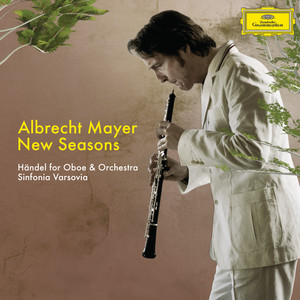 | Concerto for Oboe d'amore, Strings and B.c. "Verdi prati": Allegro ("Dopo notte" from Opera 'Ariodante', HWV 32) | George Frideric Handel, Albrecht Mayer, Sinfonia Varsovia, Jakub Haufa, Monika Razynska | B♭ Minor | 2 | 3A | 131 BPM | |
 | Symphony No. 49 in F Major, Op. 10, No. 4: I. Allegro spiritoso | Christian Cannabich, Nicolaus Esterhazy Sinfonia, Uwe Grodd | F Major | 2 | 7B | 82 BPM | |
 | Oboe Concerto No. 1 in D Minor: I. Allegro | Ludwig August Lebrun, Bart Schneemann, Radio Chamber Orchestra, Jan Willem de Vriend | D Minor | 1 | 7A | 134 BPM | |
 | String Quartet No. 1 in D Minor: I. Allegro | Juan Crisóstomo Arriaga, Cuarteto Casals | D Major | 0 | 10B | 121 BPM | |
 | Andante sostenuto | Gaetano Donizetti, Eva Oertle, Vesselin Stanev | A Minor | 1 | 8A | 176 BPM | |
 | Symphony No. 6 in D Major, Hob. I:6 "Le matin": II. Adagio | Joseph Haydn, The English Concert, Trevor Pinnock | B Minor | 0 | 10A | 89 BPM | |
 | Der Fischer und das Milchmädchen: X. Allemande | Giacomo Meyerbeer, Czech Philharmonic Chamber Orchestra, Dario Salvi | A Major | 1 | 11B | 91 BPM | |
 | Bassoon Concerto No. 1 in F Major: II. — | Franz Danzi, Albrecht Holder, New Brandenburg Philharmonic Orchestra, Nicolás Pasquet | B♭ Major | 0 | 6B | 141 BPM | |
 | Concerto for 2 Horns in F Major, RV 539: III. Allegro | Antonio Vivaldi, Tim Caister, Stephen Stirling, City of London Sinfonia, Nicholas Kraemer | G Major | 2 | 9B | 178 BPM | |
 | Die Schöpfung Hob. XXI:2 / Erster Teil: 2. Arie mit Chor: Nun schwanden vor dem heiligen Strahle | Joseph Haydn, Gösta Winbergh, Berliner Philharmoniker, James Levine, Stockholm Radio Chorus, Stockholm Chamber Choir, Gustav Sjökvist | A Major | 1 | 11B | 84 BPM | |
 | Quintet in E, Op. 106: 1. Allegro ma non troppo | Antoine Reicha, Hermann Baumann, Christian Ockert, Gewandhaus Quartet | B Major | 1 | 1B | 134 BPM | |
 | Orchestral Trio in C Minor, Op. 4, No. 3: IV. Prestissimo | Johann Stamitz, New Zealand Chamber Orchestra, Donald Armstrong | C Minor | 2 | 5A | 150 BPM | |
 | Trumpet Concerto in D Major, FWV L:D1: III. Allegro | Johann Friedrich Fasch, Niklas Eklund, Drottningholm Baroque Ensemble, Nils-Erik Sparf | B♭ Major | 1 | 6B | 59 BPM | |
 | Orphée et Eurydice, Act 4: J'ai perdu mon Eurydice - Arr. for French Horn | Christoph Willibald Gluck, Felix Klieser, CHAARTS Chamber Artists | A♭ Major | 1 | 4B | 139 BPM | |
| Piano Concerto in C Minor, Wq. 43/4: IV. Allegro assai | Carl Philipp Emanuel Bach, Michael Rische, Berliner Barock Solisten | A Minor | 2 | 8A | 73 BPM | |
 | Clarinet Concerto No. 1 in C Minor, Op. 26: I. Adagio - Allegro | Louis Spohr, Karl Leister, Radio Sinfonieorchester Stuttgart des SWR, Rafael Frühbeck de Burgos | C Minor | 1 | 5A | 62 BPM |
- ISRC
- DEE861903031
- Label
- L-M Records/RCA Records