- BPM
- 84
- Key
- D Major
- Camelot
- 10B
Tchaikovsky: Variations on a Rococo Theme for Cello and Orchestra, Op. 33: Variation III. Andande sostenuto by Pyotr Ilyich Tchaikovsky, John Eliot Gardiner, Steven Isserlis, Chamber Orchestra of Europe Song Details
"Tchaikovsky: Variations on a Rococo Theme for Cello and Orchestra, Op. 33: Variation III. Andande sostenuto" by Pyotr Ilyich Tchaikovsky, John Eliot Gardiner, Steven Isserlis, Chamber Orchestra of Europe had its release date on September 15, 1998. The duration of This song is about two minutes long, specifically at 2:31. This song does not appear to have any foul language. Tchaikovsky: Variations on a Rococo Theme for Cello and Orchestra, Op. 33: Variation III. Andande sostenuto's duration is considered a little bit shorter than the average duration of a typical track. The song is number 5 out of 34 in Cello Concertos by Steven Isserlis. Going off of the ISRC code of this track, we detected that the origin of this track is from United Kingdom. Tchaikovsky: Variations on a Rococo Theme for Cello and Orchestra, Op. 33: Variation III. Andande sostenuto is not that popular right now. In our opinion, the overall tone is not very danceable and projects negative sounds, such as being sad, depressed, or angry.
BPM and Tempo
The tempo marking of Tchaikovsky: Variations on a Rococo Theme for Cello and Orchestra, Op. 33: Variation III. Andande sostenuto by Pyotr Ilyich Tchaikovsky, John Eliot Gardiner, Steven Isserlis, Chamber Orchestra of Europe is Andante (at a walking pace), since this song has a tempo of 84 BPM. With that information, we can conclude that the song has a slow tempo. The time signature for this track is 4/4.
Music Key
This song has a musical key of D Major. This also means that this song has a camelot key of 10B. So, the perfect camelot match for 10B would be either 10B or 11A. While, 11B can give you a low energy boost. For moderate energy boost, you would use 7B and a high energy boost can either be 12B or 5B. Though, if you want a low energy drop, you should looking for songs with either a camelot key of 10A or 9B will give you a low energy drop, 1B would be a moderate one, and 8B or 3B would be a high energy drop. Lastly, 7A allows you to change the mood.
Want to find the BPM and music key for other songs? Check out our BPM and Key Finder page!
- Popularity
- 1%
- Loudness
- -34.007 dB
- Acousticness
- 97%
- Danceability
- 8%
- Energy
- 1%
- Instrumentalness
- 9%
- Liveness
- 14%
- Loudness
- 43%
- Speechiness
- 4%
- Valence
- 4%
Recommendations
| Track | Artist | Key | Energy | Camelot | BPM | ||
|---|---|---|---|---|---|---|---|
 | The Four Seasons: Concerto No. 2 in G Minor, RV 315 "L'estate" (summer): III. Presto | Antonio Vivaldi, Adrian Chandler, La Serenissima | G Major | 5 | 9B | 157 BPM | |
 | The Planets, Op. 32: VI. Uranus, the Magician | Gustav Holst, Berliner Philharmoniker, Herbert von Karajan | C Major | 3 | 8B | 110 BPM | |
 | Lyric Pieces, Book I, Op. 12: No. 1, Arietta | Edvard Grieg, Javier Perianes | G Minor | 0 | 6A | 65 BPM | |
 | Waltz No.2 | Cihat Aşkın | G Major | 8 | 9B | 85 BPM | |
 | Symphony No. 40 in G Minor, K. 550: I. Allegro molto | Wolfgang Amadeus Mozart, Capella Istropolitana, Barry Wordsworth | D Minor | 2 | 7A | 122 BPM | |
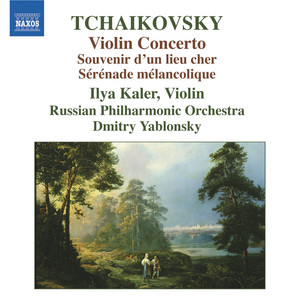 | Sérénade mélancolique, Op. 26, TH 56: Serenade melancolique (Melancholy Serenade), Op. 26 | Pyotr Ilyich Tchaikovsky, Ilya Kaler, Russian Philharmonic Orchestra, Dmitry Yablonsky | B♭ Minor | 1 | 3A | 88 BPM | |
 | 6 Impromptus, Op. 5: Impromptu V | Jean Sibelius, Leif Ove Andsnes | B Minor | 0 | 10A | 72 BPM | |
 | Egmont Overture, Op. 84 - 2018 Remastered Version | Ludwig van Beethoven, George Szell, The Cleveland Orchestra | A♭ Major | 1 | 4B | 83 BPM | |
 | Consolations, S. 172: No. 3 in D-Flat Major. Lento placido | Franz Liszt, Jean-Yves Thibaudet | D♭ Major | 0 | 3B | 134 BPM | |
 | Mendelssohn: String Quartet No. 6 in F Minor, Op. 80, MWV R37: II. Allegro assai | Felix Mendelssohn, Quatuor Ébène | F Minor | 3 | 4A | 139 BPM | |
 | Salut d'amour, Op. 12 | Edward Elgar, Sueye Park, Love Derwinger | E Major | 1 | 12B | 83 BPM | |
 | Emeralds - Faure: Incidental music to Pelleas et Melisande, Op. 80 and Shylock, Op. 57; Pelleas et Melisande - Sicilienne: Allegretto molto moderato | Gabriel Fauré, NEW YORK CITY BALLET ORCHESTRA/ROBERT IRVING, CONDUCTOR | E♭ Major | 0 | 5B | 88 BPM | |
 | Violin Concerto No. 2 in B Minor, Op. 7, "La campanella": III. Rondo | Niccolò Paganini, Netherlands Symphony Orchestra, Rudolf Koelman, Jan Willem de Vriend | B Minor | 2 | 10A | 105 BPM | |
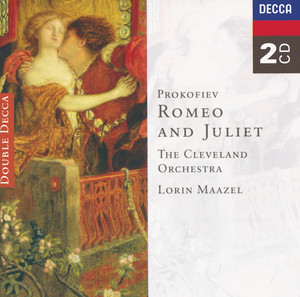 | Romeo and Juliet, Op. 64 - Act 1: Romeo | Sergei Prokofiev, Cleveland Orchestra, Lorin Maazel | C Major | 0 | 8B | 132 BPM | |
| Romeo and Juliet, Op. 64: Introduction | Sergei Prokofiev, The Cleveland Orchestra, Lorin Maazel | E Major | 1 | 12B | 112 BPM | |
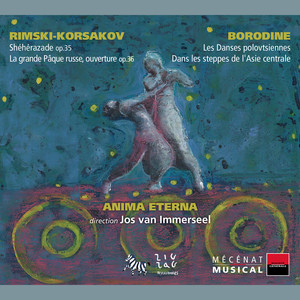 | Les danses polovtsiennes (Extraits de l'opéra Le Prince Igor): II. Danse des hommes | Alexander Borodin, Anima Eterna, Jos Van Immerseel | A Major | 0 | 11B | 87 BPM | |
 | Dance Of The Cygnets | Westminster Concert Orchestra | D Major | 3 | 10B | 72 BPM | |
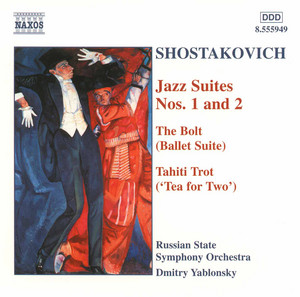 | Jazz Suite No. 1: I. Waltz | Dmitri Shostakovich, Russian State Symphony Orchestra, Dmitry Yablonsky | E♭ Major | 1 | 5B | 173 BPM | |
 | Orpheus in the Underworld: Cancan | Jacques Offenbach, Semyon Bychkov, Wiener Philharmoniker | D Major | 6 | 10B | 152 BPM | |
 | Rachmaninov: 10 Preludes, Op. 23: No. 5 in G Minor | Sergei Rachmaninoff, Nikolai Lugansky | G Minor | 1 | 6A | 113 BPM | |
 | Pavane, Op. 50 | Gabriel Fauré, Sinfonieorchester Basel, Ivor Bolton | F♯ Minor | 0 | 11A | 66 BPM | |
 | Symphony No. 10 in E Minor, Op. 93: II. Allegro | Dmitri Shostakovich, Royal Liverpool Philharmonic Orchestra, Vasily Petrenko | B♭ Minor | 6 | 3A | 89 BPM | |
 | Le Corsaire: Act II - "5. Grand Pas: Variation: Medora" | Evergreen Symphony Orchestra, Kevin Galiè, Anna-Marie Holmes | F Major | 0 | 7B | 77 BPM | |
 | Giselle, Act I: Variation de Giselle | Adolphe Adam, Academy of St. Martin in the Fields, Sir Neville Marriner | E Major | 0 | 12B | 78 BPM | |
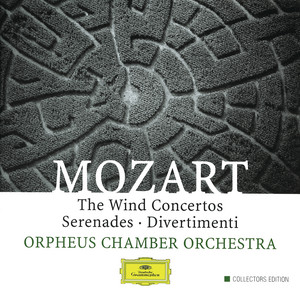 | Serenade in B-Flat Major, K. 361 "Gran Partita": III. Adagio | Wolfgang Amadeus Mozart, Orpheus Chamber Orchestra | E♭ Major | 0 | 5B | 68 BPM |
- ISRC
- GBAYC8900257
- Label
- L-M Records/RCA Records