- BPM
- 91
- Key
- F Major
- Camelot
- 7B
The Soldier's Tale (Narrated by Roger Waters): Part I: The Soldiers March (Reprise) by Igor Stravinsky, Roger Waters, Bridgehampton Chamber Music Festival Musicians Song Details
Igor Stravinsky, Roger Waters, Bridgehampton Chamber Music Festival Musicians's ' "The Soldier's Tale (Narrated by Roger Waters): Part I: The Soldiers March (Reprise)" was released on its scheduled release date, October 26, 2018. With This song being less than two minutes long, at 1:48, we are fairly confident that this song is not explicit and is safe for all ages. Based on the duration of this song, this song duration is much smaller than the average song duration. There are a total of 46 in the song's album "The Soldier's Tale (Narrated by Roger Waters)". In this album, this song's track order is #5. Furthermore, we believe that the track originated from United States. In terms of popularity, The Soldier's Tale (Narrated by Roger Waters): Part I: The Soldiers March (Reprise) is currently not that popular. The overall tone is very danceable, especially with its high energy, which produces more of a euphoric, cheerful, or happy vibe.
BPM and Tempo
With The Soldier's Tale (Narrated by Roger Waters): Part I: The Soldiers March (Reprise) by Igor Stravinsky, Roger Waters, Bridgehampton Chamber Music Festival Musicians having a BPM of 91 with a half-time of 46 BPM and a double-time of 182 BPM, we would consider this track to have a Andante (at a walking pace) tempo marking. Because of this, we believe that the song has an overall slow tempo. Looking at the BPM of this song, this song might go great with yoga or pilates. The time signature for this track is 4/4.
Music Key
This song is in the music key of F Major. Or for those who are familiar with the camelot wheel, this song has a camelot key of 7B. So, the perfect camelot match for 7B would be either 7B or 8A. While, 8B can give you a low energy boost. For moderate energy boost, you would use 4B and a high energy boost can either be 9B or 2B. Though, if you want a low energy drop, you should looking for songs with either a camelot key of 7A or 6B will give you a low energy drop, 10B would be a moderate one, and 5B or 12B would be a high energy drop. Lastly, 4A allows you to change the mood.
Want to find the BPM and music key for other songs? Check out our BPM and Key Finder page!
- Popularity
- 4%
- Loudness
- -9.349 dB
- Acousticness
- 44%
- Danceability
- 62%
- Energy
- 85%
- Instrumentalness
- 81%
- Liveness
- 15%
- Loudness
- 84%
- Speechiness
- 4%
- Valence
- 72%
Recommendations
| Track | Artist | Key | Energy | Camelot | BPM | ||
|---|---|---|---|---|---|---|---|
 | Suk: Serenade for Strings in E-Flat Major, Op. 6: IV. Allegro giocoso ma non troppo presto | Josef Suk, Christopher Warren-Green, Andrew Shulman, Lyn Fletcher, Roger Chase, Nigel Warren-Green, London Chamber Orchestra | B♭ Major | 2 | 6B | 106 BPM | |
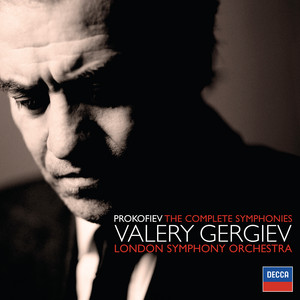 | Symphony No. 1 in D Major, Op. 25 "Classical Symphony": II. Larghetto | Sergei Prokofiev, London Symphony Orchestra, Valery Gergiev | A Major | 5 | 11B | 83 BPM | |
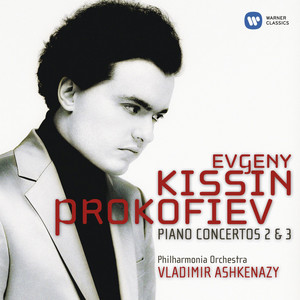 | Prokofiev: Piano Concerto No. 2 in G Minor, Op. 16: III. Intermezzo. Allegro moderato | Sergei Prokofiev, Evgeny Kissin, Vladimir Ashkenazy | C Major | 2 | 8B | 103 BPM | |
 | Finlandia, Op. 26 | Jean Sibelius, Berliner Philharmoniker, Herbert von Karajan | A♭ Major | 3 | 4B | 67 BPM | |
 | Symphony in F Major, Op. 8, H. 47 "The Cotswolds": I. Allegro con brio | Gustav Holst, Ulster Orchestra, Joann Falletta | C Minor | 3 | 5A | 103 BPM | |
 | Concerto for Orchestra, Sz. 116: 1. Introduzione (Andante non troppo - Allegro vivace | Béla Bartók, Berliner Philharmoniker, Herbert von Karajan | D♭ Major | 1 | 3B | 90 BPM | |
 | Symphony No. 2: II. Allegro molto | Sergei Rachmaninoff, Valery Gergiev, London Symphony Orchestra | F Major | 1 | 7B | 146 BPM | |
 | Aladdin Suite, Op. 34, FS 89: VI. Dance of the Prisoners | Carl Nielsen, South Jutland Symphony Orchestra, Niklas Willen | E Minor | 2 | 9A | 107 BPM | |
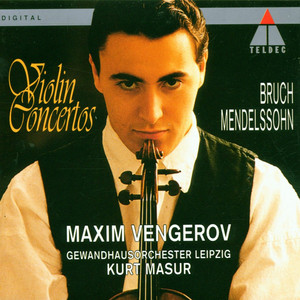 | Bruch: Violin Concerto No. 1 in G Minor, Op. 26: I. Prelude. Allegro moderato | Max Bruch, Maxim Vengerov, Kurt Masur, Gewandhausorchester | E♭ Major | 1 | 5B | 113 BPM | |
 | Symphonie fantastique, Op. 14, H 48: V. Songe d'une nuit de sabbat | Hector Berlioz, London Symphony Orchestra, Sir Colin Davis | C Minor | 1 | 5A | 60 BPM | |
 | Poulenc: Clarinet Sonata, FP 184: II. Romanza | Francis Poulenc, Sabine Meyer | G Minor | 0 | 6A | 67 BPM | |
 | Petrouchka: Danse des cochers et des palefreniers | Ferenc Fricsay, Berliner Philharmoniker | A Minor | 6 | 8A | 121 BPM | |
 | Lutosławski: Concerto for Orchestra: I. Intrada. Allegro maestoso | Witold Lutosławski, Daniel Barenboim, Chicago Symphony Orchestra | F♯ Minor | 1 | 11A | 128 BPM | |
 | Symphonie espagnole, Op. 21: I. Allegro non troppo | Édouard Lalo, Itzhak Perlman, Orchestre de Paris, Daniel Barenboim | D Minor | 1 | 7A | 75 BPM | |
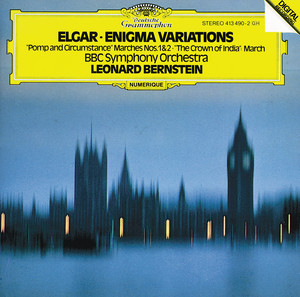 | Enigma Variations, Op. 36: Var. 9. Adagio "Nimrod" | Edward Elgar, BBC Symphony Orchestra, Leonard Bernstein | E♭ Major | 0 | 5B | 79 BPM | |
 | Prince Igor (Knyaz Igor), Act II: Dance of the Polovtsian Maidens | Alexander Borodin, Angelina Shvachka, Dmytro Popov, Mykola Koval, Taras Shtonda, Kiev Chamber Choir, Ukraine National Radio Symphony Orchestra, Theodore Kuchar | F Major | 2 | 7B | 95 BPM | |
 | Sibelius: Symphony No. 5 in E-Flat Major, Op. 82: III. Allegro molto (1915 Version) | Jean Sibelius, San Francisco Symphony, Esa-Pekka Salonen | E♭ Major | 1 | 5B | 76 BPM | |
 | Nocturnes, L. 91: II. Fêtes (Arr. by Denis Herlin) | Claude Debussy, Denis Herlin, Hallé, Sir Mark Elder | A Major | 0 | 11B | 88 BPM | |
 | Symphony No. 1 in D Major: 2. Kräftig bewegt - Live | Gustav Mahler, Berliner Philharmoniker, Claudio Abbado | A Major | 1 | 11B | 96 BPM | |
| Symphony No. 1 in D Major: III. Feierlich und gemessen, ohne zu schleppen - Live | Gustav Mahler, Berliner Philharmoniker, Claudio Abbado | G Minor | 0 | 6A | 56 BPM | |
 | Schoenberg: Verklärte Nacht, Op. 4: I. Grave (1943 Version) | Arnold Schoenberg, Daniel Barenboim, Chicago Symphony Orchestra | D Minor | 1 | 7A | 174 BPM | |
 | Preludes: Le nombre leger (The Light Number) | Olivier Messiaen, Håkon Austbø | B Major | 1 | 1B | 68 BPM | |
 | Symphony No. 5 in B-Flat Major, D. 485: 3. Menuetto (Allegro molto) | Franz Schubert, Wiener Philharmoniker, Claudio Abbado | G Minor | 1 | 6A | 181 BPM | |
| Schoenberg: Verklärte Nacht, Op. 4: V. Adagio, molto tranquilo | Arnold Schoenberg, Daniel Barenboim, Chicago Symphony Orchestra, Charles Pikler, John Sharp, Joseph Golan, Li-Kuo Chang, Ruben Gonzalez, Stephen Balderston | E Minor | 1 | 9A | 125 BPM | |
 | Symphony No. 8 in C Minor, WAB 108: I. Allegro moderato | Anton Bruckner, Wiener Philharmoniker, Pierre Boulez | B♭ Minor | 1 | 3A | 110 BPM |
- ISRC
- USQX91802233
- Label
- L-M Records/RCA Records