- BPM
- 94
- Key
- E♭ Major
- Camelot
- 5B
Violin Concerto in G Minor: II. Adagio con intimo sentimento by Guirne Creith, Geneviève Laurenceau, Orchestre De Picardie, David Niemann Song Details
"Violin Concerto in G Minor: II. Adagio con intimo sentimento" by Guirne Creith, Geneviève Laurenceau, Orchestre De Picardie, David Niemann had its release date on January 23, 2026. This song is about six minutes long, preciously at 5:42, making this song fairly long compared to other songs. Because this song is the only song in Creith: Violin Concerto in G minor - II. Adagio con intimo sentimento and no other songs are present in the album, we classify this track as a single. Going off of the ISRC code of this track, we detected that the origin of this track is from France. In terms of popularity, Violin Concerto in G Minor: II. Adagio con intimo sentimento is currently below average in popularity. In our opinion, the overall tone is not very danceable and projects negative sounds, such as being sad, depressed, or angry.
BPM and Tempo
The tempo marking of Violin Concerto in G Minor: II. Adagio con intimo sentimento by Guirne Creith, Geneviève Laurenceau, Orchestre De Picardie, David Niemann is Andante (at a walking pace), since this song has a tempo of 94 BPM. With that information, we can conclude that the song has a slow tempo. This song can go great with yoga or pilates. The time signature for this track is 3/4.
Music Key
This song is in the music key of E♭ Major. This also means that this song has a camelot key of 5B. So, the perfect camelot match for 5B would be either 5B or 6A. While, 6B can give you a low energy boost. For moderate energy boost, you would use 2B and a high energy boost can either be 7B or 12B. Though, if you want a low energy drop, you should looking for songs with either a camelot key of 5A or 4B will give you a low energy drop, 8B would be a moderate one, and 3B or 10B would be a high energy drop. Lastly, 2A allows you to change the mood.
Want to find the BPM and music key for other songs? Check out our BPM and Key Finder page!
- Popularity
- 23%
- Loudness
- -21.397 dB
- Acousticness
- 93%
- Danceability
- 17%
- Energy
- 9%
- Instrumentalness
- 4%
- Liveness
- 20%
- Loudness
- 64%
- Speechiness
- 5%
- Valence
- 4%
Recommendations
| Track | Artist | Key | Energy | Camelot | BPM | ||
|---|---|---|---|---|---|---|---|
 | Bartók: Romanian Folk Dances, Sz. 56: No. 4, Horn Dance (Transcr. Strauss & Rizikov for Cello and Piano) | Béla Bartók, Lisa Strauss, Anastasia Rizikov | F Major | 0 | 7B | 97 BPM | |
 | Waldszenen, Op. 82: No. 9, Abschied (Transcr. Soltani for Cello and Piano) | Robert Schumann, Kian Soltani, Julien Quentin | E♭ Minor | 2 | 2A | 81 BPM | |
 | Pelléas et Mélisande, Op. 80: II. Fileuse. Andantino quasi Allegretto | Gabriel Fauré, Frankfurt Radio Symphony Orchestra, Paavo Järvi | G Major | 0 | 9B | 129 BPM | |
 | Chant du ménestrel, Op. 71 | Alexander Glazunov, Pablo Ferrandez, Julien Quentin | D Major | 1 | 10B | 88 BPM | |
 | Concerto pour violon No. 2 in G Minor, Op. 63: III. Allegro, ben marcato | Sergei Prokofiev, Orchestre National Du Capitole, Tugan Sokhiev, Geneviève Laurenceau | G Major | 3 | 9B | 112 BPM | |
 | D'un soir triste | Lili Boulanger, Yo-Yo Ma, Kathryn Stott | C Major | 1 | 8B | 81 BPM | |
 | ハンガリー狂詩曲 | David Popper, ヤーノシュ・シュタルケル, Shigeo Neriki | E Minor | 3 | 9A | 115 BPM | |
 | Rhapsody of the North Wind | Yaroslav Medvedev-Taraldset, Davian Monfette | G Minor | 4 | 6A | 94 BPM | |
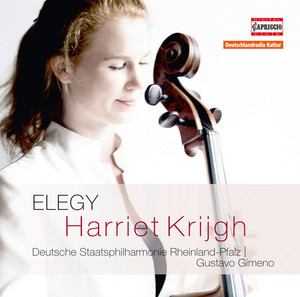 | Klid, Op. 68 No. 5, B. 182 | Antonín Dvořák, Harriet Krijgh, Gustavo Gimeno, Deutsche Staatsphilharmonie Rheinland-Pfalz | F♯ Major | 1 | 2B | 91 BPM | |
| Bartók: Romanian Folk Dances, Sz. 56: No. 3, In One Spot (Transcr. Strauss & Rizikov for Cello and Piano) | Béla Bartók, Lisa Strauss, Anastasia Rizikov | F Major | 0 | 7B | 97 BPM | |
 | Piano Trio in G Minor, Op. 17: II. Scherzo. Tempo di Menuetto | Clara Schumann, Nash Ensemble | D Major | 0 | 10B | 66 BPM | |
 | 6 Sonatas for Violin Solo, Op. 27 / Sonata No. 1 in G Minor: III. Allegretto poco scherzoso | Eugène Ysaÿe, Hilary Hahn | B♭ Major | 1 | 6B | 60 BPM | |
 | 12 Album Leaves, Op. 51: No. 4 in F Minor. Andante con moto | Reinhold Glière, Maja Bogdanovic, Maria Belooussova | D♭ Major | 1 | 3B | 80 BPM | |
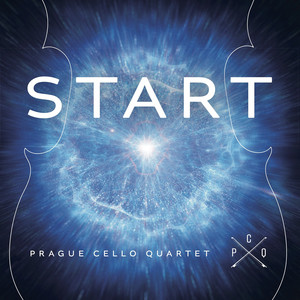 | Love Theme: Kmotr | Prague Cello Quartet | D Minor | 1 | 7A | 67 BPM | |
 | Le Tombeau de Couperin, M. 68a: IV. Rigaudon | Maurice Ravel, Orchestre De Picardie, Arie Van Beek | G Major | 1 | 9B | 177 BPM | |
 | Arpeggione Sonata in A Minor, D. 821: II. Adagio | Franz Schubert, Charles Owen, Natalie Clein | G Major | 1 | 9B | 58 BPM | |
 | España, Op. 165: Tango - for alto and piano | Isaac Albéniz, Tabea Zimmermann, Javier Perianes | D Major | 0 | 10B | 80 BPM | |
 | Beethoven: Violin Sonata No. 1 in D Major, Op. 12 No. 1: II. (c) Variation II | Ludwig van Beethoven, Renaud Capuçon, Frank Braley | G Major | 0 | 9B | 99 BPM | |
 | Piano Quartet No. 2 in G Minor, Op. 45: III. Adagio non troppo | Gabriel Fauré, Trio Wanderer, Antoine Tamestit | B♭ Major | 2 | 6B | 104 BPM | |
 | Schubert: String Quartet No. 14 in D Minor, D. 810, "Death and the Maiden": II. Andante con moto. Variation IV | Franz Schubert, Quatuor Arod | D Major | 3 | 10B | 57 BPM | |
 | Caprice d'après l'Etude en forme de valse, Op. 52 No. 6 de Saint-Saëns | Eugène Ysaÿe, Geneviève Laurenceau, Benjamin Levy, Orchestre De Picardie | D Major | 2 | 10B | 81 BPM | |
 | Shostakovich: String Quartet No. 10 in A-Flat Major, Op. 118: III. Adagio | Dmitri Shostakovich, Brodsky Quartet | A Major | 1 | 11B | 78 BPM | |
 | Winter Dream | Young Sook Lee | F Major | 2 | 7B | 72 BPM | |
 | Cinq Aquarelles: V. Intermède | Lucien Durosoir, Geneviève Laurenceau, Lorène De Ratuld | A Major | 2 | 11B | 108 BPM | |
 | Sonata in G minor, Op. 19: Andante | Sergei Rachmaninoff, Hideko Udagawa, Konstantin Lifschitz | D Minor | 2 | 7A | 138 BPM |
- ISRC
- FR7MS2613002
- Label
- L-M Records/RCA Records