- BPM
- 76
- Key
- D♭ Major
- Camelot
- 3B
Rhapsody on a Theme of Paganini, Op. 43: Variation 18 by Sergei Rachmaninoff, Bernd Glemser, Polish National Radio Symphony Orchestra, Antoni Wit Song Details
"Rhapsody on a Theme of Paganini, Op. 43: Variation 18" by Sergei Rachmaninoff, Bernd Glemser, Polish National Radio Symphony Orchestra, Antoni Wit had its release date on April 16, 1998. The duration of This song is about two minutes long, specifically at 2:44. This song does not appear to have any foul language. Rhapsody on a Theme of Paganini, Op. 43: Variation 18's duration is considered a little bit shorter than the average duration of a typical track. There are a total of 32 in the song's album "Rachmaninov: Piano Concertos Nos. 1 and 4". In this album, this song's track order is #26. Furthermore, we believe that the track originated from Hong Kong. Rhapsody on a Theme of Paganini, Op. 43: Variation 18 is average in popularity right now. In our opinion, the overall tone is not very danceable and projects negative sounds, such as being sad, depressed, or angry.
BPM and Tempo
With Rhapsody on a Theme of Paganini, Op. 43: Variation 18 by Sergei Rachmaninoff, Bernd Glemser, Polish National Radio Symphony Orchestra, Antoni Wit having a BPM of 76 with a half-time of 38 BPM and a double-time of 152 BPM, we would consider this track to have a Adagio (slowly with great expression) tempo marking. Because of this, we believe that the song has an overall slow tempo. The time signature for this track is 1/4.
Music Key
This song has a musical key of D♭ Major. Or for those who are familiar with the camelot wheel, this song has a camelot key of 3B. So, the perfect camelot match for 3B would be either 3B or 4A. While, 4B can give you a low energy boost. For moderate energy boost, you would use 12B and a high energy boost can either be 5B or 10B. Though, if you want a low energy drop, you should looking for songs with either a camelot key of 3A or 2B will give you a low energy drop, 6B would be a moderate one, and 1B or 8B would be a high energy drop. Lastly, 12A allows you to change the mood.
Want to find the BPM and music key for other songs? Check out our BPM and Key Finder page!
- Popularity
- 52%
- Loudness
- -22.798 dB
- Acousticness
- 99%
- Danceability
- 17%
- Energy
- 6%
- Instrumentalness
- 92%
- Liveness
- 10%
- Loudness
- 62%
- Speechiness
- 3%
- Valence
- 4%
Recommendations
| Track | Artist | Key | Energy | Camelot | BPM | ||
|---|---|---|---|---|---|---|---|
 | Le carnaval des animaux, R. 125: Le cygne | Camille Saint-Saëns, Mischa Maisky, Orpheus Chamber Orchestra | C Major | 0 | 8B | 83 BPM | |
 | Satie / Orch. Debussy: 3 Gymnopédies: No. 3, Lent et grave | Erik Satie, Sir Simon Rattle, Berliner Philharmoniker | A Minor | 0 | 8A | 82 BPM | |
 | Gaîté parisienne: Barcarolle | Jacques Offenbach, Berliner Philharmoniker, Herbert von Karajan | D Major | 0 | 10B | 82 BPM | |
 | Where Is Your Heart (From "Moulin Rouge") [Arr. for Piano] | Georges Auric, Dario Müller | E♭ Major | 0 | 5B | 66 BPM | |
 | 10 Preludes, Op. 23: No. 4 in D Major: Andante cantabile | Sergei Rachmaninoff, Eldar Nebolsin | D♭ Major | 1 | 3B | 63 BPM | |
 | Sarasate: Zigeunerweisen, Op. 20 | Pablo de Sarasate, Itzhak Perlman, Abbey Road Ensemble | C Minor | 1 | 5A | 83 BPM | |
 | Piano Concerto No. 2 in C Minor, Op. 18: I. Moderato (2) | Sergei Rachmaninoff, Klára Würtz, Ukraine National Symphony Orchestra, Vladimir Sirenko | E♭ Major | 0 | 5B | 75 BPM | |
 | Coppelia: Act I - Valse | Léo Delibes, Slovak Radio Symphony Orchestra, Andrew Mogrelia | E♭ Major | 0 | 5B | 89 BPM | |
 | Lieder ohne Worte, Op. 19b: Lieder ohne Worte (Song without Words) No. 6 in G Minor, Op. 19, No. 6, "Venezianisches Gondellied" [Venetian Gondola Song] | Felix Mendelssohn, Péter Nagy | G Major | 0 | 9B | 101 BPM | |
 | Lyric Pieces, Book 1, Op. 12: Arietta | Edvard Grieg, Einar Steen-Nøkleberg | E♭ Major | 0 | 5B | 111 BPM | |
 | Symphony No. 5: IV. Adagietto. Sehr langsam | Gustav Mahler, Berliner Philharmoniker, Claudio Abbado | F Major | 0 | 7B | 91 BPM | |
 | Piano Sonata No.8 In C Minor, Op.13 -"Pathétique": 2. Adagio cantabile | Ludwig van Beethoven, Daniel Barenboim | A♭ Major | 0 | 4B | 97 BPM | |
 | Farewell | Eunike Tanzil, Deutsches Symphonie-Orchester Berlin, Anna Handler | B♭ Minor | 2 | 3A | 111 BPM | |
 | Japanese Suite, Op. 33, H. 126: I. Prelude. Song of the Fisherman | Gustav Holst, Ulster Orchestra, Joann Falletta | C Minor | 3 | 5A | 103 BPM | |
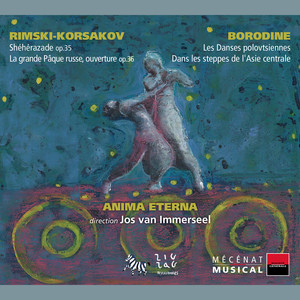 | Les danses polovtsiennes (Extraits de l'opéra Le Prince Igor): II. Danse des hommes | Alexander Borodin, Anima Eterna, Jos Van Immerseel | A Major | 0 | 11B | 87 BPM | |
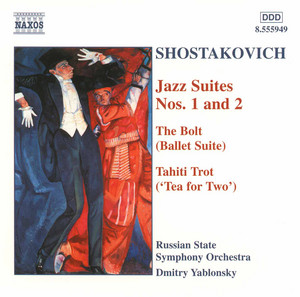 | Jazz Suite No. 2: VI. Waltz 2 | Dmitri Shostakovich, Russian State Symphony Orchestra, Dmitry Yablonsky | C Minor | 2 | 5A | 108 BPM | |
 | Peer Gynt Suite No. 1, Op. 46: I. Morning Mood | Edvard Grieg, Berliner Philharmoniker, Herbert von Karajan | E Major | 0 | 12B | 141 BPM | |
 | Consolation No. 3 in D-Flat Major, S. 172/3 | Franz Liszt, Vladimir Horowitz | D♭ Major | 0 | 3B | 70 BPM | |
 | Massenet: Thaïs, Act II: Méditation | Jules Massenet, Sarah Chang, Plácido Domingo, Berliner Philharmoniker | D Major | 1 | 10B | 99 BPM | |
 | Rosa Mundi | Paul Lewis, Royal Ballet Sinfonia, Gavin Sutherland | E Major | 0 | 12B | 81 BPM | |
 | Thaïs: Meditation | Jules Massenet, Michel Schwalbé, Berliner Philharmoniker, Herbert von Karajan | E Minor | 1 | 9A | 95 BPM | |
 | Nocturne from String Quartet No. 2 | Alexander Borodin, Klaus Arp, Sinfonie Orchester Des Sudwestfunks Baden-Baden | A Major | 1 | 11B | 82 BPM | |
 | Suite No. 3, P. 172: I. Italiana: Andantino | Ottorino Respighi, RTÉ National Symphony Orchestra | B♭ Major | 1 | 6B | 94 BPM | |
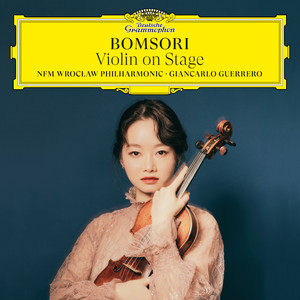 | Thaïs: Méditation | Jules Massenet, Bomsori, NFM Wrocław Philharmonic, Giancarlo Guerrero | D Major | 0 | 10B | 84 BPM | |
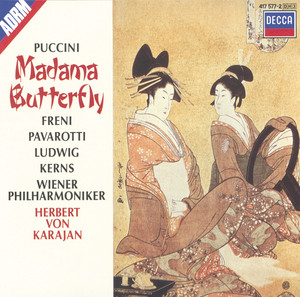 | Madama Butterfly, Act II: Coro a bocca chiusa "Humming Chorus" | Giacomo Puccini, Wiener Staatsopernchor, Wiener Philharmoniker, Herbert von Karajan | B♭ Major | 0 | 6B | 78 BPM |
- ISRC
- HKI199724326
- Label
- L-M Records/RCA Records