- BPM
- 81
- Key
- C Major
- Camelot
- 8B
4 Postludes for Piano & String Orchestra: No. 2, Moderato, con moto poco rubato by Valentin Silvestrov, Elisaveta Blumina, Stuttgart Chamber Orchestra, Thomas Sanderling Song Details
"4 Postludes for Piano & String Orchestra: No. 2, Moderato, con moto poco rubato" by Valentin Silvestrov, Elisaveta Blumina, Stuttgart Chamber Orchestra, Thomas Sanderling had its release date on September 9, 2016. With this song being around four minutes long, at 3:38, the duration of this song is pretty average compared to other songs. This track is safe for children and doesn't appear to contain any foul language, since the "Explicit" tag was not present in this track. There are a total of 7 in the song's album "Ustvolskaya, Silvestrov & Kancheli: Works for Piano & Orchestra". In this album, this song's track order is #3. Furthermore, we believe that the track originated from Hong Kong. 4 Postludes for Piano & String Orchestra: No. 2, Moderato, con moto poco rubato is unknown right now. In our opinion, the overall tone is not very danceable and projects negative sounds, such as being sad, depressed, or angry.
BPM and Tempo
With 4 Postludes for Piano & String Orchestra: No. 2, Moderato, con moto poco rubato by Valentin Silvestrov, Elisaveta Blumina, Stuttgart Chamber Orchestra, Thomas Sanderling having a BPM of 81 with a half-time of 40 BPM and a double-time of 162 BPM, we would consider this track to have a Andante (at a walking pace) tempo marking. Because of this, we believe that the song has an overall slow tempo. The time signature for this track is 4/4.
Music Key
The music key of this track is C Major. Or for those who are familiar with the camelot wheel, this song has a camelot key of 8B. So, the perfect camelot match for 8B would be either 8B or 9A. While, 9B can give you a low energy boost. For moderate energy boost, you would use 5B and a high energy boost can either be 10B or 3B. Though, if you want a low energy drop, you should looking for songs with either a camelot key of 8A or 7B will give you a low energy drop, 11B would be a moderate one, and 6B or 1B would be a high energy drop. Lastly, 5A allows you to change the mood.
Want to find the BPM and music key for other songs? Check out our BPM and Key Finder page!
- Popularity
- 0%
- Loudness
- -39.778 dB
- Acousticness
- 96%
- Danceability
- 7%
- Energy
- 0%
- Instrumentalness
- 95%
- Liveness
- 6%
- Loudness
- 34%
- Speechiness
- 5%
- Valence
- 3%
Recommendations
| Track | Artist | Key | Energy | Camelot | BPM | ||
|---|---|---|---|---|---|---|---|
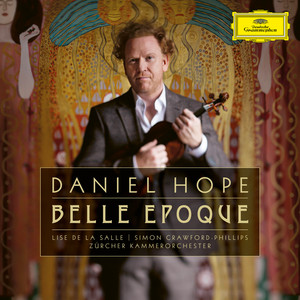 | Rêverie, L. 68 (Arr. by Badzura) | Claude Debussy, Daniel Hope, Zürcher Kammerorchester | F Major | 1 | 7B | 82 BPM | |
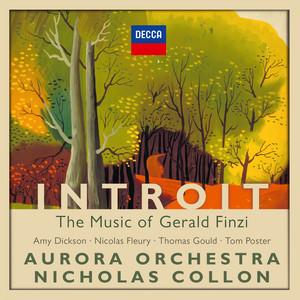 | Love's Labour's Lost, Op.28: 3. Soliloquy 3: On a day, alack the day - Instrumental | Gerald Finzi, Aurora Orchestra, Nicholas Collon | B♭ Major | 1 | 6B | 103 BPM | |
 | Cello Sonata In G Minor, Op. 19: III. Andante | Sergei Rachmaninoff, Matt Haimovitz, Christopher O'Riley | E♭ Major | 0 | 5B | 135 BPM | |
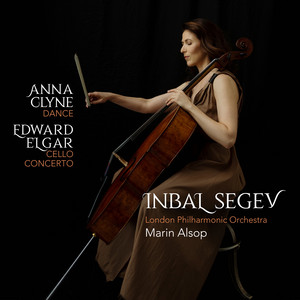 | DANCE: V. when you’re perfectly free | Anna Clyne, Inbal Segev, London Philharmonic Orchestra, Marin Alsop | G Major | 3 | 9B | 113 BPM | |
 | "Come in!": 2nd mvt. | Vladimir Martynov, Mari Samuelsen, Konzerthausorchester Berlin, Jonathan Stockhammer | A Major | 2 | 11B | 141 BPM | |
 | Elegy for Solo Viola | Igor Stravinsky, Tatjana Masurenko | C Minor | 0 | 5A | 82 BPM | |
 | Orfeo ed Euridice, Wq. 30 / Act II: Dance of the Blessed Spirits (Arr. by Mathieu Herzog for Cello and Strings) | Christoph Willibald Gluck, Camille Thomas, Brussels Philharmonic, Mathieu Herzog | B Minor | 1 | 10A | 87 BPM | |
 | II. Adagio | Wolfgang Amadeus Mozart, Emil Jonason, Helsingborg Symphony Orchestra, Stefan Solyom | D Major | 0 | 10B | 87 BPM | |
 | The Sacred Veil: V. Whenever There is Birth | Eric Whitacre, Los Angeles Master Chorale, Jeffrey Zeigler, Lisa Edwards | G Minor | 0 | 6A | 77 BPM | |
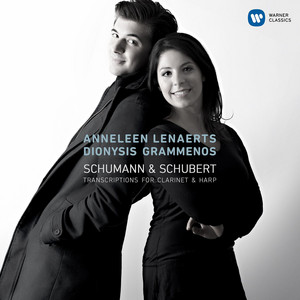 | Schubert: Schwanengesang, D. 957: No. 4, Ständchen | Franz Schubert, Anneleen Lenaerts, Dionysis Grammenos | C Minor | 0 | 5A | 131 BPM | |
 | 6 Encores for Piano (1965): No. 3, Wasserklavier | Luciano Berio, Marino Formenti | D♭ Major | 0 | 3B | 75 BPM | |
 | 6 Pieces, Op. 51: V. Romance | Pyotr Ilyich Tchaikovsky, Axel Gillison | B♭ Major | 1 | 6B | 108 BPM | |
 | Kitsch-Musik: I. Allegro vivace | Valentin Silvestrov, Elisaveta Blumina | F♯ Minor | 0 | 11A | 143 BPM | |
 | 3 Mélodies, Op. 7: No. 1, Après un rêve (Arr. For Cello & Piano) | Gabriel Fauré, Matt Haimovitz, Mari Kodama | F Minor | 0 | 4A | 91 BPM | |
 | Désir | Dan Evmark, Paula Gustafsson | D Minor | 1 | 7A | 134 BPM | |
 | The Indian Queen, Z. 630, Act 4: They Tell Us That Your Mighty Powers (Arr. for baroque orchestra and saxophone) | Henry Purcell, Lautten Compagney, Asya Fateyeva, Wolfgang Katschner | E Minor | 0 | 9A | 135 BPM | |
 | wind whispers, Op. 85: II. floating leaf | Konstantia Gourzi, William Youn | F Major | 0 | 7B | 69 BPM | |
 | Fljótavík | Georg Holm, Jon Thor Birgisson, Kjartan Sveinsson, Orri Pall Dyrason, 12 Ensemble | A♭ Major | 1 | 4B | 85 BPM | |
 | Lieder ohne Worte VIII, Op. 102: I. Andante un poco agitato, MWV U162 (Arr. Ottensamer for Clarinet & Piano) | Felix Mendelssohn, Andreas Ottensamer, Yuja Wang | E Minor | 0 | 9A | 133 BPM | |
 | Symphony No. 5 In C Sharp Minor: 4. Adagietto (Sehr langsam) | Gustav Mahler, Gyeonggi Philharmonic Orchestra, Shi-Yeon Sung | F Major | 0 | 7B | 82 BPM | |
 | Water Music Suite / Water Music Suite in D Major, BWV 349: Allegro | George Frideric Handel, Stuttgart Chamber Orchestra, Karl Münchinger | D Major | 6 | 10B | 122 BPM | |
 | Sonate pour Arpeggione et Piano en La Mineur, D. 821: II. Adagio | Franz Schubert, Jean-Guihen Queyras, Alexandre Tharaud | E Major | 0 | 12B | 91 BPM | |
 | Belshazzar's Feast, JS 48: Prelude. Nocturno | Jean Sibelius, Turku Philharmonic Orchestra, Leif Segerstam | G Major | 2 | 9B | 98 BPM | |
 | Four Dirges, Sz. 45, Op. 9a: 1. Adagio | Béla Bartók, Alexei Lubimov | E Major | 0 | 12B | 0 BPM | |
 | Ornament 2 | Bryce Dessner, Vanessa Wagner | G Minor | 0 | 6A | 108 BPM |
- ISRC
- HKI191535303
- Label
- L-M Records/RCA Records