- BPM
- 101
- Key
- D Major
- Camelot
- 10B
Introduction & Variations on Trockne Blumen, Op. 160, D. 802: Theme. Andantino by Franz Schubert, Barthold Kuijken, Luc Devos Song Details
Franz Schubert, Barthold Kuijken, Luc Devos's 'Introduction & Variations on Trockne Blumen, Op. 160, D. 802: Theme. Andantino' had a release date set for January 1, 1997. With This song being less than two minutes long, at 1:52, we are fairly confident that this song is not explicit and is safe for all ages. Based on the duration of this song, this song duration is much smaller than the average song duration. The song is number 2 out of 16 in Flute Music - Schubert, F. / Mozart, F. / Hummel, J. / Mendelssohn, Felix by Barthold Kuijken. Going off of the ISRC code of this track, we detected that the origin of this track is from Germany. In terms of popularity, Introduction & Variations on Trockne Blumen, Op. 160, D. 802: Theme. Andantino is currently unknown. Although the tone can be danceable to some, this track does projects more of a negative sound rather than a postive one.
BPM and Tempo
The tempo marking of Introduction & Variations on Trockne Blumen, Op. 160, D. 802: Theme. Andantino by Franz Schubert, Barthold Kuijken, Luc Devos is Andante (at a walking pace), since this song has a tempo of 101 BPM. With that information, we can conclude that the song has a slow tempo. The time signature for this track is 4/4.
Music Key
D Major is the music key of this track. This also means that this song has a camelot key of 10B. So, the perfect camelot match for 10B would be either 10B or 11A. While, 11B can give you a low energy boost. For moderate energy boost, you would use 7B and a high energy boost can either be 12B or 5B. Though, if you want a low energy drop, you should looking for songs with either a camelot key of 10A or 9B will give you a low energy drop, 1B would be a moderate one, and 8B or 3B would be a high energy drop. Lastly, 7A allows you to change the mood.
Want to find the BPM and music key for other songs? Check out our BPM and Key Finder page!
- Popularity
- 0%
- Loudness
- -28.11 dB
- Acousticness
- 99%
- Danceability
- 40%
- Energy
- 1%
- Instrumentalness
- 75%
- Liveness
- 13%
- Loudness
- 53%
- Speechiness
- 4%
- Valence
- 24%
Recommendations
| Track | Artist | Key | Energy | Camelot | BPM | ||
|---|---|---|---|---|---|---|---|
 | The Seasons, Op. 37a: VI. June. Barcarolle | Pyotr Ilyich Tchaikovsky, Bruce Liu | G Minor | 0 | 6A | 76 BPM | |
 | Rondo capriccioso in E Major, Op. 14, MWV U67: I. Andante | Felix Mendelssohn, Jan Lisiecki | E Major | 0 | 12B | 70 BPM | |
 | Rinaldo, HWV 7: Lascia ch'io pianga (Arr. for Piano) | George Frideric Handel, Martin Stadtfeld | F Major | 0 | 7B | 68 BPM | |
 | Come, Sweet Death, BWV 478 (Arr. for 5 Cellos) | Sheku Kanneh-Mason, Hannah Roberts, Ben Davies, Desmond Neysmith, Max Ruisi | C Major | 0 | 8B | 122 BPM | |
 | Piano Concerto No. 2 in F Major, Op. 102: II. Andante | Dmitri Shostakovich, Boris Giltburg, Royal Liverpool Philharmonic Orchestra, Vasily Petrenko | C Minor | 0 | 5A | 80 BPM | |
 | Sonata In G Minor For Cello & Piano, Op. 19: 3. Andante | Sergei Rachmaninoff, Alisa Weilerstein, Inon Barnatan | F Major | 2 | 7B | 82 BPM | |
 | Nocturnes, Op. 27: No. 2 in D-Flat Major | Frédéric Chopin, Arthur Rubinstein | D♭ Major | 0 | 3B | 77 BPM | |
 | Études: No. 6 | Yuja Wang | D♭ Minor | 0 | 12A | 131 BPM | |
 | Adagio in D Minor, BWV 974: II. Adagio | Johann Sebastian Bach, Alexandre Tharaud | D Minor | 0 | 7A | 65 BPM | |
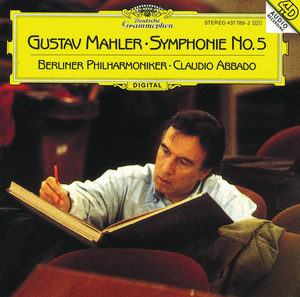 | Symphony No. 5: IV. Adagietto. Sehr langsam | Gustav Mahler, Berliner Philharmoniker, Claudio Abbado | F Major | 0 | 7B | 91 BPM | |
 | Bach: Adagio (After Violin Concerto No. 2, BWV 1042) | Johann Sebastian Bach, Gabriela Montero | F♯ Minor | 0 | 11A | 73 BPM | |
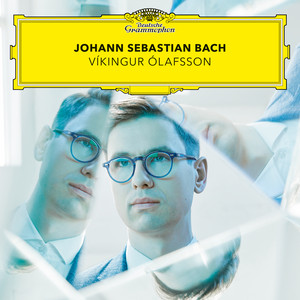 | Prelude in E Minor, BWV 855/I (Arr. Siloti in B Minor) | Johann Sebastian Bach, Víkingur Ólafsson | B Minor | 1 | 10A | 134 BPM | |
 | Kinderszenen, Op. 15: VII. Träumerei | Robert Schumann, Daniel Barenboim | F Major | 0 | 7B | 126 BPM | |
 | Carnaval, Op. 9: XII. Chopin | Robert Schumann, Daniil Trifonov | E Major | 0 | 12B | 68 BPM | |
 | 3 Romances, Op. 11: I. Andante | Clara Schumann, Yoshiko Iwai | C Major | 0 | 8B | 66 BPM | |
 | Pièces de Clavecin, Livre II, 6e ordre: V. Les Baricades Mistérieuses | François Couperin, Alexandre Tharaud | B♭ Major | 1 | 6B | 111 BPM | |
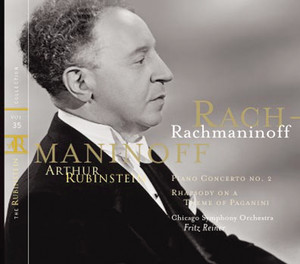 | Piano Concerto No. 2 in C Minor, Op. 18: I. Moderato | Sergei Rachmaninoff, Arthur Rubinstein, Fritz Reiner | C Minor | 1 | 5A | 71 BPM | |
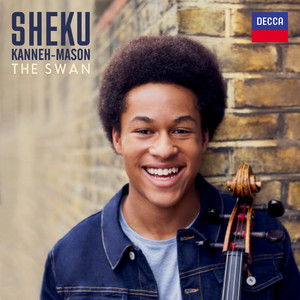 | Le Carnaval des Animaux, R. 125: 13. The Swan (Arr. Hodge for Cello, Harp & Ensemble) | Camille Saint-Saëns, Sheku Kanneh-Mason, Katherine Thomas, CBSO Cellos | G Major | 1 | 9B | 69 BPM | |
 | Suite No. 3, P. 172: III. Siciliana: Andantino | Ottorino Respighi, RTÉ National Symphony Orchestra | C Minor | 0 | 5A | 93 BPM | |
 | Mazurka in A Minor, Op. 17 No. 4 | Frédéric Chopin, Khatia Buniatishvili | A Minor | 0 | 8A | 173 BPM | |
![Etudes symphoniques (Symphonic Etudes), Op. 13, Adagio and Allegro brillante: Variation 11 [arr. P.I. Tchaikovsky for orchestra] by Robert Schumann, Seattle Symphony Orchestra, Gerard Schwarz](https://i.scdn.co/image/ab67616d00001e029057c124b554163ef1edd618) | Etudes symphoniques (Symphonic Etudes), Op. 13, Adagio and Allegro brillante: Variation 11 [arr. P.I. Tchaikovsky for orchestra] | Robert Schumann, Seattle Symphony Orchestra, Gerard Schwarz | A Minor | 0 | 8A | 104 BPM | |
 | Après un rêve, Op. 7: No. 1 | Gabriel Fauré, Joshua Bell, Frederic Chiu | G Minor | 2 | 6A | 91 BPM | |
 | Lyric Pieces: Melodie / Melody, Op. 47, 3 | Edvard Grieg, Heidi Kommerell | D♭ Minor | 1 | 12A | 73 BPM | |
 | 24 Preludes and Fugues, Op. 87: Fugue No. 7 in A Major | Dmitri Shostakovich, Igor Levit | A Major | 0 | 11B | 97 BPM | |
 | Goldberg Variations, BWV 988: Aria | Johann Sebastian Bach, Glenn Gould | A♭ Major | 0 | 4B | 123 BPM |
- ISRC
- DECP69702002
- Label
- L-M Records/RCA Records