- BPM
- 131
- Key
- D Major
- Camelot
- 10B
Tableaux de Provence: IV. Dis Alyscamps l’amo souspire by Paule Maurice, Dominic Childs, Simon Callaghan Song Details
"Tableaux de Provence: IV. Dis Alyscamps l’amo souspire" by Paule Maurice, Dominic Childs, Simon Callaghan had its release date on December 28, 2018. With this song being about 5 minutes long, at This song is fairly a long song compared to the average song length. This song does not have an "Explicit" tag, making it safe for all ages. There are a total of 11 in the song's album "Tableaux De Provence: Works for Saxophone". In this album, this song's track order is #9. Furthermore, we believe that the track originated from United Kingdom. Based on our statistics, Tableaux de Provence: IV. Dis Alyscamps l’amo souspire's popularity is not that popular right now. In our opinion, the overall tone is not very danceable and projects negative sounds, such as being sad, depressed, or angry.
BPM and Tempo
With Tableaux de Provence: IV. Dis Alyscamps l’amo souspire by Paule Maurice, Dominic Childs, Simon Callaghan having a BPM of 131 with a half-time of 66 BPM and a double-time of 262 BPM, we would consider this track to have a Allegro (fast, quick, and bright) tempo marking. Because of this, we believe that the song has an overall fast tempo. Looking at the BPM of this song, this song might go great with walking. The time signature for this track is 4/4.
Music Key
This song has a musical key of D Major. Or for those who are familiar with the camelot wheel, this song has a camelot key of 10B. So, the perfect camelot match for 10B would be either 10B or 11A. While, 11B can give you a low energy boost. For moderate energy boost, you would use 7B and a high energy boost can either be 12B or 5B. Though, if you want a low energy drop, you should looking for songs with either a camelot key of 10A or 9B will give you a low energy drop, 1B would be a moderate one, and 8B or 3B would be a high energy drop. Lastly, 7A allows you to change the mood.
Want to find the BPM and music key for other songs? Check out our BPM and Key Finder page!
- Popularity
- 6%
- Loudness
- -24.375 dB
- Acousticness
- 99%
- Danceability
- 22%
- Energy
- 1%
- Instrumentalness
- 86%
- Liveness
- 7%
- Loudness
- 59%
- Speechiness
- 4%
- Valence
- 3%
Recommendations
| Track | Artist | Key | Energy | Camelot | BPM | ||
|---|---|---|---|---|---|---|---|
 | Horn Concerto in C Minor, Op. 8: II. Andante | Franz Strauss, Samuel Seidenberg, Frankfurt Radio Symphony Orchestra, Sebastian Weigle | F♯ Major | 3 | 2B | 145 BPM | |
 | Colors: II. Red | Bert Appermont, Columbus State University Wind Ensemble, Joseph Alessi, Robert W. Rumbelow | F Major | 3 | 7B | 86 BPM | |
 | Sonata "Undine" Op. 167 for Flute and Piano: I. Allegro | Carl Reinecke, Jasmine Choi | E Minor | 1 | 9A | 108 BPM | |
 | Gil Blas: Theme. Allegro vivo | Jules Strens, Matty Cilissen, Royal Band of the Belgian Air Force | F Minor | 0 | 4A | 176 BPM | |
 | Petite pièce concertante | Guillaume Balay, Ryan Gardner, Charity Wicks | B♭ Major | 4 | 6B | 124 BPM | |
 | Concertpiece #2, Op. 12 | Vasily Brandt, Joshua Whitehouse, Joshua Whitehouse, Cornet And Trumpet, Gail Novak, Piano | F Minor | 1 | 4A | 99 BPM | |
 | Anders Högstedt: A Night At The Opera III | Anders Högstedt, Axiom Brass, Christian Lindberg | C Minor | 0 | 5A | 70 BPM | |
 | Wine-Dark Sea: II. Immortal Thread, So Weak | John Mackey, North Texas Wind Symphony, Eugene Migliaro Corporon | C Major | 0 | 8B | 135 BPM | |
 | Légende | George Enescu, Philip Smith, Joseph Turrin | A♭ Major | 0 | 4B | 70 BPM | |
 | Sonata No. 1 in C Major (REINVENTED for Solo Flute by LUCA ASTOLFONI FOSSI): VII. Variation VI | Saverio Mercadante, Claudio Ferrarini | A♭ Major | 1 | 4B | 196 BPM | |
 | Trombone Quartet No. 1: II. — | Saskia Apon, Trombone Unit Hannover | E Major | 2 | 12B | 162 BPM | |
 | Poulenc: Sextet for Piano and Winds, FP 100: I. Allegro vivace | Francis Poulenc, Les Vents Français | E Minor | 1 | 9A | 76 BPM | |
 | Sonate pour Clarinette et Piano, Op. 167: Sonate pour clarinette et piano, Op. 167: I. Allegretto | Camille Saint-Saëns, David Bismuth, Pierre Génisson | E♭ Major | 0 | 5B | 135 BPM | |
 | Bassoon Sonata in G Major, Op. 168: II. Allegro scherzando | Camille Saint-Saëns, Christopher Millard, Stephane Lemelin | B Major | 0 | 1B | 71 BPM | |
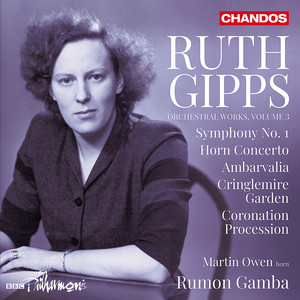 | Horn Concerto, Op. 58: II. Scherzo | Ruth Gipps, Martin Owen, BBC Philharmonic, Rumon Gamba | F Minor | 0 | 4A | 47 BPM | |
 | Arutiunian: Trumpet Concerto: I | Alexander Arutiunian, Gert Skovlod Hattesen, Christian Lindberg, Prince of Denmark Air Force Band | E♭ Major | 0 | 5B | 66 BPM | |
 | Summer Music, Op. 31: III. Faster | Samuel Barber, Ensemble Ouranos | A♭ Major | 1 | 4B | 196 BPM | |
 | A Duet For Our Time: Of Beauty | Columbus State University Trombone Ensemble, Bill Thomas, George Curran | C Major | 1 | 8B | 138 BPM | |
 | Suite from "The Victorian Kitchen Garden": II. Spring. Allegretto | Paul Reade, Michael Collins, Michael McHale | G Minor | 0 | 6A | 65 BPM | |
![Tableaux de Provence: V. Lou Cabridan (Le cabridan) [Version for saxophone and piano] by Paule Maurice, Claude Delangle, Odile Delangle](https://i.scdn.co/image/ab67616d00001e02895e4e0d06f1c15d7bb1ec8a) | Tableaux de Provence: V. Lou Cabridan (Le cabridan) [Version for saxophone and piano] | Paule Maurice, Claude Delangle, Odile Delangle | G Major | 3 | 9B | 151 BPM | |
 | タンゴの歴史 ボーデル1900 | Nobuya Sugawa | G Major | 3 | 9B | 88 BPM | |
 | Fandango (Arr. F. Werle) | Frank Perkins, Dallas Wind Symphony, Howard Dunn | D Major | 6 | 10B | 110 BPM | |
 | Redline Tango | John Mackey, University of Kansas Wind Ensemble, John P. Lynch | D♭ Major | 2 | 3B | 128 BPM | |
 | Adios Nonino | Eric Baret, Yves Jeanne, Françis Prost, Florent Héau, Bruno Desmouillieres | C Minor | 0 | 5A | 116 BPM | |
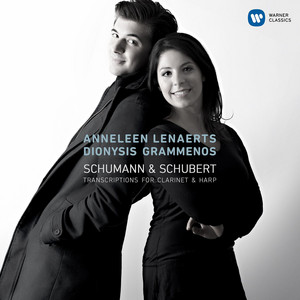 | Schumann: Romanzen, Op. 94: II. Einfach, innig | Robert Schumann, Anneleen Lenaerts, Dionysis Grammenos | A Major | 0 | 11B | 114 BPM |
- ISRC
- GBC3S1823109
- Label
- L-M Records/RCA Records