- BPM
- 149
- Key
- A Major
- Camelot
- 11B
Tchaikovsky: Variations on a Rococo Theme for Cello and Orchestra, Op. 33: Variation VII - Coda. Allegro vivo by Pyotr Ilyich Tchaikovsky, Edgar Moreau, Michael Sanderling, Luzerner Sinfonieorchester Song Details
Pyotr Ilyich Tchaikovsky, Edgar Moreau, Michael Sanderling, Luzerner Sinfonieorchester's ' "Tchaikovsky: Variations on a Rococo Theme for Cello and Orchestra, Op. 33: Variation VII - Coda. Allegro vivo" was released on its scheduled release date, November 8, 2024. The duration of This song is about two minutes long, specifically at 2:14. This song does not appear to have any foul language. Tchaikovsky: Variations on a Rococo Theme for Cello and Orchestra, Op. 33: Variation VII - Coda. Allegro vivo's duration is considered a little bit shorter than the average duration of a typical track. There are a total of 18 in the song's album "Rococo". In this album, this song's track order is #8. Furthermore, we believe that the track originated from United Kingdom. Based on our statistics, Tchaikovsky: Variations on a Rococo Theme for Cello and Orchestra, Op. 33: Variation VII - Coda. Allegro vivo's popularity is not that popular right now. Based on the vibe, this track doesn't seem to be that danceable, however its valence properties can make this some somewhat danceable.
BPM and Tempo
With Tchaikovsky: Variations on a Rococo Theme for Cello and Orchestra, Op. 33: Variation VII - Coda. Allegro vivo by Pyotr Ilyich Tchaikovsky, Edgar Moreau, Michael Sanderling, Luzerner Sinfonieorchester having a BPM of 149 with a half-time of 74 BPM and a double-time of 298 BPM, we would consider this track to have a Allegro (fast, quick, and bright) tempo marking. Because of this, we believe that the song has an overall fast tempo. Looking at the BPM of this song, this song might go great with jogging or cycling. The time signature for this track is 4/4.
Music Key
This song has a musical key of A Major. Or for those who are familiar with the camelot wheel, this song has a camelot key of 11B. So, the perfect camelot match for 11B would be either 11B or 12A. While, 12B can give you a low energy boost. For moderate energy boost, you would use 8B and a high energy boost can either be 1B or 6B. Though, if you want a low energy drop, you should looking for songs with either a camelot key of 11A or 10B will give you a low energy drop, 2B would be a moderate one, and 9B or 4B would be a high energy drop. Lastly, 8A allows you to change the mood.
Want to find the BPM and music key for other songs? Check out our BPM and Key Finder page!
- Popularity
- 8%
- Loudness
- -17.84 dB
- Acousticness
- 94%
- Danceability
- 35%
- Energy
- 28%
- Instrumentalness
- 93%
- Liveness
- 9%
- Loudness
- 70%
- Speechiness
- 4%
- Valence
- 56%
Recommendations
| Track | Artist | Key | Energy | Camelot | BPM | ||
|---|---|---|---|---|---|---|---|
 | Hungarian Dance No.1 in G minor - Orchestrated by Brahms: Allegro molto | Johannes Brahms, Chicago Symphony Orchestra, Daniel Barenboim | G Minor | 2 | 6A | 65 BPM | |
 | Le Sacre du Printemps - Revised version for Orchestra (published 1947) / Part 1: The Adoration of the Earth: The Augurs of Spring: Dances of the Young Girls | Igor Stravinsky, Berliner Philharmoniker, Herbert von Karajan | A♭ Minor | 3 | 1A | 104 BPM | |
 | Nocturne No. 2 in E-Flat Major, Op. 9 No. 2 | Frédéric Chopin, Daniel Barenboim | E♭ Major | 0 | 5B | 79 BPM | |
 | Peer Gynt Suite No. 1, Op. 46: II. The Death of Åse - Recorded 1982 | Edvard Grieg, Berliner Philharmoniker, Herbert von Karajan | G Major | 0 | 9B | 45 BPM | |
 | Beethoven: Symphony No. 6 in F Major, Op. 68 "Pastoral": IV. Gewitter. Sturm. Allegro - | Ludwig van Beethoven, Philadelphia Orchestra, Riccardo Muti | G Major | 0 | 9B | 127 BPM | |
 | Giselle / Act 2: Grand pas de deux: Adage | Adolphe Adam, Orchestra of the Royal Opera House, Covent Garden, Richard Bonynge | E♭ Major | 0 | 5B | 73 BPM | |
 | Peer Gynt, Op. 23: Act II, 7, In the Hall of the Mountain King | Edvard Grieg, Esa-Pekka Salonen | B Minor | 2 | 10A | 104 BPM | |
 | Carmen Suite No.2: 5. Danse bohème | Georges Bizet, Orchestre de Paris, Semyon Bychkov | E Major | 1 | 12B | 142 BPM | |
 | Symphony No. 10 in E Minor, Op. 93: II. Allegro | Dmitri Shostakovich, Royal Liverpool Philharmonic Orchestra, Vasily Petrenko | B♭ Minor | 6 | 3A | 89 BPM | |
 | Die Walküre, Act III: Ride of the Valkyries | Richard Wagner, Budapest Symphony Orchestra, György Lehel | D♭ Major | 1 | 3B | 72 BPM | |
 | Jazz Suite No. 2: IV. Waltz 1 | Dmitri Shostakovich, Russian State Symphony Orchestra, Dmitry Yablonsky | B♭ Major | 2 | 6B | 109 BPM | |
 | Symphony No. 40 in G Minor, K. 550: I. Allegro molto | Wolfgang Amadeus Mozart, Capella Istropolitana, Barry Wordsworth | D Minor | 2 | 7A | 122 BPM | |
 | Brook Green Suite: II. Air | Gustav Holst, English Sinfonia, Howard Griffiths | E♭ Major | 0 | 5B | 128 BPM | |
 | Swan Lake, Op. 20 (Mariinsky Version), Act I: No. 10, Scene. Moderato | Pyotr Ilyich Tchaikovsky, Mariinsky Orchestra, Valery Gergiev | E Minor | 2 | 9A | 87 BPM | |
 | Serenade in C Major, Op. 48: I. Pezzo in forma di Sonatina | Pyotr Ilyich Tchaikovsky, Vienna Chamber Orchestra, Philippe Entremont | C Major | 3 | 8B | 112 BPM | |
 | Orfeo ed Euridice, Wq. 30: Dance of the Blessed Spirits "Melody" (Arr. Sgambati for Piano) | Christoph Willibald Gluck, Yuja Wang | D Minor | 0 | 7A | 70 BPM | |
 | Danse macabre, Op. 40 | Camille Saint-Saëns, Royal Stockholm Philharmonic Orchestra, James DePreist | G Minor | 1 | 6A | 102 BPM | |
 | Serenade for Strings in E-Flat Major, Op. 6: I. Andante con moto | Josef Suk, Alexej Svjatlovskij, Igor Makarow, Sergej Belesow, European New Philharmonic Orchestra, Volker Hartung | B♭ Major | 1 | 6B | 109 BPM | |
 | La Gioconda / Act 3: Dance of the Hours | Amilcare Ponchielli, Michaela Rózsa Růžičková, Czech Symphony Orchestra | E Major | 1 | 12B | 65 BPM | |
 | Symphony No. 6 in B Minor, Op. 74, TH 30 "Pathétique": IV. Finale. Adagio lamentoso - Andante | Pyotr Ilyich Tchaikovsky, Czech Philharmonic, Semyon Bychkov | B Minor | 1 | 10A | 106 BPM | |
| Serenade in C Major, Op. 48: II. Walzer | Pyotr Ilyich Tchaikovsky, Vienna Chamber Orchestra, Philippe Entremont | G Major | 2 | 9B | 180 BPM | |
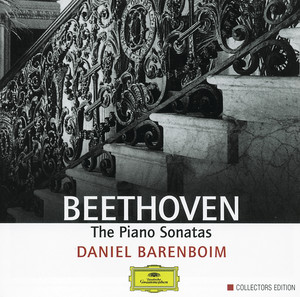 | Piano Sonata No. 14 in C-Sharp Minor, Op. 27 No. 2 "Moonlight Sonata": I. Adagio sostenuto | Ludwig van Beethoven, Daniel Barenboim | D♭ Minor | 0 | 12A | 139 BPM | |
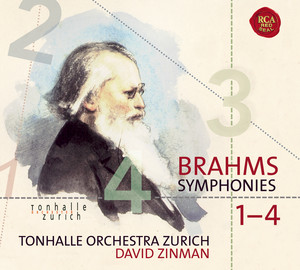 | Symphony No. 3 in F Major, Op. 90: III. Poco allegretto | Johannes Brahms, David Zinman | C Minor | 0 | 5A | 173 BPM | |
 | Masquerade Suite: IV. Romance | Aram Khachaturian, Karen Khatchaturian, Moscow RTV Large Symphony Orcherstra | B♭ Minor | 2 | 3A | 124 BPM | |
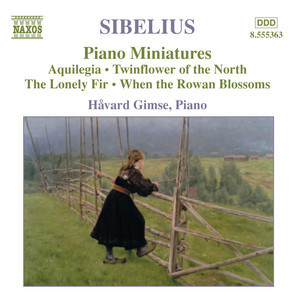 | 13 Pieces, Op. 76: No. 2 Etude | Jean Sibelius, Håvard Gimse | A Minor | 2 | 8A | 72 BPM |
- ISRC
- GBAYC2400925
- Label
- L-M Records/RCA Records