- BPM
- 124
- Key
- E♭ Major
- Camelot
- 5B
Orpheus in der Unterwelt · Operette in 2 Akten (1988 Digital Remaster): Ouvertüre (Orchester) by Jacques Offenbach, Adolf Dallapozza/Gisela Litz/Grit van Jüten/Theo Lingen/Ferry Gruber /Kari Lövaas/Brigitte Lindner /Chor der Kölner Oper/Philharmonia Hungarica/Willy Mattes/Anneliese Rothenberger, Willy Mattes, Philharmonia Hungarica Song Details
Jacques Offenbach, Adolf Dallapozza/Gisela Litz/Grit van Jüten/Theo Lingen/Ferry Gruber /Kari Lövaas/Brigitte Lindner /Chor der Kölner Oper/Philharmonia Hungarica/Willy Mattes/Anneliese Rothenberger, Willy Mattes, Philharmonia Hungarica's 'Orpheus in der Unterwelt · Operette in 2 Akten (1988 Digital Remaster): Ouvertüre (Orchester)' had a release date set for 1978. Since This song is still less than 10 minute long, it is still considered a pretty long duration song compared to the average song length. This song does not appear to be explicit due to the lack of the "E" tag. There are a total of 27 in the song's album "Offenbach: Orpheus in der Unterwelt". In this album, this song's track order is #1. Furthermore, we believe that the track originated from Germany. Based on our statistics, Orpheus in der Unterwelt · Operette in 2 Akten (1988 Digital Remaster): Ouvertüre (Orchester)'s popularity is not that popular right now. Although the overall vibe is very danceable, it does project more negative sounds.
BPM and Tempo
With Orpheus in der Unterwelt · Operette in 2 Akten (1988 Digital Remaster): Ouvertüre (Orchester) by Jacques Offenbach, Adolf Dallapozza/Gisela Litz/Grit van Jüten/Theo Lingen/Ferry Gruber /Kari Lövaas/Brigitte Lindner /Chor der Kölner Oper/Philharmonia Hungarica/Willy Mattes/Anneliese Rothenberger, Willy Mattes, Philharmonia Hungarica having a BPM of 124 with a half-time of 62 BPM and a double-time of 248 BPM, we would consider this track to have a Allegro (fast, quick, and bright) tempo marking. Because of this, we believe that the song has an overall fast tempo. Looking at the BPM of this song, this song might go great with walking. The time signature for this track is 4/4.
Music Key
This song is in the music key of E♭ Major. Or for those who are familiar with the camelot wheel, this song has a camelot key of 5B. So, the perfect camelot match for 5B would be either 5B or 6A. While, 6B can give you a low energy boost. For moderate energy boost, you would use 2B and a high energy boost can either be 7B or 12B. Though, if you want a low energy drop, you should looking for songs with either a camelot key of 5A or 4B will give you a low energy drop, 8B would be a moderate one, and 3B or 10B would be a high energy drop. Lastly, 2A allows you to change the mood.
Want to find the BPM and music key for other songs? Check out our BPM and Key Finder page!
- Popularity
- 10%
- Loudness
- -13.543 dB
- Acousticness
- 98%
- Danceability
- 61%
- Energy
- 36%
- Instrumentalness
- 0%
- Liveness
- 60%
- Loudness
- 77%
- Speechiness
- 13%
- Valence
- 20%
Recommendations
| Track | Artist | Key | Energy | Camelot | BPM | ||
|---|---|---|---|---|---|---|---|
 | Nabucco: Va, pensiero, sull'ali dorate (Chorus of the Hebrew Slaves) | Renato Cellini, Robert Shaw | A♭ Major | 1 | 4B | 168 BPM | |
 | Carnival of the Animals: The Swan | Camille Saint-Saëns, Isata Kanneh-Mason, Jeneba Kanneh-Mason, Sheku Kanneh-Mason | G Major | 1 | 9B | 65 BPM | |
 | Haydn: Trumpet Concerto In E Flat - Iii Finale | Franz Joseph Haydn, Tine Thing Helseth | E♭ Major | 2 | 5B | 145 BPM | |
 | 21 Hungarian Dances, WoO 1: Hungarian Dance No. 16 in F Minor | Johannes Brahms, Seattle Symphony Orchestra, Gerard Schwarz | F Major | 1 | 7B | 84 BPM | |
 | Tico Tico No Fubá | Zequinha De Abreu, Cincinnati Pops Orchestra, Erich Kunzel | F Major | 5 | 7B | 123 BPM | |
 | Coppelia: Act I - Valse | Léo Delibes, Slovak Radio Symphony Orchestra, Andrew Mogrelia | E♭ Major | 0 | 5B | 89 BPM | |
 | Zigeunerweisen, Op. 20 (version for violin and orchestra): III. Allegro molto vivace | RCA Victor Symphony Orchestra & William Steinberg | A♭ Major | 1 | 4B | 88 BPM | |
 | La Gioconda, acte 4: La danse des heures | Amilcare Ponchielli, Slovenska Filharmonija, Kurt Redel | E Major | 0 | 12B | 136 BPM | |
 | Orphée aux enfers, ACT 1, Deuxième tableau: l'Olympe: Par Saturne!, quel est ce bruit (Jupiter/Choeur/Diane) | Jacques Offenbach, Laurent Naouri/Jennifer Smith/Choeurs de l'Opéra National de Lyon/Orchestre de l'Opéra National de Lyon/Orchestre de Chambre de Grenoble/Marc Minkowski, Marc Minkowski, Sébastien Rouland, Choeur & Orchestre De L'Opéra National De Lyon, Orchestre de Chambre de Grenoble, Orchestre De L'Opéra National De Lyon | A Major | 4 | 11B | 113 BPM | |
 | J. Strauss: Radetzky March | Johann Strauss I, Willi Boskovsky, Wiener Johann Strauss Orchester | A Major | 4 | 11B | 112 BPM | |
 | Peer Gynt, Op. 23: No. 16, Anitra's Dance | Edvard Grieg, San Francisco Symphony, Herbert Blomstedt | A Minor | 0 | 8A | 82 BPM | |
 | Samson et Dalila: Bacchanale | Camille Saint-Saëns, Royal Stockholm Philharmonic Orchestra, James DePreist | D Minor | 1 | 7A | 122 BPM | |
 | Frist Trasch Polka | George Henkla | A Major | 5 | 11B | 81 BPM | |
 | Bruch : Violin Concerto No.1 in G minor Op.26 : III Finale - Allegro energico | Max Bruch, Maxim Vengerov, Kurt Masur, Gewandhausorchester Leipzig | G Major | 2 | 9B | 90 BPM | |
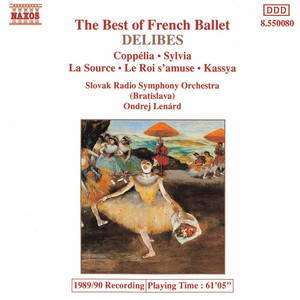 | Le roi s'amuse: Passepied | Léo Delibes, Slovak Philharmonic, Ondrej Lenard | A Major | 1 | 11B | 88 BPM | |
 | Die Walküre, Act III: Ride of the Valkyries | Richard Wagner, Budapest Symphony Orchestra, György Lehel | D♭ Major | 1 | 3B | 72 BPM | |
 | Verdi: Aida, Act 2: Triumphal March | Giuseppe Verdi, Antonio Pappano, Orchestra dell'Accademia Nazionale di Santa Cecilia | E♭ Major | 0 | 5B | 93 BPM | |
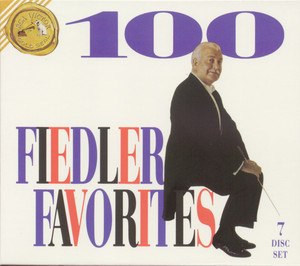 | Rákóczy March | Arthur Fiedler | A Major | 3 | 11B | 106 BPM | |
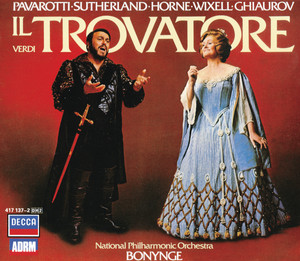 | Il Trovatore / Act 2: "Vedi! le fosche notturne spoglie" (Anvil Chorus) | Giuseppe Verdi, The London Opera Chorus, National Philharmonic Orchestra, Richard Bonynge | G Major | 3 | 9B | 130 BPM | |
 | La danza delle ore | Radio Symphony Orchestra | E Minor | 1 | 9A | 132 BPM | |
 | Blumenduett - Lakmé | Léo Delibes, Alain Lombard, Danielle Millet, Mady Mesplé, Orchestre Du Theatre National De L'Opera Comique | B Major | 1 | 1B | 130 BPM | |
 | Offenbach: Les Brigands, Act 1: No. 5, Rondo, "Après avoir pris à droite" (Fiorella) | Jacques Offenbach, John Eliot Gardiner - Colette Alliot Lugaz - Choeurs De L'Opéra National De Lyon - Thierry Dran - François Le Roux - Orch Nat Opéra De Lyon - Tibere Raffalli - Michel Trempont, Orchestre De L'Opéra National De Lyon | A Major | 2 | 11B | 123 BPM | |
 | Boccherini / Arr. Paillard: String Quintet in E Major, Op. 11 No. 5, G. 275: III. Minuetto | Luigi Boccherini, Jean-François Paillard, Orchestre de chambre Jean-François Paillard | A Major | 1 | 11B | 111 BPM | |
 | Bizet: Carmen: No. 1 Prélude | Georges Bizet, Michel Plasson, Orchestre National Du Capitole De Toulouse, Wolff | D Minor | 3 | 7A | 129 BPM | |
 | Voices of Spring Waltz, Op. 410 | Orchestra of the Viennese Volksoper & Alfred Scholz | C Minor | 1 | 5A | 99 BPM |
- ISRC
- DEC628700759
- Label
- L-M Records/RCA Records