- BPM
- 121
- Key
- E♭ Major
- Camelot
- 5B
Ariadne auf Naxos, Op. 60 / Opera: "Es gibt ein Reich" by Richard Strauss, Renée Fleming, Munich Philharmonic Orchestra, Christian Thielemann Song Details
Richard Strauss, Renée Fleming, Munich Philharmonic Orchestra, Christian Thielemann's ' "Ariadne auf Naxos, Op. 60 / Opera: "Es gibt ein Reich"" was released on its scheduled release date, January 1, 2008. This song is about six minutes long, preciously at 5:55, making this song fairly long compared to other songs. There are a total of 12 in the song's album "Strauss, R.: Vier Letzte Lieder". In this album, this song's track order is #7. Furthermore, we believe that the track originated from United Kingdom. Based on our statistics, Ariadne auf Naxos, Op. 60 / Opera: "Es gibt ein Reich"'s popularity is not that popular right now. Since there is more of a neutral sound being played, this makes the track somewhat danceable.
BPM and Tempo
With Ariadne auf Naxos, Op. 60 / Opera: "Es gibt ein Reich" by Richard Strauss, Renée Fleming, Munich Philharmonic Orchestra, Christian Thielemann having a BPM of 121 with a half-time of 60 BPM and a double-time of 242 BPM, we would consider this track to have a Allegro (fast, quick, and bright) tempo marking. Because of this, we believe that the song has an overall fast tempo. Looking at the BPM of this song, this song might go great with walking. The time signature for this track is 4/4.
Music Key
This song has a musical key of E♭ Major. Or for those who are familiar with the camelot wheel, this song has a camelot key of 5B. So, the perfect camelot match for 5B would be either 5B or 6A. While, 6B can give you a low energy boost. For moderate energy boost, you would use 2B and a high energy boost can either be 7B or 12B. Though, if you want a low energy drop, you should looking for songs with either a camelot key of 5A or 4B will give you a low energy drop, 8B would be a moderate one, and 3B or 10B would be a high energy drop. Lastly, 2A allows you to change the mood.
Want to find the BPM and music key for other songs? Check out our BPM and Key Finder page!
- Popularity
- 6%
- Loudness
- -19.568 dB
- Acousticness
- 98%
- Danceability
- 46%
- Energy
- 20%
- Instrumentalness
- 2%
- Liveness
- 30%
- Loudness
- 67%
- Speechiness
- 5%
- Valence
- 58%
Recommendations
| Track | Artist | Key | Energy | Camelot | BPM | ||
|---|---|---|---|---|---|---|---|
 | Debussy: La plus que lente, L. 121 | Claude Debussy, San Francisco Symphony, Michael Tilson Thomas | G Major | 0 | 9B | 133 BPM | |
 | Legends, Op. 59, B. 122: No. 6, Allegro con moto | Antonín Dvořák, Czech Philharmonic, Tomáš Netopil | D♭ Major | 0 | 3B | 78 BPM | |
 | The Planets, Op. 32: II. Venus, the Bringer of Peace | Gustav Holst, Daniel Harding, Bavarian Radio Symphony Orchestra | C Minor | 2 | 5A | 89 BPM | |
 | Symphonie Fantastique, Op.14, H 48: 5b. Songe d'une nuit du Sabbat - Dies irae | Hector Berlioz, Chicago Symphony Orchestra, Claudio Abbado | G Minor | 1 | 6A | 63 BPM | |
 | Nocturnes, CD 98: I. Nuages | Claude Debussy, Berliner Philharmoniker, Claudio Abbado | C Major | 0 | 8B | 83 BPM | |
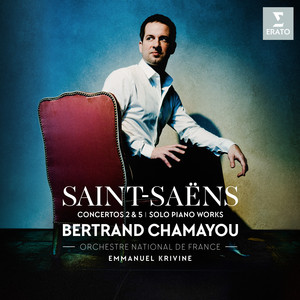 | Saint-Saëns: Piano Concerto No. 2 in G Minor, Op. 22: III. Presto | Camille Saint-Saëns, Bertrand Chamayou, Emmanuel Krivine, Orchestre National De France | C Minor | 4 | 5A | 110 BPM | |
 | Toccata | Johann Sebastian Bach, Symphonica Orchestra, Leopold Stokowski | D Major | 2 | 10B | 130 BPM | |
 | Guillaume Tell: Overture | Gioachino Rossini, Donato Renzetti, Orchestra Filarmonica Gioachino Rossini | E Major | 2 | 12B | 81 BPM | |
 | Fantasia & Fugue in C Minor, Op. 86 (After J.S. Bach's BWV 537): Fantasia | Edward Elgar, Seattle Symphony Orchestra, Gerard Schwarz | F Minor | 1 | 4A | 143 BPM | |
 | Verklärte Nacht, Op. 4 (Version for String Orchestra): I. Grave | Arnold Schoenberg, Danish National Symphony Orchestra, Fabio Luisi | D Minor | 2 | 7A | 79 BPM | |
 | Symphony No. 2 in E Minor, Op. 27: II. Allegro molto | Sergei Rachmaninoff, Philadelphia Orchestra, Yannick Nézet-Séguin | D Minor | 1 | 7A | 70 BPM | |
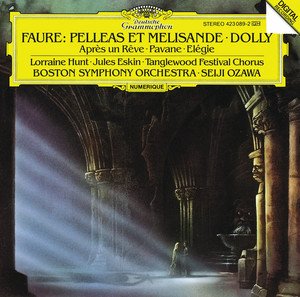 | Pelléas et Mélisande, Op. 80, Suite: IV. La mort de Mélisande | Gabriel Fauré, Boston Symphony Orchestra, Seiji Ozawa | D Minor | 0 | 7A | 82 BPM | |
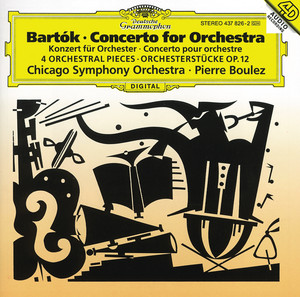 | Concerto for Orchestra, Sz. 116: V. Finale. Pesante – Presto | Béla Bartók, Chicago Symphony Orchestra, Pierre Boulez | A♭ Major | 2 | 4B | 127 BPM | |
 | Symphony No. 6 in B Minor, Op. 74 "Pathétique": IV. Finale. Adagio lamentoso | Pyotr Ilyich Tchaikovsky, Teodor Currentzis, musicAeterna | B Minor | 1 | 10A | 100 BPM | |
| Prelude: Allegro - Meno mosso - Alla breve (Allegro) - Adagio - | Ottorino Respighi, Seattle Symphony Orchestra, Gerard Schwarz | D Major | 1 | 10B | 74 BPM | |
 | Mahler: Blumine | Gustav Mahler, San Francisco Symphony, Michael Tilson Thomas | C Major | 1 | 8B | 100 BPM | |
 | Salome, Op. 54 / Scene 2: Laßt den Propheten herauskommen | Richard Strauss, Cheryl Studer, Clemens Bieber, Orchester der Deutschen Oper Berlin, Giuseppe Sinopoli | C Minor | 0 | 5A | 64 BPM | |
 | Symphony No. 3 in C Minor, Op. 78 "Organ": Allegro moderato | Camille Saint-Saëns, Eugene Ormandy, Philadelphia Orchestra | A♭ Major | 1 | 4B | 109 BPM | |
 | String Quartet No. 12 in F major, Op. 96 - "American" B.179: 2. Lento | Antonín Dvořák, Hagen Quartett | D Minor | 1 | 7A | 88 BPM | |
 | Carmen Suite No. 1 (Arr. E. Guiraud): III. Intermezzo | Georges Bizet, Orquestra Simfònica de Barcelona i Nacional de Catalunya, Pablo González | E♭ Major | 0 | 5B | 81 BPM | |
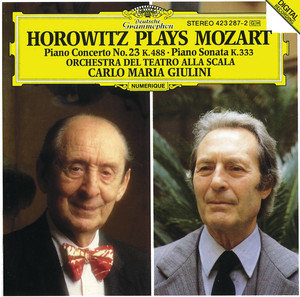 | Piano Concerto No. 23 in A Major, K. 488: I. Allegro (Cadenza by Busoni) | Wolfgang Amadeus Mozart, Vladimir Horowitz, Orchestra Del Teatro Alla Scala, Milano, Carlo Maria Giulini | A Major | 1 | 11B | 140 BPM | |
 | Orchestervorspiel | Berliner Philharmoniker, Chor der Deutschen Oper Berlin | A Major | 2 | 11B | 119 BPM | |
 | Symphony No. 9 in E-Flat Major, Op. 70: II. Moderato | Dmitri Shostakovich, Berliner Philharmoniker, Kirill Petrenko | B♭ Minor | 2 | 3A | 122 BPM | |
 | 4 Letzte Lieder, TrV 296: No. 2, September | Richard Strauss, Renée Fleming, Munich Philharmonic Orchestra, Christian Thielemann | F♯ Major | 1 | 2B | 81 BPM | |
 | Ancient Airs & Dances, Suite III, P. 172: I. Italiana (Anonymous) | Ottorino Respighi, Filarmonica della Scala, Riccardo Chailly | B♭ Major | 1 | 6B | 172 BPM |
- ISRC
- GBBBA0800773
- Label
- L-M Records/RCA Records