- BPM
- 83
- Key
- D♭ Major
- Camelot
- 3B
Verdi : Rigoletto : Act 1 "Ch'io gli parli" [Monterone, Duca, Rigoletto, Borsa, Marullo, Ceprano, Chorus] by Giuseppe Verdi, Carlo Rizzi, Orchestra of Welsh National Opera Song Details
"Verdi : Rigoletto : Act 1 "Ch'io gli parli" [Monterone, Duca, Rigoletto, Borsa, Marullo, Ceprano, Chorus]" by Giuseppe Verdi, Carlo Rizzi, Orchestra of Welsh National Opera had its release date on 1992. With this song being about 5 minutes long, at This song is fairly a long song compared to the average song length. This song does not have an "Explicit" tag, making it safe for all ages. This song is part of Verdi : Rigoletto by Giuseppe Verdi, Leontina Vaduva, Jennifer Larmore, Richard Leech, Alexandru Agache, Samuel Ramey, Carlo Rizzi & Orchestra of Welsh National Opera, Carlo Rizzi, Orchestra of Welsh National Opera. The song's track number on the album is #6 out of 36 tracks. Based on our data, Germany was the country where this track was produced or recorded. Verdi : Rigoletto : Act 1 "Ch'io gli parli" [Monterone, Duca, Rigoletto, Borsa, Marullo, Ceprano, Chorus] is unknown right now. In our opinion, the overall tone is not very danceable and projects negative sounds, such as being sad, depressed, or angry.
BPM and Tempo
Since Verdi : Rigoletto : Act 1 "Ch'io gli parli" [Monterone, Duca, Rigoletto, Borsa, Marullo, Ceprano, Chorus] by Giuseppe Verdi, Carlo Rizzi, Orchestra of Welsh National Opera has a tempo of 83 beats per a minute, the tempo markings of this song would be Andante (at a walking pace). With Verdi : Rigoletto : Act 1 "Ch'io gli parli" [Monterone, Duca, Rigoletto, Borsa, Marullo, Ceprano, Chorus] being at 83 BPM, the half-time would be 42 BPM with a double-time of 166 BPM.In addition, we consider the tempo speed to be pretty slow for this song. The time signature for this track is 4/4.
Music Key
This song is in the music key of D♭ Major. Or for those who are familiar with the camelot wheel, this song has a camelot key of 3B. So, the perfect camelot match for 3B would be either 3B or 4A. While, 4B can give you a low energy boost. For moderate energy boost, you would use 12B and a high energy boost can either be 5B or 10B. Though, if you want a low energy drop, you should looking for songs with either a camelot key of 3A or 2B will give you a low energy drop, 6B would be a moderate one, and 1B or 8B would be a high energy drop. Lastly, 12A allows you to change the mood.
Want to find the BPM and music key for other songs? Check out our BPM and Key Finder page!
- Popularity
- 0%
- Loudness
- -25.821 dB
- Acousticness
- 97%
- Danceability
- 21%
- Energy
- 3%
- Instrumentalness
- 1%
- Liveness
- 7%
- Loudness
- 57%
- Speechiness
- 6%
- Valence
- 4%
Recommendations
| Track | Artist | Key | Energy | Camelot | BPM | ||
|---|---|---|---|---|---|---|---|
 | Faust, CG 4, Act III: Quel trouble inconnu – Salut, demeure chaste et pure | Charles Gounod, Luciano Pavarotti, Vienna Volksoper Orchestra, Leone Magiera | A♭ Major | 2 | 4B | 174 BPM | |
 | Pagliacci / Act 1: "Recitar!...Vesti la giubba" | Ruggero Leoncavallo, Luciano Pavarotti, National Philharmonic Orchestra, Giuseppe Patanè | E Major | 2 | 12B | 83 BPM | |
 | Carmen Suite No.2: 5. Danse bohème | Georges Bizet, Orchestre de Paris, Semyon Bychkov | E Major | 1 | 12B | 142 BPM | |
 | Die Zauberflöte, K. 620: Overture | Wolfgang Amadeus Mozart, Mahler Chamber Orchestra, Claudio Abbado | E♭ Major | 1 | 5B | 85 BPM | |
 | La traviata / Act 1: "Follie! Delirio vano è questo!" - "Sempre libera" | Giuseppe Verdi, Kiri Te Kanawa, Alfredo Kraus, Orchestra del Maggio Musicale Fiorentino, Zubin Mehta | D♭ Major | 1 | 3B | 91 BPM | |
 | Norma (1997 - Remaster), Act I, Scene 1: Casta diva (Norma/Coro) | Vincenzo Bellini, Maria Callas, Coro Del Teatro Alla Scala Di Milano, Orchestra Del Teatro Alla Scala, Milano, Tullio Serafin, Orchestra Del Teatro Alla Scala Di Milan | F Major | 1 | 7B | 140 BPM | |
 | Bizet: Carmen, Act 1: Séguedille. "Près des remparts de Séville" (Carmen, José) | Georges Bizet, Maria Callas, Nicolai Gedda, Orchestre de l'Opéra National de Paris, Georges Prêtre, Orchestre du Théâtre National de l'Opéra Paris, Paris Opera Orchestra | D Major | 1 | 10B | 83 BPM | |
 | Les contes d'Hoffmann: "Barcarole" | Philharmonia Orchestra, Herbert von Karajan | D Major | 0 | 10B | 76 BPM | |
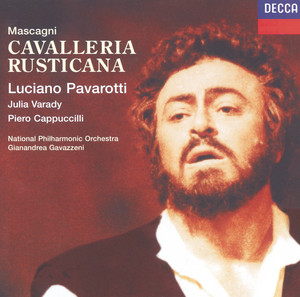 | Cavalleria rusticana: Intermezzo | Pietro Mascagni, National Philharmonic Orchestra, Gianandrea Gavazzeni, Giuseppe Patanè | F Major | 2 | 7B | 81 BPM | |
 | Così fan tutte, K. 588 / Act I: "Soave sia il vento" | Wolfgang Amadeus Mozart, Miah Persson, Angela Brower, Alessandro Corbelli, Chamber Orchestra of Europe, Yannick Nézet-Séguin | G Minor | 1 | 6A | 88 BPM | |
 | Carmen, WD 31 (Excerpts): Act I: L'amour est un oiseau rebelle (Habanera) | Georges Bizet, Herbert von Karajan, Wiener Philharmoniker | D Major | 0 | 10B | 127 BPM | |
 | Pelléas et Mélisande, CD 93, Act III: Mes longs cheveux descendent | Claude Debussy, Francois Le Roux, Maria Ewing, Wiener Philharmoniker, Claudio Abbado | A Minor | 1 | 8A | 123 BPM | |
 | Thaïs: Meditation | Jules Massenet, Michel Schwalbé, Berliner Philharmoniker, Herbert von Karajan | E Minor | 1 | 9A | 95 BPM | |
 | Nabucco: Overture | Giuseppe Verdi, Berliner Philharmoniker, Claudio Abbado | F Major | 2 | 7B | 100 BPM | |
| Così fan tutte, K. 588 / Act I: "La mia Dorabella" | Wolfgang Amadeus Mozart, Rolando Villazón, Adam Plachetka, Alessandro Corbelli, Chamber Orchestra of Europe, Yannick Nézet-Séguin | G Major | 2 | 9B | 128 BPM | |
 | Kaiser (Emperor), Op. 437 : Kaiser Walzer (Emperor Waltz), Op. 437 | Strauss Festival Orchestra, Johann Strauss II | C Major | 0 | 8B | 181 BPM | |
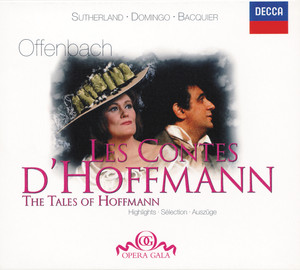 | Les Contes d'Hoffmann / Act 2: "Belle nuit, ô nuit d'amour" | Jacques Offenbach, Dame Joan Sutherland, Huguette Tourangeau, Chorus Pro Arte Lausanne Du Brassus, Radio Suisse Romande Chorus, Orchestre de la Suisse Romande, Richard Bonynge | D Major | 1 | 10B | 82 BPM | |
| Bizet: Carmen, Act 2: "Les tringles des sistres tintaient" (Carmen, Frasquita, Mercédès) | Georges Bizet, Maria Callas, Orchestre de l'Opéra National de Paris, Georges Prêtre, Orchestre du Théâtre National de l'Opéra Paris | C Major | 2 | 8B | 138 BPM | |
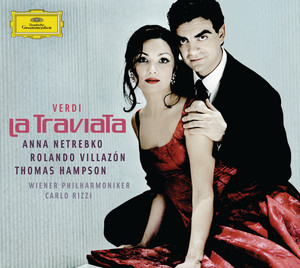 | La traviata / Act II: "Ah! Dite alla giovine" | Giuseppe Verdi, Anna Netrebko, Thomas Hampson, Wiener Philharmoniker, Carlo Rizzi | E♭ Major | 1 | 5B | 170 BPM | |
 | Aida / Act 2: Chi mai fra gl'inni e i plausi | Giuseppe Verdi, Elena Obraztsova, Orchestra Del Teatro Alla Scala, Milano, Claudio Abbado, Coro Del Teatro Alla Scala Di Milano, Romano Gandolfi | A♭ Major | 0 | 4B | 81 BPM | |
 | Messa da Requiem: Confutatis | Giuseppe Verdi, Elena Filipova, Gloria Scalchi, Cesar Hernandez, Carlo Colombara, Hungarian State Opera Chorus, Hungarian State Opera Orchestra, Pier Giorgio Morandi | F♯ Major | 0 | 2B | 81 BPM | |
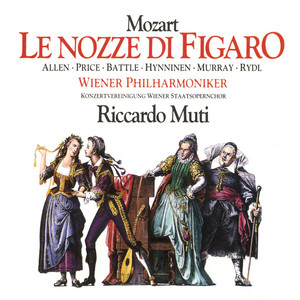 | Mozart: Le nozze di Figaro, K. 492, Act 2: "Voi, che sapete che cosa è amor" (Cherubino) | Wolfgang Amadeus Mozart, Riccardo Muti, Ann Murray, Wiener Philharmoniker | B♭ Major | 1 | 6B | 111 BPM | |
| Cavalleria rusticana: "Beato voi, compar Alfio...Inneggiamo, Il Signor" | Pietro Mascagni, Ida Bormida, Piero Cappuccilli, Julia Varady, The London Opera Chorus, National Philharmonic Orchestra, Gianandrea Gavazzeni | G Major | 2 | 9B | 68 BPM | |
 | Le nozze di Figaro, K. 492, Act III: No. 21, Sull' aria... Che soave zeffiretto "Letter Duet" | Wolfgang Amadeus Mozart, Edith Mathis, Gundula Janowitz, Orchester der Deutschen Oper Berlin, Karl Böhm | B♭ Major | 1 | 6B | 80 BPM | |
 | Carmen, WD 31 / Act 1: "L'amour est un oiseau rebelle" | Georges Bizet, Marilyn Horne, Wiener Opernchor, Wiener Opernorchester, Henry Lewis | D Major | 2 | 10B | 129 BPM |
- ISRC
- DEA809360005
- Label
- L-M Records/RCA Records