- BPM
- 107
- Key
- B♭ Major
- Camelot
- 6B
Variations on an Original Theme by Handel: Variation 24 by Johannes Brahms, David Wilde Song Details
On March 2, 2009, the song "Variations on an Original Theme by Handel: Variation 24" was released by Johannes Brahms, David Wilde. With This song being less than a minute long, we are pretty confident that this song does not contain any foul language. That being said, this song is pretty short compared to other songs. This song is part of Wilde Plays Brahms: Two Rhapsodies, Variations on an Original Theme, Three Intermezzi by Johannes Brahms, David Wilde. The song's track number on the album is #42 out of 44 tracks. Based on our data, United Kingdom was the country where this track was produced or recorded. In terms of popularity, Variations on an Original Theme by Handel: Variation 24 is currently unknown. The mood doesn't appear to be that danceable, but it still produces a high amount of positive energy.
BPM and Tempo
Since Variations on an Original Theme by Handel: Variation 24 by Johannes Brahms, David Wilde has a tempo of 107 beats per a minute, the tempo markings of this song would be Andante (at a walking pace). With Variations on an Original Theme by Handel: Variation 24 being at 107 BPM, the half-time would be 54 BPM with a double-time of 214 BPM.In addition, we consider the tempo speed to be pretty slow for this song. The time signature for this track is 3/4.
Music Key
This song is in the music key of B♭ Major. Or for those who are familiar with the camelot wheel, this song has a camelot key of 6B. So, the perfect camelot match for 6B would be either 6B or 7A. While, 7B can give you a low energy boost. For moderate energy boost, you would use 3B and a high energy boost can either be 8B or 1B. Though, if you want a low energy drop, you should looking for songs with either a camelot key of 6A or 5B will give you a low energy drop, 9B would be a moderate one, and 4B or 11B would be a high energy drop. Lastly, 3A allows you to change the mood.
Want to find the BPM and music key for other songs? Check out our BPM and Key Finder page!
- Popularity
- 0%
- Loudness
- -17.157 dB
- Acousticness
- 98%
- Danceability
- 37%
- Energy
- 30%
- Instrumentalness
- 85%
- Liveness
- 12%
- Loudness
- 71%
- Speechiness
- 4%
- Valence
- 90%
Recommendations
| Track | Artist | Key | Energy | Camelot | BPM | ||
|---|---|---|---|---|---|---|---|
 | 6 Violin Sonatas, Op. 10b No. 1 in F Major, J. 99: II. Romanza. Larghetto | Carl Maria von Weber, Frederieke Saeijs, Nino Gvetadze | B♭ Major | 0 | 6B | 85 BPM | |
 | Sarasate: Spanish Dances, Op. 23: II. Zapateado (Allegro) | Pablo de Sarasate, Itzhak Perlman, Samuel Sanders | A Major | 3 | 11B | 114 BPM | |
 | Sheep May Safely Graze | Johann Sebastian Bach, Leon Fleisher | B♭ Major | 0 | 6B | 98 BPM | |
 | Scottish Fantasy for Violin and Orchestra, Op. 46: I. Introduction: Grave, Adagio cantabile | Max Bruch, Joshua Bell, Academy of St. Martin in the Fields | E♭ Major | 2 | 5B | 60 BPM | |
 | String Quartet No.2 in D Major | Alexander Borodin, Borodin Quartet | A Major | 1 | 11B | 90 BPM | |
 | Slavonic Dance for Four Hands in E Minor, Op. 72/2: Dumka (Allegretto grazioso) | Antonín Dvořák, Khatia Buniatishvili | C Major | 0 | 8B | 77 BPM | |
 | Le roi s'amuse: Pavane | Léo Delibes, Slovak Philharmonic, Ondrej Lenard | B♭ Major | 0 | 6B | 91 BPM | |
 | Ständchen in D Minor (After Schubert), S. 560 | Franz Liszt, Lise de la Salle | D Major | 0 | 10B | 76 BPM | |
 | Fauré: Élégie in C Minor, Op. 24 | Gabriel Fauré, Jacqueline du Pré, Gerald Moore | A♭ Major | 0 | 4B | 56 BPM | |
 | Cello Sonata in G Minor, Op. 65: III. Largo | Frédéric Chopin, Emmanuelle Bertrand, Pascal Amoyel | B♭ Major | 0 | 6B | 89 BPM | |
 | Cello Concerto No. 1 in A Minor, Op. 33: I. Allegro non troppo | Camille Saint-Saëns, Mischa Maisky, Orpheus Chamber Orchestra | F Major | 2 | 7B | 131 BPM | |
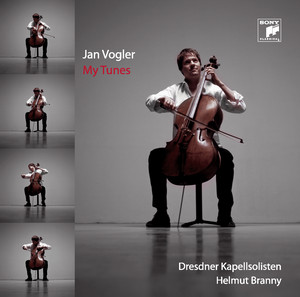 | Kol Nidrei, Op. 47 | Max Bruch, Jan Vogler, Helmut Branny | D Major | 1 | 10B | 136 BPM | |
 | Khachaturian: Spartacus (Highlights from the Ballet): Adagio of Spartacus and Phrygia | Aram Khachaturian, London Symphony Orchestra | A♭ Major | 1 | 4B | 88 BPM | |
 | Carmen Suite No. 1 (Arr. E. Guiraud): III. Intermezzo | Georges Bizet, Orquestra Simfònica de Barcelona i Nacional de Catalunya, Pablo González | E♭ Major | 0 | 5B | 81 BPM | |
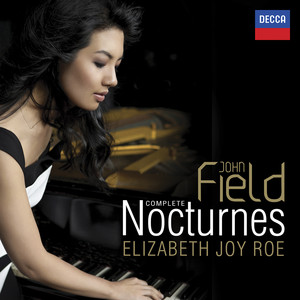 | Nocturne No. 1 in E-Flat Major, H. 24 | John Field, Elizabeth Joy Roe | E♭ Major | 0 | 5B | 75 BPM | |
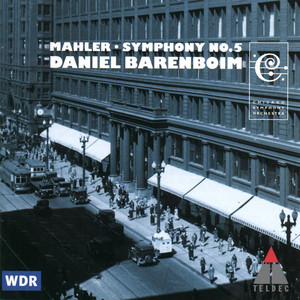 | Mahler: Symphony No. 5 in C-Sharp Minor: IV. Adagietto. Sehr langsam | Gustav Mahler, Daniel Barenboim, Chicago Symphony Orchestra | F Major | 1 | 7B | 82 BPM | |
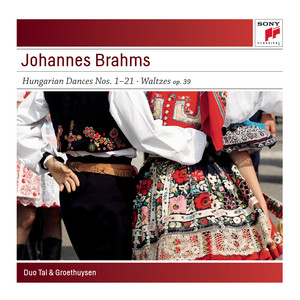 | 21 Hungarian Dances, WoO 1: No. 1 in G Minor. Allegro molto | Johannes Brahms, Tal & Groethuysen | G Minor | 1 | 6A | 70 BPM | |
 | Goldberg Variations, BWV 988: Aria | Johann Sebastian Bach, Glenn Gould | A♭ Major | 0 | 4B | 123 BPM | |
 | Symphonie fantastique, Op. 14, H 48: II. Un Bal | Hector Berlioz, London Symphony Orchestra, Sir Colin Davis | A Major | 1 | 11B | 113 BPM | |
 | 21 Hungarian Dances, WoO 1 (arr. J. Joachim for violin and piano): No. 6 in D Major (original in D-Flat Major) | Joseph Joachim, Johannes Brahms, Marat Bisengaliev, John Lenehan | B♭ Major | 1 | 6B | 72 BPM | |
 | Valse Fantaisie, Op. 49 | Raoul Koczalski, Ingolf Wunder | B Minor | 0 | 10A | 66 BPM | |
 | Minuet in G Minor, HWV 434 No. 4 (Transc. W. Kempff) | George Frideric Handel, Roberto Cominati | G Minor | 0 | 6A | 66 BPM | |
 | Zigeunerweisen, Op. 20: III. Un poco piú lento | Pablo de Sarasate, Jascha Heifetz, William Steinberg, RCA Victor Symphony Orchestra | C Minor | 1 | 5A | 100 BPM | |
 | Bach, JS : Well-Tempered Clavier Book 1 : Prelude No.1 in C major BWV846 | Daniel Barenboim | C Major | 0 | 8B | 95 BPM | |
 | VI. June. Barcarolle | Pyotr Ilyich Tchaikovsky, Mikhail Pletnev | G Minor | 0 | 6A | 69 BPM |
- ISRC
- GBEBL0904042
- Label
- L-M Records/RCA Records