- BPM
- 145
- Key
- G Major
- Camelot
- 9B
Requiem, Op. 48: 7. In paradisum by Gabriel Fauré, MDR Leipzig Radio Chorus, Staatskapelle Dresden, Sir Colin Davis Song Details
"Requiem, Op. 48: 7. In paradisum" by Gabriel Fauré, MDR Leipzig Radio Chorus, Staatskapelle Dresden, Sir Colin Davis had its release date on January 1, 1985. With this song being around four minutes long, at 3:31, the duration of this song is pretty average compared to other songs. This track is safe for children and doesn't appear to contain any foul language, since the "Explicit" tag was not present in this track. The song is number 7 out of 7 in Fauré: Requiem by Gabriel Fauré, Lucia Popp, Simon Estes, MDR Leipzig Radio Chorus, Staatskapelle Dresden, Sir Colin Davis. Going off of the ISRC code of this track, we detected that the origin of this track is from Netherlands. Based on our statistics, Requiem, Op. 48: 7. In paradisum's popularity is not that popular right now. In our opinion, the overall tone is not very danceable and projects negative sounds, such as being sad, depressed, or angry.
BPM and Tempo
The tempo marking of Requiem, Op. 48: 7. In paradisum by Gabriel Fauré, MDR Leipzig Radio Chorus, Staatskapelle Dresden, Sir Colin Davis is Allegro (fast, quick, and bright), since this song has a tempo of 145 BPM. With that information, we can conclude that the song has a fast tempo. This song can go great with jogging or cycling. The time signature for this track is 4/4.
Music Key
This song is in the music key of G Major. This also means that this song has a camelot key of 9B. So, the perfect camelot match for 9B would be either 9B or 10A. While, 10B can give you a low energy boost. For moderate energy boost, you would use 6B and a high energy boost can either be 11B or 4B. Though, if you want a low energy drop, you should looking for songs with either a camelot key of 9A or 8B will give you a low energy drop, 12B would be a moderate one, and 7B or 2B would be a high energy drop. Lastly, 6A allows you to change the mood.
Want to find the BPM and music key for other songs? Check out our BPM and Key Finder page!
- Popularity
- 16%
- Loudness
- -24.622 dB
- Acousticness
- 95%
- Danceability
- 21%
- Energy
- 8%
- Instrumentalness
- 1%
- Liveness
- 33%
- Loudness
- 59%
- Speechiness
- 4%
- Valence
- 11%
Recommendations
| Track | Artist | Key | Energy | Camelot | BPM | ||
|---|---|---|---|---|---|---|---|
 | Dvořák: 4 Romantic Pieces, Op. 75, B. 150: No. 1, Allegro moderato | Antonín Dvořák, Renaud Capuçon, Khatia Buniatishvili | B♭ Major | 1 | 6B | 107 BPM | |
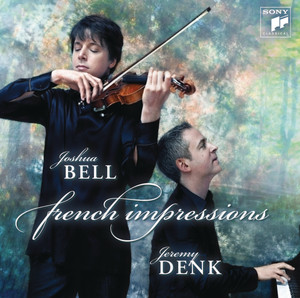 | Violin Sonata in A major, FWV 8: IV. Allegretto poco mosso | César Franck, Joshua Bell, Jeremy Denk | A Major | 1 | 11B | 94 BPM | |
 | Polovetsian Dances from Prince Igor: Introduzione | Alexander Borodin, George Szell, The Cleveland Orchestra | A Major | 1 | 11B | 83 BPM | |
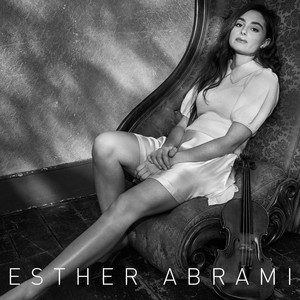 | Three Romances for Violin and Piano, Op. 22: I. Andante molto | Clara Schumann, Esther Abrami, Iyad Sughayer | D♭ Major | 2 | 3B | 81 BPM | |
 | Schumann, Clara: 3 Romances, Op. 11: No. 1 in E-Flat Minor | Clara Schumann, Sophie Pacini | E♭ Minor | 0 | 2A | 60 BPM | |
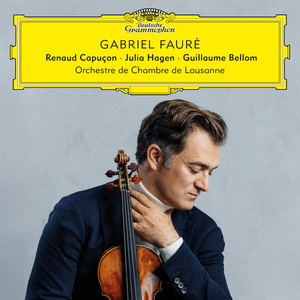 | Pavane, Op. 50 (Version for Orchestra) | Gabriel Fauré, Orchestre de Chambre de Lausanne, Renaud Capuçon | F♯ Minor | 0 | 11A | 70 BPM | |
 | Dolly, Op.56: 6. Le pas Espagnol | Gabriel Fauré, Katia Labèque, Marielle Labèque | F Major | 2 | 7B | 126 BPM | |
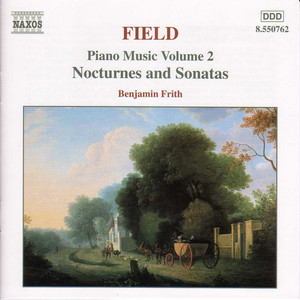 | Nocturne No. 10 In E Minor | Benjamin Frith, John Field | E Minor | 0 | 9A | 65 BPM | |
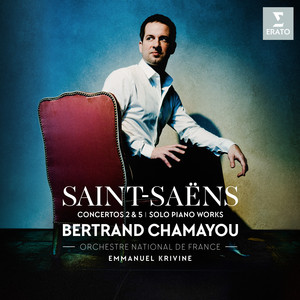 | Saint-Saëns: Piano Concerto No. 2 in G Minor, Op. 22: I. Andante sostenuto | Camille Saint-Saëns, Bertrand Chamayou, Emmanuel Krivine, Orchestre National De France | G Minor | 2 | 6A | 94 BPM | |
 | Nocturne No. 6 in F Major, H. 40 "Cradle Song" | John Field, Alice Sara Ott | F Major | 0 | 7B | 67 BPM | |
 | Thaïs, Act II: Méditation | Jules Massenet, Joshua Bell, Royal Philharmonic Orchestra, Andrew Litton | E Minor | 1 | 9A | 172 BPM | |
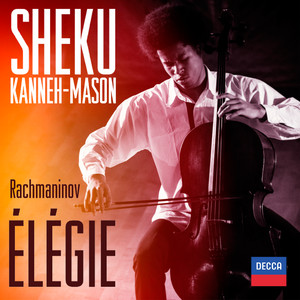 | Morceaux de Fantaisie, Op. 3: 1. Elégie | Sergei Rachmaninoff, Sheku Kanneh-Mason, Isata Kanneh-Mason | E♭ Minor | 1 | 2A | 89 BPM | |
 | L'heure exquise | Reynaldo Hahn, Christian-Pierre La Marca | D Major | 0 | 10B | 80 BPM | |
 | Crisantemi | Brodsky Quartet | F♯ Minor | 0 | 11A | 75 BPM | |
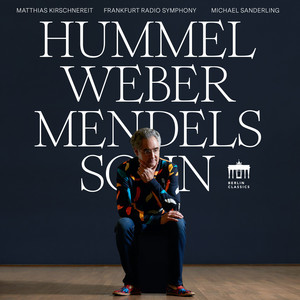 | Capriccio brillant, Op. 22: Andante | Felix Mendelssohn, Matthias Kirschnereit, Michael Sanderling, Frankfurt Radio Symphony Orchestra | B Major | 0 | 1B | 91 BPM | |
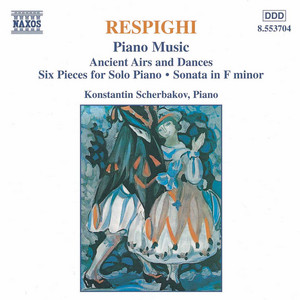 | Antiche Danze Ed Arie Per Liuto (Ancient Airs And Dances), P. 114: V. Siciliana | Ottorino Respighi, Konstantin Scherbakov | B Minor | 0 | 10A | 126 BPM | |
 | There Will Come | Rebecca Dale, Philharmonia Orchestra, Michael Collins, Steven Isserlis | B♭ Major | 1 | 6B | 67 BPM | |
 | 24 Preludes, Op. 11: No. 15 in D-Flat Major | Alexander Scriabin, Evgeny Zarafiants | D♭ Major | 0 | 3B | 70 BPM | |
 | Brook Green Suite: II. Air | Gustav Holst, English Sinfonia, Howard Griffiths | E♭ Major | 0 | 5B | 128 BPM | |
 | Les noces de Jeanette: Air du rossignol (Arr. Pierre for Flute & Orchestra) | Victor Massé, Patrick Gallois, Richard Friedman, Fabrice Pierre, London Festival Orchestra, Ross Pople | A♭ Major | 1 | 4B | 135 BPM | |
 | Carnival of the Animals, R. 125: XIII. The Swan | Camille Saint-Saëns, Marian Lapsansky, Peter Toperczer, Slovak Radio Symphony Orchestra, Ondrej Lenard | G Major | 0 | 9B | 79 BPM | |
 | Romance In B Flat Major, Op. 28 : Romance | Gabriel Fauré, Pascal Devoyon, Dong-Suk Kang | A Major | 2 | 11B | 89 BPM | |
 | Mozart: Piano Concerto No. 21 in C Major, K. 467: II. Andante | Wolfgang Amadeus Mozart, Jonathan Biss, Orpheus Chamber Orchestra | F Major | 0 | 7B | 183 BPM | |
 | Dido & Aeneas, Z. 626: When I Am Laid in Earth "Dido's Lament" (Transcr. L. Stokowski) | Henry Purcell, Timothy Walden, Bournemouth Symphony Orchestra, José Serebrier | E Major | 0 | 12B | 76 BPM | |
| Nocturne No. 2 in C Minor, H. 25 | John Field, Alice Sara Ott | F Major | 0 | 7B | 67 BPM |
- ISRC
- NLA508436007
- Label
- L-M Records/RCA Records