- BPM
- 84
- Key
- E Major
- Camelot
- 12B
Dolly Suite, Op. 56: I. Berceuse (Arr. Cortot) by Gabriel Fauré, Lívia Rév Song Details
"Dolly Suite, Op. 56: I. Berceuse (Arr. Cortot)" by Gabriel Fauré, Lívia Rév had its release date on May 1, 1987. The duration of This song is about 3 minutes long, at 3:04. Based on our data, This song appears to be safe for all ages and is not considered explicit. This track is about the average length of a typical track. The song is number 13 out of 33 in For Children: Piano Music for the Young to Play and Enjoy by Lívia Rév, Johann Sebastian Bach, Louis-Claude Daquin, Wolfgang Amadeus Mozart, Ludwig van Beethoven, Robert Schumann, Frédéric Chopin, Franz Liszt, Georges Bizet, Gabriel Fauré, Pyotr Ilyich Tchaikovsky, Heitor Villa-Lobos, André Jolivet, Sergei Prokofiev, Claude Debussy, Béla Bartók, Milosz Magin, Janez Matičič. Going off of the ISRC code of this track, we detected that the origin of this track is from United Kingdom. Dolly Suite, Op. 56: I. Berceuse (Arr. Cortot) is unknown right now. In our opinion, the overall tone is not very danceable and projects negative sounds, such as being sad, depressed, or angry.
BPM and Tempo
The tempo marking of Dolly Suite, Op. 56: I. Berceuse (Arr. Cortot) by Gabriel Fauré, Lívia Rév is Andante (at a walking pace), since this song has a tempo of 84 BPM. With that information, we can conclude that the song has a slow tempo. The time signature for this track is 4/4.
Music Key
This song is in the music key of E Major. This also means that this song has a camelot key of 12B. So, the perfect camelot match for 12B would be either 12B or 1A. While, 1B can give you a low energy boost. For moderate energy boost, you would use 9B and a high energy boost can either be 2B or 7B. Though, if you want a low energy drop, you should looking for songs with either a camelot key of 12A or 11B will give you a low energy drop, 3B would be a moderate one, and 10B or 5B would be a high energy drop. Lastly, 9A allows you to change the mood.
Want to find the BPM and music key for other songs? Check out our BPM and Key Finder page!
- Popularity
- 0%
- Loudness
- -29.276 dB
- Acousticness
- 99%
- Danceability
- 26%
- Energy
- 8%
- Instrumentalness
- 92%
- Liveness
- 10%
- Loudness
- 51%
- Speechiness
- 5%
- Valence
- 7%
Recommendations
| Track | Artist | Key | Energy | Camelot | BPM | ||
|---|---|---|---|---|---|---|---|
 | 6 Impromptus, Op. 5: Impromptu V | Jean Sibelius, Leif Ove Andsnes | B Minor | 0 | 10A | 72 BPM | |
 | Cello Sonata in B-Flat Major, Op. 46: 2. Andante sostenuto | Louise Farrenc, David Berlin, Benjamin Martin | A♭ Major | 0 | 4B | 65 BPM | |
 | 13 Pieces for Piano, Op. 76: Elegiaco, No. 10 | Jean Sibelius, Leif Ove Andsnes | E Major | 0 | 12B | 169 BPM | |
 | Les noces de Jeanette: Air du rossignol (Arr. Pierre for Flute & Orchestra) | Victor Massé, Patrick Gallois, Richard Friedman, Fabrice Pierre, London Festival Orchestra, Ross Pople | A♭ Major | 1 | 4B | 135 BPM | |
 | Lieder ohne Worte, Op. 19: No. 6 in G Minor (Andante sostenuto) "Venetian Gondola Song", MWV U78 | Felix Mendelssohn, Jan Lisiecki | G Minor | 0 | 6A | 168 BPM | |
 | 6 Chorale Preludes, BV B 50: Herzlich tut mich verlangen, Op. 122/10 | Johannes Brahms, Ferruccio Busoni, Igor Levit | A Minor | 0 | 8A | 84 BPM | |
 | Dvořák: 7 Gipsy Melodies, Op. 55, B. 104: No. 4, Als die alte Mutter (Transcr. for Trumpet and Orchestra) | Antonín Dvořák, Tine Thing Helseth, Eivind Aadland, Royal Liverpool Philharmonic Orchestra | D Major | 1 | 10B | 92 BPM | |
 | There Will Come | Rebecca Dale, Philharmonia Orchestra, Michael Collins, Steven Isserlis | B♭ Major | 1 | 6B | 67 BPM | |
 | 13 Pieces for Piano, Op. 76: II. Etude | Jean Sibelius, Jian Wang, Göran Söllscher | G Minor | 0 | 6A | 124 BPM | |
 | Fauré: Pavane, Op. 50 (Instrumental Version) | Gabriel Fauré, Sir Neville Marriner, Academy of St. Martin in the Fields | F♯ Minor | 1 | 11A | 70 BPM | |
 | Variations on a Rococo Theme, Op. 33: Var. 6 - Andante | Pyotr Ilyich Tchaikovsky, Pablo Ferrandez, Martin Fröst, Swedish Chamber Orchestra | F Major | 2 | 7B | 114 BPM | |
 | Klavierquintett Nr. 1 d-Moll, Op. 89: I. Molto moderato | Gabriel Fauré, Fine Arts Quartet, Cristina Ortiz | D Minor | 1 | 7A | 88 BPM | |
 | Pavane pour une infante défunte in G major, M. 19 | Maurice Ravel, Khatia Buniatishvili | E Minor | 0 | 9A | 63 BPM | |
 | Sicilienne, Op. 78 (arr. for flute and harp) | Donald Sosin, Gabriel Fauré, Nora Shulman, Judy Loman | B♭ Major | 1 | 6B | 153 BPM | |
 | Thaïs / Acte Deux: Meditation | Jules Massenet, Michel Schwalbé, Berliner Philharmoniker, Herbert von Karajan | B♭ Major | 3 | 6B | 99 BPM | |
 | Schwanenlied | Fanny Mendelssohn, Eva Oertle, Consuelo Giulianelli | G Minor | 1 | 6A | 143 BPM | |
 | Consolation No. 3 in D-Flat Major, S. 172 | Franz Liszt, Lang Lang | D♭ Major | 0 | 3B | 74 BPM | |
 | 5 Pieces for Violin and Piano: I. Elegia. Andante larghetto | Valentin Silvestrov, Duo Gazzana | E♭ Major | 0 | 5B | 74 BPM | |
 | Orfeo ed Euridice, Wq. 30, Act II: Danse des champs-elysées "Mélodie" (Arr. for Piano by Ignaz Friedman) | Christoph Willibald Gluck, Joseph Banowetz | A Major | 0 | 11B | 72 BPM | |
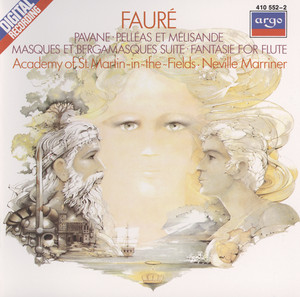 | Pelléas et Mélisande, Op. 80, Suite: I. Prélude | Gabriel Fauré, Academy of St. Martin in the Fields, Sir Neville Marriner | G Major | 1 | 9B | 134 BPM | |
 | 6 Melodies, Op. 4 - 6 melodies, Op. 5: Allegretto | Fanny Mendelssohn, Beatrice Rauchs | G Minor | 1 | 6A | 107 BPM | |
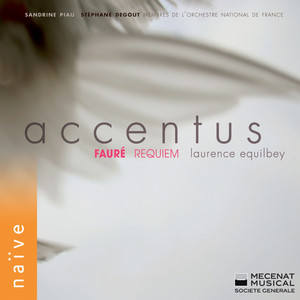 | Requiem, Op. 48: IV. Sanctus | Gabriel Fauré, Laurence Equilbey, Accentus, Orchestre National De France | E♭ Major | 1 | 5B | 64 BPM | |
 | Chanson de Matin, Op. 15 No. 2 (Version for Orchestra) | Edward Elgar, New Zealand Symphony Orchestra, James Judd | G Major | 1 | 9B | 141 BPM | |
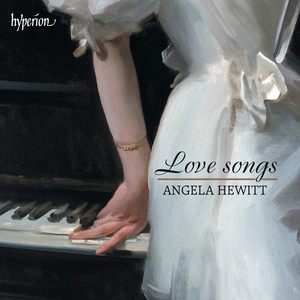 | Liebeslied "Widmung, von Robert Schumann", S. 566 (After Myrthen, Op. 25/1) | Franz Liszt, Angela Hewitt | G Major | 0 | 9B | 63 BPM | |
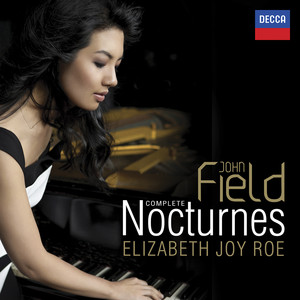 | Nocturne No. 1 in E-Flat Major, H. 24 | John Field, Elizabeth Joy Roe | E♭ Major | 0 | 5B | 75 BPM |
- ISRC
- GBAJY8618513
- Label
- L-M Records/RCA Records