- BPM
- 99
- Key
- A Major
- Camelot
- 11B
The Rake's Progress, Act I Scene 1: Recitative. Tom Rakewell? (Nick, Tom) by Igor Stravinsky, Jayne West, Jon Garrison, Arthur Woodley, John Cheek, Shirley Love, Wendy White, Melvin Lowery, Jeffrey Johnson, Gregg Smith Singers, Orchestra of St. Luke's, Robert Craft Song Details
Igor Stravinsky, Jayne West, Jon Garrison, Arthur Woodley, John Cheek, Shirley Love, Wendy White, Melvin Lowery, Jeffrey Johnson, Gregg Smith Singers, Orchestra of St. Luke's, Robert Craft's ' "The Rake's Progress, Act I Scene 1: Recitative. Tom Rakewell? (Nick, Tom)" was released on its scheduled release date, May 26, 2009. With This song being less than two minutes long, at 1:24, we are fairly confident that this song is not explicit and is safe for all ages. Based on the duration of this song, this song duration is much smaller than the average song duration. There are a total of 73 in the song's album "Stravinsky, I.: Rake's Progress (The) [Opera]". In this album, this song's track order is #6. Furthermore, we believe that the track originated from Hong Kong. In terms of popularity, The Rake's Progress, Act I Scene 1: Recitative. Tom Rakewell? (Nick, Tom) is currently unknown. Since there is more of a neutral sound being played, this makes the track somewhat danceable.
BPM and Tempo
With The Rake's Progress, Act I Scene 1: Recitative. Tom Rakewell? (Nick, Tom) by Igor Stravinsky, Jayne West, Jon Garrison, Arthur Woodley, John Cheek, Shirley Love, Wendy White, Melvin Lowery, Jeffrey Johnson, Gregg Smith Singers, Orchestra of St. Luke's, Robert Craft having a BPM of 99 with a half-time of 50 BPM and a double-time of 198 BPM, we would consider this track to have a Andante (at a walking pace) tempo marking. Because of this, we believe that the song has an overall slow tempo. The time signature for this track is 4/4.
Music Key
This song is in the music key of A Major. Or for those who are familiar with the camelot wheel, this song has a camelot key of 11B. So, the perfect camelot match for 11B would be either 11B or 12A. While, 12B can give you a low energy boost. For moderate energy boost, you would use 8B and a high energy boost can either be 1B or 6B. Though, if you want a low energy drop, you should looking for songs with either a camelot key of 11A or 10B will give you a low energy drop, 2B would be a moderate one, and 9B or 4B would be a high energy drop. Lastly, 8A allows you to change the mood.
Want to find the BPM and music key for other songs? Check out our BPM and Key Finder page!
- Popularity
- 0%
- Loudness
- -21.165 dB
- Acousticness
- 97%
- Danceability
- 41%
- Energy
- 18%
- Instrumentalness
- 0%
- Liveness
- 43%
- Loudness
- 65%
- Speechiness
- 6%
- Valence
- 54%
Recommendations
| Track | Artist | Key | Energy | Camelot | BPM | ||
|---|---|---|---|---|---|---|---|
 | Tchaikovsky: Symphony No. 5 in E Minor, Op. 64: III. Valse. Allegro moderato | Pyotr Ilyich Tchaikovsky, Daniel Barenboim, Chicago Symphony Orchestra | A Major | 1 | 11B | 146 BPM | |
 | Romeo and Juliet, Op. 64 - Act 1: The Street Wakens - Morning Dance | Sergei Prokofiev, The Cleveland Orchestra, Lorin Maazel | G Major | 2 | 9B | 90 BPM | |
 | Nocturnes, CD 98: I. Nuages | Claude Debussy, Berliner Philharmoniker, Claudio Abbado | C Major | 0 | 8B | 83 BPM | |
 | The Three-Cornered Hat: Suite No. 2 - Three Dances, I. The Neighbors' Dance - Seguidillas | Manuel de Falla, Philadelphia Orchestra, Raphael Frühbeck de Burgos | G Major | 2 | 9B | 78 BPM | |
 | Scheherazade: Sinbad's mighty bird, the Roc | Nikolai Rimsky-Korsakov, Lars Hjalmar Joakim | G Major | 3 | 9B | 143 BPM | |
 | Peer Gynt Suite No. 1, Op. 46: II. The Death of Åse - Recorded 1982 | Edvard Grieg, Berliner Philharmoniker, Herbert von Karajan | G Major | 0 | 9B | 45 BPM | |
 | The Rite of Spring: Part One: Adoration of the Earth: Games of the Rival Tribes | Igor Stravinsky, Teodor Currentzis, musicAeterna | G Major | 4 | 9B | 80 BPM | |
 | Elegie, Op. 24 | Gabriel Fauré, Maria Kliegel, Nina Tichman | A♭ Major | 0 | 4B | 72 BPM | |
 | Variations on a Hungarian Folksong "The Peacock": Moderato | Zoltán Kodály, Neeme Järvi, Chicago Symphony Orchestra | C Minor | 0 | 5A | 69 BPM | |
 | Béatrice et Bénédict, Op. 27, H 138: Ouverture | Hector Berlioz, London Symphony Orchestra, Sir Colin Davis | G Major | 0 | 9B | 101 BPM | |
 | Le Sacre du Printemps - Revised version for Orchestra (published 1947) / Part 1: The Adoration of the Earth: The Augurs of Spring: Dances of the Young Girls | Igor Stravinsky, Berliner Philharmoniker, Herbert von Karajan | A♭ Minor | 3 | 1A | 104 BPM | |
 | Miroirs, M. 43: No. 3, Une barque sur l'ocean (Version for Orchestra) | Maurice Ravel, Orchestre Philharmonique Du Luxembourg, Gustavo Gimeno | A Major | 0 | 11B | 134 BPM | |
 | Symphony No. 3 in C Minor, Op. 78 "Organ": I. Adagio | Camille Saint-Saëns, Eugene Ormandy, Philadelphia Orchestra | F Minor | 0 | 4A | 84 BPM | |
 | Symphony No. 2 in D Major, Op. 43: I. Allegretto | Jean Sibelius, Berliner Philharmoniker, Sir Simon Rattle | D Major | 1 | 10B | 117 BPM | |
| Romeo and Juliet, Op. 64 - Act 1: The Young Juliet | Sergei Prokofiev, The Cleveland Orchestra, Lorin Maazel | F Major | 0 | 7B | 83 BPM | |
 | Strauss, R: Ein Heldenleben, Op. 40: V. Des Helden Friedenswerke | Richard Strauss, Sir Simon Rattle, Berliner Philharmoniker, Guy Braunstein | D Major | 1 | 10B | 87 BPM | |
 | Variations On An Original Theme, Op.36 "Enigma": 13. Romanza *** (Moderato) | Edward Elgar, BBC Symphony Orchestra, Leonard Bernstein | A♭ Major | 0 | 4B | 87 BPM | |
 | Peter Grimes, 4 Sea Interludes, Op. 33a: III. Moonlight | Benjamin Britten, London Symphony Orchestra, Steuart Bedford | E♭ Major | 0 | 5B | 78 BPM | |
 | Mavra (arr. S. Dushkin): Mavra: Russian Maiden's Song, "Parasha's Aria" (arr. S. Dushkin for violin and piano) | Samuel Dushkin, Igor Stravinsky, Livia Sohn, Benjamin Loeb | G Minor | 0 | 6A | 140 BPM | |
| Scheherazade: Calm - the triumph of Scheherazade | Nikolai Rimsky-Korsakov, Lars Hjalmar Joakim | E Minor | 0 | 9A | 68 BPM | |
 | Symphony No. 2 in C Minor "Resurrection": III. In ruhig fließender Bewegung | Gustav Mahler, Leonard Bernstein, New York Philharmonic | B Minor | 0 | 10A | 112 BPM | |
 | Piano Concerto No. 2 in C Minor, Op. 18: 1. Moderato | Sergei Rachmaninoff, Valentina Lisitsa, London Symphony Orchestra, Michael Francis | C Minor | 1 | 5A | 55 BPM | |
 | Pini di Roma, P. 141: I. I pini di Villa Borghese | Ottorino Respighi, New York Philharmonic, Giuseppe Sinopoli | G Minor | 1 | 6A | 65 BPM | |
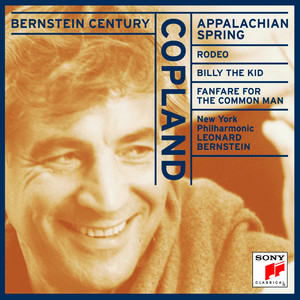 | Appalachian Spring: VIII. Coda. Moderato | Aaron Copland, Leonard Bernstein, New York Philharmonic | C Major | 0 | 8B | 106 BPM | |
 | Symphony No. 8 in G Minor, Op. 88, B. 163: I. Allegro con brio | Antonín Dvořák, London Symphony Orchestra, Sir Colin Davis | G Major | 1 | 9B | 139 BPM |
- ISRC
- HKI190908206
- Label
- L-M Records/RCA Records