- BPM
- 105
- Key
- E♭ Major
- Camelot
- 5B
Messiah, HWV 56, Part II: No. 37, The Lord Gave the Word by George Frideric Handel, London Symphony Orchestra, Sir Colin Davis, Tenebrae Song Details
George Frideric Handel, London Symphony Orchestra, Sir Colin Davis, Tenebrae's ' "Messiah, HWV 56, Part II: No. 37, The Lord Gave the Word" was released on its scheduled release date, October 9, 2007. With This song being less than two minutes long, at 1:11, we are fairly confident that this song is not explicit and is safe for all ages. Based on the duration of this song, this song duration is much smaller than the average song duration. The track order of this song in George Frideric Handel, London Symphony Orchestra, Sir Colin Davis, Susan Gritton, Sara Mingardo, Mark Padmore, Alastair Miles, Tenebrae's "Handel: Messiah" album is number 11 out of 53. On top of that, United Kingdom appears to be the country where this track was created. In terms of popularity, Messiah, HWV 56, Part II: No. 37, The Lord Gave the Word is currently not that popular. Since there is more of a neutral sound being played, this makes the track somewhat danceable.
BPM and Tempo
We consider the tempo marking of Messiah, HWV 56, Part II: No. 37, The Lord Gave the Word by George Frideric Handel, London Symphony Orchestra, Sir Colin Davis, Tenebrae to be Andante (at a walking pace) because the track has a tempo of 105 BPM, a half-time of 52BPM, and a double-time of 210 BPM. Based on that, the speed of the song's tempo is slow. The time signature for this track is 4/4.
Music Key
This song is in the music key of E♭ Major. This also means that this song has a camelot key of 5B. So, the perfect camelot match for 5B would be either 5B or 6A. While, 6B can give you a low energy boost. For moderate energy boost, you would use 2B and a high energy boost can either be 7B or 12B. Though, if you want a low energy drop, you should looking for songs with either a camelot key of 5A or 4B will give you a low energy drop, 8B would be a moderate one, and 3B or 10B would be a high energy drop. Lastly, 2A allows you to change the mood.
Want to find the BPM and music key for other songs? Check out our BPM and Key Finder page!
- Popularity
- 7%
- Loudness
- -21.81 dB
- Acousticness
- 96%
- Danceability
- 42%
- Energy
- 13%
- Instrumentalness
- 0%
- Liveness
- 7%
- Loudness
- 64%
- Speechiness
- 3%
- Valence
- 58%
Recommendations
| Track | Artist | Key | Energy | Camelot | BPM | ||
|---|---|---|---|---|---|---|---|
 | Concerto grosso in D Minor, Op. 6 No. 10, HWV 328: V. Allegro moderato | George Frideric Handel, Simon Standage, Elizabeth Wilcock, Anthony Pleeth, Robert Woolley, Trevor Pinnock, The English Concert | A Major | 1 | 11B | 79 BPM | |
 | Concerto Per Oboe, Archi E Continuo In Re Minore: II. Adagio | Alessandro Marcello, Venice Baroque Orchestra | D♭ Minor | 0 | 12A | 79 BPM | |
 | Zoroastre, RCT 62, Acte III, Scène VII: Gavotte en rondeau | Jean-Philippe Rameau, Teodor Currentzis | A♭ Minor | 1 | 1A | 116 BPM | |
 | Symphony in A Major, J-C 62: II. Andante e pianissimo | Giovanni Battista Sammartini, Aradia Ensemble, Kevin Mallon | A♭ Minor | 0 | 1A | 104 BPM | |
 | Sinfonia In D Major, Wq. 183/1, H. 663 : II. Largo | Carl Philipp Emanuel Bach, Salzburg Chamber Philharmonic Orchestra | F Major | 0 | 7B | 133 BPM | |
 | Keyboard Sonata in E Major, Kk. 20 | Domenico Scarlatti, Ivo Pogorelich | E Major | 0 | 12B | 130 BPM | |
 | 16 Waltzes, Op. 39 (Version for Piano Duet): No. 15 in A-Flat Major | Johannes Brahms, Tal & Groethuysen | A Major | 0 | 11B | 126 BPM | |
 | Magnificat, Wq. 215: Magnificat, Wq. 215: 1. Chor. Magnificat anima mea Dominum | Carl Philipp Emanuel Bach, RIAS Kammerchor, Akademie für Alte Musik Berlin, Hans-Christoph Rademann | D♭ Major | 3 | 3B | 135 BPM | |
 | Burlesque de Quixotte: III. Son Attaque des moulins à vent | Georg Philipp Telemann, Simon Standage, Collegium Musicum 90 | D♭ Major | 4 | 3B | 134 BPM | |
 | Oboe Concerto in C Major, Op. 9, No. 5: I. Allegro | Tomaso Albinoni, Anthony Camden, London Virtuosi, John Georgiadis | C Major | 3 | 8B | 108 BPM | |
 | Concerto No. 2 In G Minor RV 578: II. Allegro (Vivaldi) | Accademia Bizantina | F♯ Minor | 3 | 11A | 120 BPM | |
 | Fauré: Requiem, Op. 48: VII. In Paradisum | Gabriel Fauré, Paavo Järvi, Orchestre de Paris | D Major | 0 | 10B | 147 BPM | |
 | Thaïs: Méditation | Jules Massenet, Bomsori, NFM Wrocław Philharmonic, Giancarlo Guerrero | D Major | 0 | 10B | 84 BPM | |
 | String Quintet in E Major, G. 275: III. Minuetto - Trio | Luigi Boccherini, Cuarteto Casals, Eckart Runge | A Major | 0 | 11B | 127 BPM | |
 | Symphony for Flute, Oboe, Horn and Strings in D Major: III. Presto | Domenico Cimarosa, Chopin Chamber Orchestra, Winston Dan Vogel | E♭ Major | 1 | 5B | 116 BPM | |
 | Oboe Concerto in D Minor, S. Z799: II. Adagio | Alessandro Marcello, Heinz Holliger, I Musici | D Minor | 1 | 7A | 79 BPM | |
 | Suite in G minor: VII. Rigaudon (Arr. A. Camden) | George Frideric Handel, Anthony Camden, Julia Girdwood, City of London Sinfonia, Nicholas Ward | C Minor | 1 | 5A | 118 BPM | |
 | Tafelmusik - Banquet Music In 3 Parts / Production 1 - 3. Concert In A Major, TWV 53:A2: 2. Allegro | Georg Philipp Telemann, Musica Antiqua Köln, Reinhard Goebel | A♭ Major | 2 | 4B | 126 BPM | |
 | Symphony No. 1 in B-Flat Major, Op. 2: I. Allegro | William Boyce, Aradia Ensemble, Kevin Mallon | A Major | 1 | 11B | 86 BPM | |
 | Le Tic-Toc-Choc, ou Les Maillotins: 18ème ordre, 3ème livre | François Couperin, Iddo Bar-Shaï | C Major | 3 | 8B | 145 BPM | |
 | Trio Sonata in B Minor, H. 567: III. Presto | Carl Philipp Emanuel Bach, Lisa Batiashvili, Emmanuel Pahud, Sebastian Klinger, Peter Kofler | A Major | 2 | 11B | 110 BPM | |
 | Flute Concerto in D Minor, QV 5:81: II. Arioso | Johann Joachim Quantz, Mary Oleskiewicz, Concerto Armonico Budapest, Miklós Spányi | G Minor | 2 | 6A | 77 BPM | |
 | Lo frate 'nnamorato: II. Andante | Giovanni Battista Pergolesi, Orchestra da Camera di Napoli, Enzo Amato | E Minor | 5 | 9A | 165 BPM | |
 | Suite Les Boréades, RCT 31: 9. Entrée d' Albaris, Polimnie, les Muses, Zéphirs, Saisons, Les Heures et Les Arts | Jean-Philippe Rameau, Orchestra Of The 18th Century, Frans Brüggen | D♭ Major | 2 | 3B | 85 BPM | |
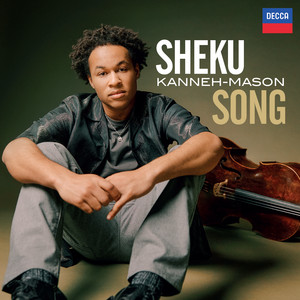 | Savior of the Nations, Come, BWV 659 (Arr. for 4 Cellos) | Johann Sebastian Bach, Sheku Kanneh-Mason, Hannah Roberts, Ben Davies, Max Ruisi | C Major | 0 | 8B | 122 BPM |
- ISRC
- GBDGQ0610736
- Label
- L-M Records/RCA Records