- BPM
- 88
- Key
- E Major
- Camelot
- 12B
Tchaikovsky: Variations on a Rococo Theme for Cello and Orchestra, Op. 33: Variation V. Allegro moderato - Cadenza by Pyotr Ilyich Tchaikovsky, Edgar Moreau, Michael Sanderling, Luzerner Sinfonieorchester Song Details
"Tchaikovsky: Variations on a Rococo Theme for Cello and Orchestra, Op. 33: Variation V. Allegro moderato - Cadenza" by Pyotr Ilyich Tchaikovsky, Edgar Moreau, Michael Sanderling, Luzerner Sinfonieorchester had its release date on November 8, 2024. With this song being around four minutes long, at 3:36, the duration of this song is pretty average compared to other songs. This track is safe for children and doesn't appear to contain any foul language, since the "Explicit" tag was not present in this track. There are a total of 18 in the song's album "Rococo". In this album, this song's track order is #6. Furthermore, we believe that the track originated from United Kingdom. Tchaikovsky: Variations on a Rococo Theme for Cello and Orchestra, Op. 33: Variation V. Allegro moderato - Cadenza is not that popular right now. In our opinion, the overall tone is not very danceable and projects negative sounds, such as being sad, depressed, or angry.
BPM and Tempo
With Tchaikovsky: Variations on a Rococo Theme for Cello and Orchestra, Op. 33: Variation V. Allegro moderato - Cadenza by Pyotr Ilyich Tchaikovsky, Edgar Moreau, Michael Sanderling, Luzerner Sinfonieorchester having a BPM of 88 with a half-time of 44 BPM and a double-time of 176 BPM, we would consider this track to have a Andante (at a walking pace) tempo marking. Because of this, we believe that the song has an overall slow tempo. Looking at the BPM of this song, this song might go great with yoga or pilates. The time signature for this track is 4/4.
Music Key
This song has a musical key of E Major. Or for those who are familiar with the camelot wheel, this song has a camelot key of 12B. So, the perfect camelot match for 12B would be either 12B or 1A. While, 1B can give you a low energy boost. For moderate energy boost, you would use 9B and a high energy boost can either be 2B or 7B. Though, if you want a low energy drop, you should looking for songs with either a camelot key of 12A or 11B will give you a low energy drop, 3B would be a moderate one, and 10B or 5B would be a high energy drop. Lastly, 9A allows you to change the mood.
Want to find the BPM and music key for other songs? Check out our BPM and Key Finder page!
- Popularity
- 1%
- Loudness
- -23.817 dB
- Acousticness
- 90%
- Danceability
- 22%
- Energy
- 8%
- Instrumentalness
- 77%
- Liveness
- 11%
- Loudness
- 60%
- Speechiness
- 5%
- Valence
- 7%
Recommendations
| Track | Artist | Key | Energy | Camelot | BPM | ||
|---|---|---|---|---|---|---|---|
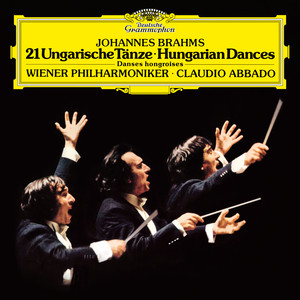 | 21 Hungarian Dances, WoO 1: Hungarian Dance No. 6 in D Major. Vivace (Orch. Schmeling) | Johannes Brahms, Wiener Philharmoniker, Claudio Abbado | D Major | 2 | 10B | 153 BPM | |
 | 3 Liebesträume, S. 541/3: No. 3, O lieb, so lang du lieben kannst (Arr. for Harp by Nora von Marschall) | Franz Liszt, Nora von Marschall | B♭ Major | 0 | 6B | 85 BPM | |
 | Symphony No. 5 in C Minor, Op. 67: I. Allegro con brio | Ludwig van Beethoven, Wiener Philharmoniker, Carlos Kleiber | C Minor | 3 | 5A | 98 BPM | |
 | Gayane Suite No. 2: VI. Sabre Dance | Aram Khachaturian, St. Petersburg State Symphony Orchestra, Andre Anichanov | E♭ Major | 8 | 5B | 91 BPM | |
 | The Sleeping Beauty, Op. 66, TH.13 / Act 3: 23c. Pas de quatre: Variation II (Polka)(Silver Fairy) | Pyotr Ilyich Tchaikovsky, Mariinsky Orchestra, Uri Zagorodniuk, Sergei Roldugin, Valery Gergiev | A♭ Major | 1 | 4B | 118 BPM | |
 | Masquerade Suite: IV. Romance | Aram Khachaturian, Karen Khatchaturian, Moscow RTV Large Symphony Orcherstra | B♭ Minor | 2 | 3A | 124 BPM | |
 | Masquerade Suite: Nocturne | Aram Khachaturian, St. Petersburg State Symphony Orchestra, Andre Anichanov | A Major | 1 | 11B | 105 BPM | |
 | Polovetsian Dances from Prince Igor: Introduzione | Alexander Borodin, George Szell, The Cleveland Orchestra | A Major | 1 | 11B | 83 BPM | |
 | 10 Preludes, Op. 23: No. 5 in G Minor: Alla marcia | Sergei Rachmaninoff, Eldar Nebolsin | G Minor | 2 | 6A | 114 BPM | |
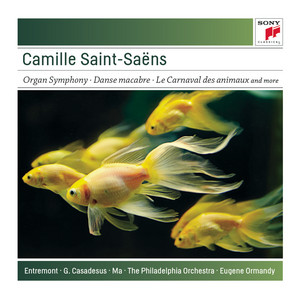 | Carnival of the Animals, R. 125: Introduction and Royal March of the Lion | Camille Saint-Saëns, Philippe Entremont, Gaby Casadesus, Yo-Yo Ma, Michel Cerruti, Michel Cals, Régis Pasquier, Yan Pascal Tortelier, Gabin Lauridon, Gerard Causse, Alain Marion, Michel Arrignon | G Major | 2 | 9B | 90 BPM | |
 | The Sleeping Beauty, Op. 66 : Le Prologue: Marche - Entree du Roi Florestan et sa cour (Entrance of King Florestan and Court) | Pyotr Ilyich Tchaikovsky, Slovak State Philharmonic Orchestra, Kosice | A Major | 2 | 11B | 112 BPM | |
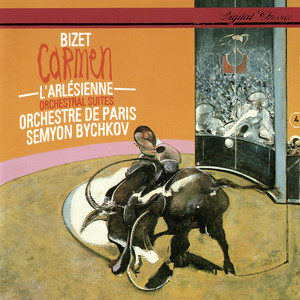 | Carmen Suite No.2: 5. Danse bohème | Georges Bizet, Orchestre de Paris, Semyon Bychkov | E Major | 1 | 12B | 142 BPM | |
 | Gaîté parisienne: Barcarolle | Jacques Offenbach, Berliner Philharmoniker, Herbert von Karajan | D Major | 0 | 10B | 82 BPM | |
 | Waltz No. 19 in A minor, Op. posth. | Frédéric Chopin, Peter Jablonski | A Minor | 0 | 8A | 69 BPM | |
 | Prelude in C Major, BWV 846 | Johann Sebastian Bach, Alistair McGowan | C Major | 1 | 8B | 122 BPM | |
 | Holberg Suite, Op. 40: I. Präludium (Allegro vivace) | Edvard Grieg, Gothenburg Symphony Orchestra, Neeme Järvi | G Major | 1 | 9B | 135 BPM | |
 | Le roi s'amuse: Pavane | Léo Delibes, Slovak Philharmonic, Ondrej Lenard | B♭ Major | 0 | 6B | 91 BPM | |
 | Masquerade - Ballet Suite: 1. Waltz | Aram Khachaturian, London Symphony Orchestra, Stanley Black | C Major | 3 | 8B | 100 BPM | |
 | Danse Bacchanale | Camille Saint-Saëns, N/A, Banda de Lalín, Bram Sniekers | D Major | 2 | 10B | 125 BPM | |
 | Symphony No. 5: IV. Adagietto. Sehr langsam | Gustav Mahler, Berliner Philharmoniker, Claudio Abbado | F Major | 0 | 7B | 91 BPM | |
 | Carnival of the Animals: The Swan - Arranged for Cello and Harp by Miriam Keogh | Camille Saint-Saëns, None, Sebastian Comberti, Miriam Keogh | G Major | 1 | 9B | 123 BPM | |
 | Peer Gynt Suite No. 1, Op. 46: I. Morning Mood | Edvard Grieg, Berliner Philharmoniker, Herbert von Karajan | E Major | 0 | 12B | 141 BPM | |
 | Serenade in C Major, Op. 48: III. Elegie | Pyotr Ilyich Tchaikovsky, Vienna Chamber Orchestra, Philippe Entremont | D Major | 1 | 10B | 89 BPM | |
 | Romeo and Juliet, Op. 64: Introduction | Sergei Prokofiev, The Cleveland Orchestra, Lorin Maazel | E Major | 1 | 12B | 112 BPM | |
 | Serenade | Jairos | C Major | 2 | 8B | 118 BPM |
- ISRC
- GBAYC2400923
- Label
- L-M Records/RCA Records