- BPM
- 103
- Key
- D Minor
- Camelot
- 7A
12 Studies for the Left Hand, Op. 92: III. A Minor by Moritz Moszkowski, Alain Raës Song Details
Moritz Moszkowski, Alain Raës's ' "12 Studies for the Left Hand, Op. 92: III. A Minor" was released on its scheduled release date, December 15, 1992. With This song being less than two minutes long, at 1:56, we are fairly confident that this song is not explicit and is safe for all ages. Based on the duration of this song, this song duration is much smaller than the average song duration. The track order of this song in Moritz Moszkowski, Alain Raës's "Moszkowski: 27 Piano Studies, Op. 72 & Op. 92" album is number 18 out of 27. In terms of popularity, 12 Studies for the Left Hand, Op. 92: III. A Minor is currently not that popular. Based on the vibe, this track doesn't seem to be that danceable, however its valence properties can make this some somewhat danceable.
BPM and Tempo
We consider the tempo marking of 12 Studies for the Left Hand, Op. 92: III. A Minor by Moritz Moszkowski, Alain Raës to be Andante (at a walking pace) because the track has a tempo of 103 BPM, a half-time of 52BPM, and a double-time of 206 BPM. Based on that, the speed of the song's tempo is slow. The time signature for this track is 4/4.
Music Key
This song is in the music key of D Minor. Because this track belongs in the D Minor key, the camelot key is 7A. So, the perfect camelot match for 7A would be either 7A or 6B. While, a low energy boost can consist of either 7B or 8A. For moderate energy boost, you would use 4A and a high energy boost can either be 9A or 2A. However, if you are looking for a low energy drop, finding a song with a camelot key of 6A would be a great choice. Where 10A would give you a moderate drop, and 5A or 12A would be a high energy drop. Lastly, 10B allows you to change the mood.
Want to find the BPM and music key for other songs? Check out our BPM and Key Finder page!
- Popularity
- 3%
- Loudness
- -20.345 dB
- Acousticness
- 99%
- Danceability
- 21%
- Energy
- 28%
- Instrumentalness
- 85%
- Liveness
- 12%
- Loudness
- 66%
- Speechiness
- 4%
- Valence
- 44%
Recommendations
| Track | Artist | Key | Energy | Camelot | BPM | ||
|---|---|---|---|---|---|---|---|
 | Piano Concerto No. 1 in G Minor, Op. 25, MWV O7: III. Presto. Molto allegro e vivace | Felix Mendelssohn, Jan Lisiecki, Orpheus Chamber Orchestra | G Major | 2 | 9B | 91 BPM | |
 | 3 Études de Concert, S. 144: No. 3 in D-Flat Major "Un sospiro" | Franz Liszt, Daniil Trifonov | D♭ Major | 1 | 3B | 76 BPM | |
 | Anton Notenquetscher - Musical Parodies: Theme | Alexander Moszkowski, Moritz Moszkowski, Christof Keymer | G Major | 1 | 9B | 128 BPM | |
 | Ludus pro Patria, La Nuit et l'Amour: La Nuit et l'Amour: Interlude de l'ode symphonique - Ludus pro Patria | Augusta Holmès, Staatsphilharmonie Rheinland-Pfalz, Patrick Davin | B♭ Major | 0 | 6B | 78 BPM | |
![Spartacus, Act III: Adagio of Spartacus and Phrygia (arr. Y. Grigorovich) [1968 Bolshoi Version] by Aram Khachaturian, RIAS Kammerchor, Deutsches Symphonie-Orchester Berlin, Michail Jurowski](https://i.scdn.co/image/ab67616d00001e02c21d253eed4ccdd547b4b94d) | Spartacus, Act III: Adagio of Spartacus and Phrygia (arr. Y. Grigorovich) [1968 Bolshoi Version] | Aram Khachaturian, RIAS Kammerchor, Deutsches Symphonie-Orchester Berlin, Michail Jurowski | E Major | 2 | 12B | 123 BPM | |
 | Carmen Variations | Vladimir Horowitz | E Major | 2 | 12B | 148 BPM | |
 | Violin Concerto No. 1 in G Minor, Op. 26: III. Allegro energico | Max Bruch, Itzhak Perlman, Bernard Haitink, Royal Concertgebouw Orchestra | G Major | 3 | 9B | 97 BPM | |
 | Symphony No. 8 in G Minor, Op. 88, B. 163: III. Allegretto grazioso - Molto vivace | Antonín Dvořák, London Symphony Orchestra, Sir Colin Davis | G Major | 1 | 9B | 130 BPM | |
 | Symphony No. 3 In C Minor, Op. 78 "Organ Symphony": 2. Allegro moderato - Presto - Allegro moderato - Maestoso - Più allegro - Molto allegro | Camille Saint-Saëns, Simon Preston, Berliner Philharmoniker, James Levine | F Minor | 2 | 4A | 117 BPM | |
 | Ravel: Le Tombeau de Couperin, M. 68: VI. Toccata | Maurice Ravel, Bertrand Chamayou | B Minor | 2 | 10A | 144 BPM | |
 | Spanish Dances, Op. 12, Book 1: No. 2 in G major | Moritz Moszkowski, London Symphony Orchestra, Ataúlfo Argenta | G Major | 1 | 9B | 85 BPM | |
 | Suite d'orchestre No. 3, Op. 79: II. Molto moderato | Moritz Moszkowski, Sinfonia Varsovia, Ian Hobson | F Major | 0 | 7B | 93 BPM | |
 | 8 Morceaux caractéristiques, Op. 36: No. 2, Rêverie | Moritz Moszkowski, Seta Tanyel | A♭ Major | 0 | 4B | 145 BPM | |
 | Petit Etudes Op. 91: No. 8 in B Minor: Moderato | Moritz Moszkowski, Esther Budiardjo | G Major | 2 | 9B | 136 BPM | |
 | Moods, Impressions and Souvenirs, Op. 41: IV. Poème | Zdeněk Fibich, Balazs Szokolay | E Major | 0 | 12B | 126 BPM | |
 | Fantasia in D Minor, K. 397 | Wolfgang Amadeus Mozart, Seong-Jin Cho | D Major | 1 | 10B | 130 BPM | |
 | Elegie, Op. 24 | Gabriel Fauré, Maria Kliegel, Nina Tichman | A♭ Major | 0 | 4B | 72 BPM | |
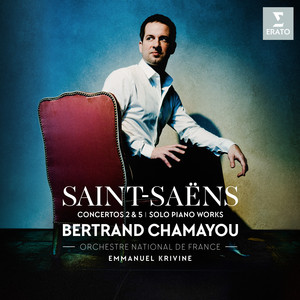 | Saint-Saëns: Piano Concerto No. 2 in G Minor, Op. 22: I. Andante sostenuto | Camille Saint-Saëns, Bertrand Chamayou, Emmanuel Krivine, Orchestre National De France | G Minor | 2 | 6A | 94 BPM | |
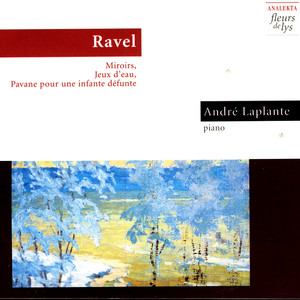 | Miroirs: IV. Alborada del gracioso | Maurice Ravel, André Laplante | D Major | 1 | 10B | 140 BPM | |
 | Poulenc: Concerto for Two Pianos in D Minor, FP 61: I. Allegro ma non troppo | Francis Poulenc, James Conlon, Rotterdam Philharmonic Orchestra | E♭ Major | 1 | 5B | 103 BPM | |
 | Arabeske, Op. 18 | Robert Schumann, Tiffany Poon | C Major | 0 | 8B | 104 BPM | |
 | Piano Concerto No. 2 in G Minor, Op. 22, R. 190: 1. Andante sostenuto | Camille Saint-Saëns, Pascal Rogé, Royal Philharmonic Orchestra, Charles Dutoit | G Minor | 1 | 6A | 86 BPM | |
 | Symphonie fantastique, Op. 14, H 48: II. Un Bal | Hector Berlioz, London Symphony Orchestra, Sir Colin Davis | A Major | 1 | 11B | 113 BPM | |
 | Piano Sonata in E Minor, Op. 7: II. Andante molto | Edvard Grieg, Einar Steen-Nøkleberg | F Major | 0 | 7B | 137 BPM | |
 | Double Bass Concerto, Op. 3: II. Andante | Serge Koussevitzky, Iván Sztankov, Budapest Symphony Orchestra, Janos Kovacs | B Minor | 1 | 10A | 133 BPM |
- ISRC
- This song does not have an ISRC.
- Label
- L-M Records/RCA Records