- BPM
- 67
- Key
- F♯ Major
- Camelot
- 2B
Strauss, R: An Alpine Symphony, Op. 64: XXII. Finale. Night by Richard Strauss, Rudolf Kempe, Staatskapelle Dresden Song Details
"Strauss, R: An Alpine Symphony, Op. 64: XXII. Finale. Night" by Richard Strauss, Rudolf Kempe, Staatskapelle Dresden had its release date on 2013. The duration of This song is about two minutes long, specifically at 2:12. This song does not appear to have any foul language. Strauss, R: An Alpine Symphony, Op. 64: XXII. Finale. Night's duration is considered a little bit shorter than the average duration of a typical track. There are a total of 103 in the song's album "Strauss, Richard: Complete Orchestral Works". In this album, this song's track order is #41. Furthermore, we believe that the track originated from United Kingdom. Strauss, R: An Alpine Symphony, Op. 64: XXII. Finale. Night is not that popular right now. In our opinion, the overall tone is not very danceable and projects negative sounds, such as being sad, depressed, or angry.
BPM and Tempo
With Strauss, R: An Alpine Symphony, Op. 64: XXII. Finale. Night by Richard Strauss, Rudolf Kempe, Staatskapelle Dresden having a BPM of 67 with a half-time of 34 BPM and a double-time of 134 BPM, we would consider this track to have a Adagio (slowly with great expression) tempo marking. Because of this, we believe that the song has an overall slow tempo. The time signature for this track is 3/4.
Music Key
This song has a musical key of F♯ Major. Or for those who are familiar with the camelot wheel, this song has a camelot key of 2B. So, the perfect camelot match for 2B would be either 2B or 3A. While, 3B can give you a low energy boost. For moderate energy boost, you would use 11B and a high energy boost can either be 4B or 9B. Though, if you want a low energy drop, you should looking for songs with either a camelot key of 2A or 1B will give you a low energy drop, 5B would be a moderate one, and 12B or 7B would be a high energy drop. Lastly, 11A allows you to change the mood.
Want to find the BPM and music key for other songs? Check out our BPM and Key Finder page!
- Popularity
- 2%
- Loudness
- -31.745 dB
- Acousticness
- 85%
- Danceability
- 19%
- Energy
- 3%
- Instrumentalness
- 97%
- Liveness
- 18%
- Loudness
- 47%
- Speechiness
- 3%
- Valence
- 3%
Recommendations
| Track | Artist | Key | Energy | Camelot | BPM | ||
|---|---|---|---|---|---|---|---|
 | Hungarian Dance No.1 in G minor - Orchestrated by Brahms: Allegro molto | Johannes Brahms, Chicago Symphony Orchestra, Daniel Barenboim | G Minor | 2 | 6A | 65 BPM | |
 | La forza del destino: Overture (Sinfonia) | Giuseppe Verdi, Berliner Philharmoniker, Claudio Abbado | E Minor | 2 | 9A | 80 BPM | |
 | Brahms: Violin Concerto in D Major, Op. 77: II. Adagio | Johannes Brahms, Itzhak Perlman, Carlo Maria Giulini, Chicago Symphony Orchestra | F Major | 2 | 7B | 72 BPM | |
 | Vocalise, Op. 34, No. 14 | Sergei Rachmaninoff, Berliner Philharmoniker, Lorin Maazel | E Minor | 1 | 9A | 76 BPM | |
 | Consolation No. 3 in D-Flat Major, S. 172/3 | Franz Liszt, Vladimir Horowitz | D♭ Major | 0 | 3B | 70 BPM | |
 | La Mer, L.109: 1. From Dawn Till Noon On The Sea (De l'aube à midi sur la mer) | Claude Debussy, Orchestre Symphonique de Montréal, Charles Dutoit | F♯ Major | 1 | 2B | 61 BPM | |
 | Strauss, R: Der Bürger als Edelmann Suite, Op. 60-IIIa: IX. Das Diner | Richard Strauss, Jeffrey Tate, English Chamber Orchestra, Clifford Benson | B♭ Major | 2 | 6B | 146 BPM | |
 | Organ Concerto in G Minor, FP 93: I. Andante | Francis Poulenc, Philippe Lefebvre, Orchestre National de Lille, Jean-Claude Casadesus | F♯ Minor | 1 | 11A | 139 BPM | |
 | Orfeo ed Euridice, Wq. 30: Dance of the Blessed Spirits "Melody" (Arr. Sgambati for Piano) | Christoph Willibald Gluck, Yuja Wang | D Minor | 0 | 7A | 70 BPM | |
 | Carmen Suite No. 1 (Arr. E. Guiraud): IV. Séguedille | Georges Bizet, Orquestra Simfònica de Barcelona i Nacional de Catalunya, Pablo González | G Minor | 0 | 6A | 66 BPM | |
 | Petrouchka: Danse des cochers et des palefreniers | Ferenc Fricsay, Berliner Philharmoniker | A Minor | 6 | 8A | 121 BPM | |
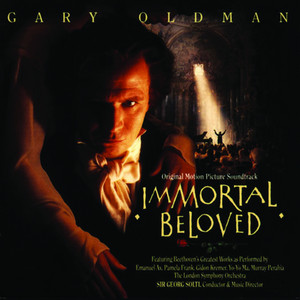 | II. Adagio cantabile from Piano Sonata No. 8 in C minor, Op. 13 "Pathetique" - Instrumental | Ludwig van Beethoven, Murray Perahia | A♭ Major | 0 | 4B | 62 BPM | |
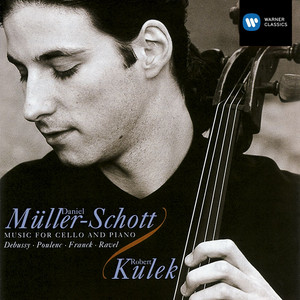 | Poulenc: Cello Sonata, FP 143: II. Cavatine | Francis Poulenc, Daniel Müller-Schott/Robert Kulek | F♯ Major | 0 | 2B | 77 BPM | |
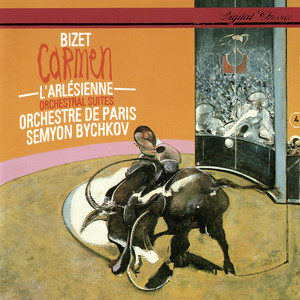 | L'Arlésienne Suite No. 1, WD 40: 3. Adagietto | Georges Bizet, Orchestre de Paris, Semyon Bychkov | F Major | 0 | 7B | 92 BPM | |
 | Symphony No. 5 In C Sharp Minor: 4. Adagietto (Sehr langsam) | Gustav Mahler, Gyeonggi Philharmonic Orchestra, Shi-Yeon Sung | F Major | 0 | 7B | 82 BPM | |
 | Serenade for String Orchestra in C Minor, Op. posth.: VI. Andante sostenuto | Max Bruch, George Hanson, Sinfonieorchester Wuppertal | E♭ Major | 0 | 5B | 87 BPM | |
 | Symphony No. 3 in E-Flat Major, Op. 97 "Rhenish": IV. Feierlich | Robert Schumann, Leonard Bernstein, New York Philharmonic | E♭ Minor | 2 | 2A | 113 BPM | |
 | Souvenir d'un lieu cher, Op. 42: 3. Mélodie | Pyotr Ilyich Tchaikovsky, Janine Jansen, Mahler Chamber Orchestra, Daniel Harding | E♭ Major | 0 | 5B | 99 BPM | |
 | Ancient Airs & Dances, Suite III, P. 172: I. Italiana (Anonymous) | Ottorino Respighi, Filarmonica della Scala, Riccardo Chailly | B♭ Major | 1 | 6B | 172 BPM | |
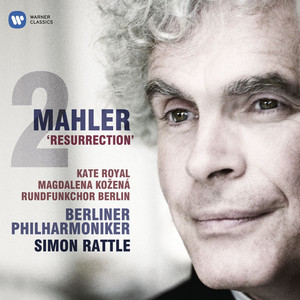 | Mahler: Symphony No. 2 in C Minor "Resurrection": V. (g) Mit Aufschwung aber nicht eilen. "O Schmerz !" | Gustav Mahler, Sir Simon Rattle, Kate Royal, Magdalena Kozená, Rundfunkchor Berlin, Berliner Philharmoniker | E♭ Major | 4 | 5B | 80 BPM | |
 | Piano Concerto in A Minor, Op. 16: I. Allegro molto moderato - Live | Edvard Grieg, Alice Sara Ott, Symphonieorchester des Bayerischen Rundfunks, Esa-Pekka Salonen | D Major | 2 | 10B | 121 BPM | |
 | Prelude: Allegro - Meno mosso - Alla breve (Allegro) - Adagio - | Ottorino Respighi, Seattle Symphony Orchestra, Gerard Schwarz | D Major | 1 | 10B | 74 BPM | |
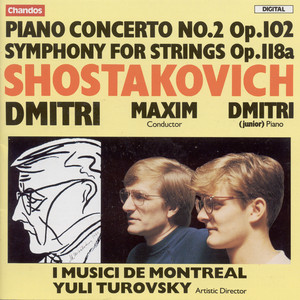 | Piano Concerto No. 2 in F Major, Op. 102: III. Allegro | Dmitri Shostakovich, I Musici de Montréal, Maxim Shostakovich | F Major | 3 | 7B | 164 BPM | |
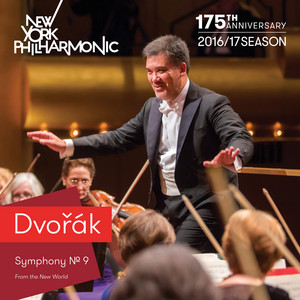 | Symphony No. 9 in E Minor, Op. 95 "From the New World": III. Scherzo. Molto vivace | Antonín Dvořák, New York Philharmonic, Alan Gilbert | C Major | 1 | 8B | 121 BPM | |
 | Sibelius: Symphony No. 5 in E-Flat Major, Op. 82: III. Allegro molto | Jean Sibelius, Sakari Oramo, City Of Birmingham Symphony Orchestra | A♭ Major | 1 | 4B | 149 BPM |
- ISRC
- GBAYC1201667
- Label
- L-M Records/RCA Records