- BPM
- 71
- Key
- D Minor
- Camelot
- 7A
Requiem in D Minor, K. 626 (Completed J. Eybler & F. Süssmayr): Sequenz VI. Lacrimosa dies illa by Wolfgang Amadeus Mozart, Miriam Allan, Anne Buter, Marcus Ullmann, Martin Snell, Gewandhaus-Kammerchor, Leipziger Kammerorchester, Morten Schuldt-Jensen Song Details
"Requiem in D Minor, K. 626 (Completed J. Eybler & F. Süssmayr): Sequenz VI. Lacrimosa dies illa" by Wolfgang Amadeus Mozart, Miriam Allan, Anne Buter, Marcus Ullmann, Martin Snell, Gewandhaus-Kammerchor, Leipziger Kammerorchester, Morten Schuldt-Jensen had its release date on October 1, 2005. The duration of This song is about two minutes long, specifically at 2:43. This song does not appear to have any foul language. Requiem in D Minor, K. 626 (Completed J. Eybler & F. Süssmayr): Sequenz VI. Lacrimosa dies illa's duration is considered a little bit shorter than the average duration of a typical track. The track order of this song in Wolfgang Amadeus Mozart, Morten Schuldt-Jensen, Leipziger Kammerorchester's "Mozart: Requiem in D Minor" album is number 10 out of 16. On top of that, Hong Kong appears to be the country where this track was created. Requiem in D Minor, K. 626 (Completed J. Eybler & F. Süssmayr): Sequenz VI. Lacrimosa dies illa is not that popular right now. In our opinion, the overall tone is not very danceable and projects negative sounds, such as being sad, depressed, or angry.
BPM and Tempo
We consider the tempo marking of Requiem in D Minor, K. 626 (Completed J. Eybler & F. Süssmayr): Sequenz VI. Lacrimosa dies illa by Wolfgang Amadeus Mozart, Miriam Allan, Anne Buter, Marcus Ullmann, Martin Snell, Gewandhaus-Kammerchor, Leipziger Kammerorchester, Morten Schuldt-Jensen to be Adagio (slowly with great expression) because the track has a tempo of 71 BPM, a half-time of 36BPM, and a double-time of 142 BPM. Based on that, the speed of the song's tempo is slow. The time signature for this track is 4/4.
Music Key
The music key of this track is D Minor. Because this track belongs in the D Minor key, the camelot key is 7A. So, the perfect camelot match for 7A would be either 7A or 6B. While, a low energy boost can consist of either 7B or 8A. For moderate energy boost, you would use 4A and a high energy boost can either be 9A or 2A. However, if you are looking for a low energy drop, finding a song with a camelot key of 6A would be a great choice. Where 10A would give you a moderate drop, and 5A or 12A would be a high energy drop. Lastly, 10B allows you to change the mood.
Want to find the BPM and music key for other songs? Check out our BPM and Key Finder page!
- Popularity
- 8%
- Loudness
- -25.926 dB
- Acousticness
- 94%
- Danceability
- 14%
- Energy
- 7%
- Instrumentalness
- 89%
- Liveness
- 12%
- Loudness
- 57%
- Speechiness
- 4%
- Valence
- 10%
Recommendations
| Track | Artist | Key | Energy | Camelot | BPM | ||
|---|---|---|---|---|---|---|---|
 | Prokofiev: Suite No. 2 from Romeo and Juliet, Op. 64ter: I. The Montagues and Capulets (Excerpt) | Sergei Prokofiev, Philadelphia Orchestra, Riccardo Muti | A Minor | 3 | 8A | 108 BPM | |
 | Mass No. 13 in C Major, K. 262 "Missa longa": II. Gloria | Wolfgang Amadeus Mozart, Carolina Ullrich, Marie Henriette Reinhold, Angelo Pollak, Konstantin Krimmel, WDR Rundfunkchor Köln, Cologne Chamber Orchestra, Christoph Poppen | C Major | 1 | 8B | 105 BPM | |
 | Requiem In D Minor, K. 626: Kyrie Eleison | Slovak Philharmonic, Jozef Kundlák, Slovak Philharmonic Chorus, Jaroslava Horska, Vladimir Ruso, Stefan Klimo, Peter Mikulas, Magdaléna Hajóssyová, Wolfgang Amadeus Mozart | F Major | 2 | 7B | 82 BPM | |
 | Requiem in C Minor: Introitus - Kyrie | Antonio Salieri, Lawrence Foster, Orquestra Gulbenkian, Coro Gulbenkian, Adam Zdunikowski, Luis Rodrigues | C Minor | 0 | 5A | 57 BPM | |
 | Pavane, Op. 50 | Gabriel Fauré, Netherlands Chamber Choir, Limburg Symphony Orchestra, Ed Spanjaard | F♯ Minor | 0 | 11A | 97 BPM | |
 | Dido and Aeneas, Z.626 / Act 3: "When I Am Laid In Earth" | Henry Purcell, Catherine Bott, The Academy Of Ancient Music Chorus, Academy of Ancient Music, Christopher Hogwood | E♭ Major | 6 | 5B | 131 BPM | |
 | Stabat Mater: 10. Amen | Gioachino Rossini, London Symphony Chorus, London Symphony Orchestra, István Kertész | G Major | 4 | 9B | 69 BPM | |
 | The Magic Flute, K. 620, Act II: Ach! Ich fühl's, es ist verschwunden | Wolfgang Amadeus Mozart, Wilfried Gahmlich, Anna Gonda, Hungarian Festival Chorus, Budapest Failoni Chamber Orchestra, Michael Halasz, Hellen Kwon, Lotte Leitner, Herbert Lippert, Elizabeth Norberg-Schulz, Kurt Rydl, Georg Tichy, Julia Faulkner, Waltraud Winsauer | G Minor | 0 | 6A | 181 BPM | |
 | Symphony No. 3 in F, Op. 90: 3. Poco allegretto | Johannes Brahms, The Cleveland Orchestra, Lorin Maazel | C Minor | 0 | 5A | 75 BPM | |
 | Johannes-Passion, BWV 245: 10. Recitativo: Derselbe Jünger war dem Hohenpriester bekannt | Georg Christoph Biller, Gewandhausorchester, Johann Sebastian Bach, Marcus Ullmann, Gotthold Schwarz | G Major | 0 | 9B | 87 BPM | |
 | Symphony No. 7 in A Major, Op. 92: II. Allegretto | Ludwig van Beethoven, Berliner Philharmoniker, Herbert von Karajan | E Minor | 0 | 9A | 77 BPM | |
 | Anonymous / Foggia: O quam clemens et pia, a 2 | Anonymus, Francesco Foggia, Philippe Jaroussky, Jean Tubéry | D Minor | 0 | 7A | 69 BPM | |
| Johannes-Passion, BWV 245: 23. Recitativo: Die Jüden aber schrieen und sprachen | Thomanerchor Leipzig, Georg Christoph Biller, Gewandhausorchester, Marcus Ullmann, Gotthold Schwarz, Henryk Bohm | E♭ Major | 2 | 5B | 171 BPM | |
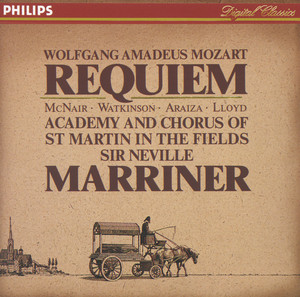 | Requiem in D minor, K.626: 4. Offertorium: Domine Jesu | Wolfgang Amadeus Mozart, Sylvia McNair, Carolyn Watkinson, Francisco Araiza, Robert Lloyd, Academy of St. Martin in the Fields, Sir Neville Marriner | C Minor | 2 | 5A | 95 BPM | |
 | Orff: Carmina Burana, Introduction, Fortuna Imperatrix Mundi: Fortune plango vulnera | Carl Orff, Michel Plasson, Orfeon Donostiarra, Orchestre National Du Capitole De Toulouse | D Minor | 0 | 7A | 141 BPM | |
![Die Jahreszeiten (the Seasons), Hob. XXI:3: Der Frühling [Spring]: Trio. Song of Joy: O wie lieblich ist der Anblick [Hanne, Lukas, Simon, Chorus] by Joseph Haydn, Sibylla Rubens, Andreas Karasiak, Stephan MacLeod, Gewandhaus-Kammerchor, Leipziger Kammerorchester, Morten Schuldt-Jensen](https://i.scdn.co/image/ab67616d00001e025f99b4ae795ba76f8afddaf8) | Die Jahreszeiten (the Seasons), Hob. XXI:3: Der Frühling [Spring]: Trio. Song of Joy: O wie lieblich ist der Anblick [Hanne, Lukas, Simon, Chorus] | Joseph Haydn, Sibylla Rubens, Andreas Karasiak, Stephan MacLeod, Gewandhaus-Kammerchor, Leipziger Kammerorchester, Morten Schuldt-Jensen | C Major | 2 | 8B | 110 BPM | |
 | Messe de Requiem, Op. 54: VIII. Agnus dei | Camille Saint-Saëns, Diego Fasolis, Orchestra della Svizzera Italiana, Marie-Paule Dotti, Guillemette Laurens, Luca Lombardo, Nicolas Teste, Francesco Cera, Swiss Radio Choir | F Minor | 0 | 4A | 82 BPM | |
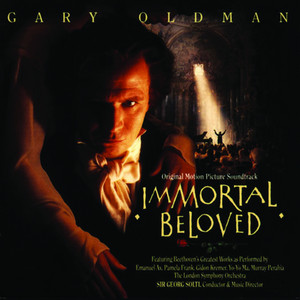 | II. Allegretto (excerpt) from Symphony No. 7 in A Major, Op. 92 - Instrumental | Ludwig van Beethoven, Sir Georg Solti, London Symphony Orchestra | E Minor | 0 | 9A | 67 BPM | |
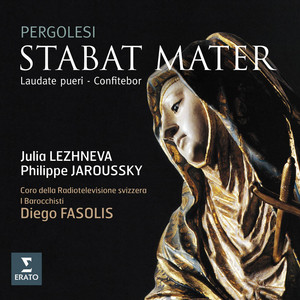 | Pergolesi: Stabat Mater: VII. Eia Mater | Giovanni Battista Pergolesi, Philippe Jaroussky, I Barocchisti, Diego Fasolis | E Minor | 1 | 9A | 131 BPM | |
 | Vesperae solennes de confessore in C Major, K. 339, "Solemn Vespers": IV. Laudate Dominum | Wolfgang Amadeus Mozart, Priti Coles, Kosice Teachers' Choir, Camerata Cassovia, Johannes Wildner | F Major | 1 | 7B | 112 BPM | |
 | Requiem, Op. 89, B. 165: Dies irae | Antonín Dvořák, Chór Filharmonii Narodowej w Warszawie, Orkiestra Filharmonii Narodowej w Warszawie, Antoni Wit | B♭ Major | 3 | 6B | 90 BPM | |
 | Barber: Agnus Dei (Adagio Op.11) | Samuel Barber, The Sixteen, Harry Christophers | F♯ Major | 1 | 2B | 135 BPM | |
 | Requiem in D minor, KV 626: III. Sequenz: N°6 Lacrimosa | Schola Cantorum Cantate Domino | D Major | 1 | 10B | 85 BPM | |
 | Requiem No. 1 in C Minor: Graduale: Requiem aeternam | Luigi Cherubini, Radio Svizzera Choir, Lugano, Radio Svizzera Italiana Orchestra, Diego Fasolis | G Minor | 1 | 6A | 111 BPM | |
 | Requiem in D Minor, K. 626: II. Kyrie | Wolfgang Amadeus Mozart, Carlo Maria Giulini, Philharmonia Orchestra | B♭ Major | 2 | 6B | 73 BPM |
- ISRC
- HKI190533810
- Label
- L-M Records/RCA Records