- BPM
- 140
- Key
- A Major
- Camelot
- 11B
Delius: Fennimore and Gerda: Intermezzo by Frederick Delius, Sir Thomas Beecham, Royal Philharmonic Orchestra Song Details
"Delius: Fennimore and Gerda: Intermezzo" by Frederick Delius, Sir Thomas Beecham, Royal Philharmonic Orchestra had its release date on February 7, 2011. With this song being about 5 minutes long, at This song is fairly a long song compared to the average song length. This song does not have an "Explicit" tag, making it safe for all ages. There are a total of 88 in the song's album "Sir Thomas Beecham: The English Collection". In this album, this song's track order is #6. Furthermore, we believe that the track originated from United Kingdom. Based on our statistics, Delius: Fennimore and Gerda: Intermezzo's popularity is unknown right now. In our opinion, the overall tone is not very danceable and projects negative sounds, such as being sad, depressed, or angry.
BPM and Tempo
With Delius: Fennimore and Gerda: Intermezzo by Frederick Delius, Sir Thomas Beecham, Royal Philharmonic Orchestra having a BPM of 140 with a half-time of 70 BPM and a double-time of 280 BPM, we would consider this track to have a Allegro (fast, quick, and bright) tempo marking. Because of this, we believe that the song has an overall fast tempo. Looking at the BPM of this song, this song might go great with jogging or cycling. The time signature for this track is 1/4.
Music Key
A Major is the music key of this track. Or for those who are familiar with the camelot wheel, this song has a camelot key of 11B. So, the perfect camelot match for 11B would be either 11B or 12A. While, 12B can give you a low energy boost. For moderate energy boost, you would use 8B and a high energy boost can either be 1B or 6B. Though, if you want a low energy drop, you should looking for songs with either a camelot key of 11A or 10B will give you a low energy drop, 2B would be a moderate one, and 9B or 4B would be a high energy drop. Lastly, 8A allows you to change the mood.
Want to find the BPM and music key for other songs? Check out our BPM and Key Finder page!
- Popularity
- 0%
- Loudness
- -16.492 dB
- Acousticness
- 88%
- Danceability
- 16%
- Energy
- 12%
- Instrumentalness
- 92%
- Liveness
- 14%
- Loudness
- 73%
- Speechiness
- 4%
- Valence
- 4%
Recommendations
| Track | Artist | Key | Energy | Camelot | BPM | ||
|---|---|---|---|---|---|---|---|
 | 3 Liebesträume, S. 541/3: No. 3, O lieb, so lang du lieben kannst (Arr. for Harp by Nora von Marschall) | Franz Liszt, Nora von Marschall | B♭ Major | 0 | 6B | 85 BPM | |
 | 3 Visions: No. 2, Summerland | William Grant Still, Althea Waites | G Major | 0 | 9B | 68 BPM | |
 | On Hearing the First Cuckoo in Spring | Frederick Delius, Charles Abramovic | D Major | 1 | 10B | 87 BPM | |
 | Lieder ohne Worte, Op. 19: No. 6 in G Minor (Andante sostenuto) "Venetian Gondola Song", MWV U78 | Felix Mendelssohn, Jan Lisiecki | G Minor | 0 | 6A | 168 BPM | |
 | L'Arlésienne Suite No. 2 (Arr. Guiraud): III. Menuet | Georges Bizet, Orchestre Symphonique de Montréal, Charles Dutoit | E♭ Major | 0 | 5B | 128 BPM | |
 | 3 Small Tone Poems: No. 1, Summer Evening | Frederick Delius, Royal Scottish National Orchestra, David Lloyd-Jones | E Minor | 0 | 9A | 71 BPM | |
 | Notturno for Strings and Harp | Arnold Schoenberg, Daniel Hope, Zürcher Kammerorchester, Jane Berthe | A♭ Major | 1 | 4B | 75 BPM | |
 | A Shropshire Lad - Rhapsody | George Butterworth, Academy of St. Martin in the Fields, Sir Neville Marriner | A♭ Major | 1 | 4B | 95 BPM | |
 | Symphony No. 3 in F Major, Op. 90: III. Poco allegretto | Johannes Brahms, David Zinman | C Minor | 0 | 5A | 173 BPM | |
 | Cançoneta for Violin and Orchestra | Joaquín Rodrigo, Agustín León Ara, Academy of St. Martin in the Fields, Sir Neville Marriner | A Major | 0 | 11B | 70 BPM | |
 | Fauré: Pavane, Op. 50 (Instrumental Version) | Gabriel Fauré, Sir Neville Marriner, Academy of St. Martin in the Fields | F♯ Minor | 1 | 11A | 70 BPM | |
 | La pentola magica, P. 129: Preludio | Ottorino Respighi, Jakub Francisci, Slovak Radio Symphony Orchestra, Adriano | D Minor | 0 | 7A | 91 BPM | |
 | 21 Hungarian Dances, WoO 1: Hungarian Dance No. 11 in D Minor | Johannes Brahms, Seattle Symphony Orchestra, Gerard Schwarz | A Minor | 0 | 8A | 104 BPM | |
 | Nocturnes n°7 en mi majeur | Francis Poulenc, Alexandre Tharaud | E♭ Major | 1 | 5B | 87 BPM | |
 | Piano Concerto in One Movement: Adagio cantabile | Florence Beatrice Price, Jeneba Kanneh-Mason, Chineke! Orchestra, Leslie Suganandarajah | D Major | 0 | 10B | 77 BPM | |
 | Bach: Adagio (After Violin Concerto No. 2, BWV 1042) | Johann Sebastian Bach, Gabriela Montero | F♯ Minor | 0 | 11A | 73 BPM | |
 | 6 Pezzi, P. 44: No. 1. Valse Caressante | Ottorino Respighi, Konstantin Scherbakov | E♭ Major | 1 | 5B | 70 BPM | |
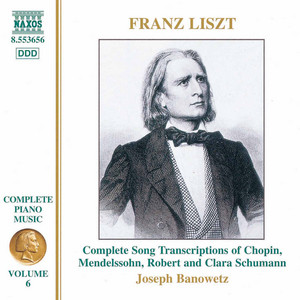 | Chopin - 6 Chants Polonais, S480/R145: No. 2. Fruhling(Wiosna, Spring) | Joseph Banowetz, Franz Liszt | G Major | 1 | 9B | 108 BPM | |
 | Spartacus: Adagio of Spartacus and Phrygia | Aram Khachaturian, Wiener Philharmoniker | A♭ Major | 1 | 4B | 129 BPM | |
 | Phantasy Quintet: III. Alla Sarabanda: Lento | Ralph Vaughan Williams, Garfield Jackson, Maggini Quartet | E♭ Minor | 10 | 2A | 123 BPM | |
 | Chant du menestrel for Cello and Orchestra, Op. 71 | Alexander Glazunov, Alexander Rudin, Moscow Symphony Orchestra, Igor Golovschin | F♯ Minor | 0 | 11A | 87 BPM | |
| Mendelssohn - Lieder, S547/R217 (7 Lieder From Mendelssohn, Op, 19a, 34, 47) : Auf Flugeln Des Gesanges(From Op. 34, No. 2) | Joseph Banowetz, Franz Liszt | A♭ Major | 0 | 4B | 149 BPM | |
 | Mahler: Blumine | Gustav Mahler, San Francisco Symphony, Michael Tilson Thomas | C Major | 1 | 8B | 100 BPM | |
 | Carnaval, Op. 9: No. 12, Chopin | Robert Schumann, Boris Giltburg | B♭ Minor | 0 | 3A | 92 BPM | |
 | Schumann: 6 Studien in kanonischer Form, Op. 56: No. 1, Nicht schnell | Robert Schumann, Piotr Anderszewski | C Major | 0 | 8B | 173 BPM |
- ISRC
- GBAYC0100236
- Label
- L-M Records/RCA Records