- BPM
- 97
- Key
- D♭ Major
- Camelot
- 3B
American Rhapsody by Frederick Delius, Royal Scottish National Orchestra, David Lloyd-Jones Song Details
"American Rhapsody" by Frederick Delius, Royal Scottish National Orchestra, David Lloyd-Jones had its release date on March 1, 2004. Since This song is still less than 10 minute long, it is still considered a pretty long duration song compared to the average song length. This song does not appear to be explicit due to the lack of the "E" tag. The song is number 5 out of 10 in Delius: On Hearing the First Cuckoo in Spring by Frederick Delius, David Lloyd-Jones, Royal Scottish National Orchestra. Going off of the ISRC code of this track, we detected that the origin of this track is from Hong Kong. In terms of popularity, American Rhapsody is currently not that popular. In our opinion, the overall tone is not very danceable and projects negative sounds, such as being sad, depressed, or angry.
BPM and Tempo
The tempo marking of American Rhapsody by Frederick Delius, Royal Scottish National Orchestra, David Lloyd-Jones is Andante (at a walking pace), since this song has a tempo of 97 BPM. With that information, we can conclude that the song has a slow tempo. The time signature for this track is 4/4.
Music Key
D♭ Major is the music key of this track. This also means that this song has a camelot key of 3B. So, the perfect camelot match for 3B would be either 3B or 4A. While, 4B can give you a low energy boost. For moderate energy boost, you would use 12B and a high energy boost can either be 5B or 10B. Though, if you want a low energy drop, you should looking for songs with either a camelot key of 3A or 2B will give you a low energy drop, 6B would be a moderate one, and 1B or 8B would be a high energy drop. Lastly, 12A allows you to change the mood.
Want to find the BPM and music key for other songs? Check out our BPM and Key Finder page!
- Popularity
- 7%
- Loudness
- -22.789 dB
- Acousticness
- 98%
- Danceability
- 13%
- Energy
- 2%
- Instrumentalness
- 92%
- Liveness
- 8%
- Loudness
- 62%
- Speechiness
- 4%
- Valence
- 6%
Recommendations
| Track | Artist | Key | Energy | Camelot | BPM | ||
|---|---|---|---|---|---|---|---|
 | Love's Labour's Lost, Op. 28a: II. Longaville's Sonnet | Gerald Finzi, Robert Plane, Royal Northern Sinfonia, Howard Griffiths | D Minor | 0 | 7A | 94 BPM | |
 | Symphonie fantastique, Op. 14, H 48: II. Un Bal | Hector Berlioz, London Symphony Orchestra, Sir Colin Davis | A Major | 1 | 11B | 113 BPM | |
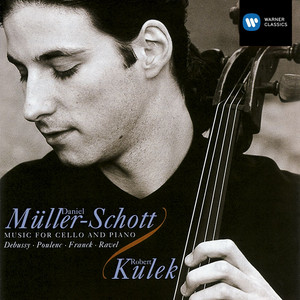 | Poulenc: Cello Sonata, FP 143: II. Cavatine | Francis Poulenc, Daniel Müller-Schott/Robert Kulek | F♯ Major | 0 | 2B | 77 BPM | |
 | Prince Igor: Polovtsian Dances (Version for Chorus) | Alexander Borodin, Kiev Chamber Choir, Ukraine National Radio Symphony Orchestra, Theodore Kuchar | A Major | 2 | 11B | 110 BPM | |
 | Aria, Op. 9 | Mieczysław Weinberg, Deutsche Kammerphilharmonie Bremen, Mirga Gražinytė-Tyla | B♭ Major | 1 | 6B | 103 BPM | |
 | L'Oiseau de feu, K10: X. Khorovod (Ronde) des princesses | Igor Stravinsky, Orchestre de Paris, Klaus Mäkelä | F Minor | 0 | 4A | 68 BPM | |
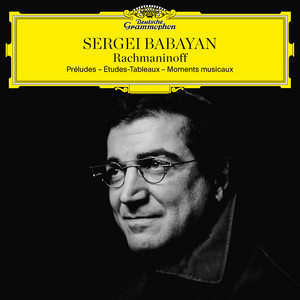 | 12 Songs, Op. 21: V. Lilacs (Transcr. Rachmaninoff for Solo Piano) | Sergei Rachmaninoff, Sergei Babayan | A♭ Major | 0 | 4B | 78 BPM | |
 | Simple Symphony, Op. 4: III. Sentimental Sarabande | Benjamin Britten, Camerata Nordica, Terje Tonnesen | G Minor | 0 | 6A | 85 BPM | |
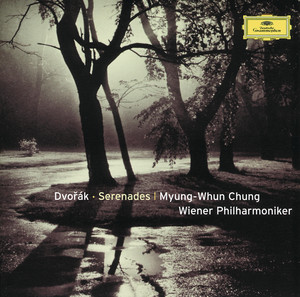 | Serenade for Strings in E Major, Op. 22, B. 52: IV. Larghetto | Antonín Dvořák, Wiener Philharmoniker, Myung-Whun Chung | A Major | 1 | 11B | 79 BPM | |
 | Abendlied, Op. 85, No. 12 (Arr. for String Orchestra by Johan Svendsen) | Robert Schumann, Lucerne Festival Strings, Daniel Dodds | B Major | 1 | 1B | 113 BPM | |
 | Divertimento: II. Waltz. Allegretto, con grazia | Leonard Bernstein, Bournemouth Symphony Orchestra, Marin Alsop | D Minor | 7 | 7A | 148 BPM | |
 | Piano Quintet in C Minor: I. Andante | Alexander Borodin, Ilona Prunyi, New Budapest Quartet | C Minor | 1 | 5A | 68 BPM | |
 | Chamber Symphony No. 5 in A-Flat Major, Op. 118a: I. Andante | Dmitri Shostakovich, Yuli Turovsky, I Musici de Montréal | D♭ Major | 0 | 3B | 106 BPM | |
 | Delius: Cello Concerto: III. Lento – | Frederick Delius, Jacqueline du Pré, Sir Malcolm Sargent, Royal Philharmonic Orchestra | D Major | 1 | 10B | 46 BPM | |
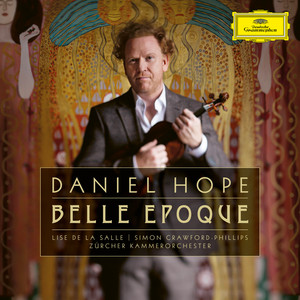 | Notturno for Strings and Harp | Arnold Schoenberg, Daniel Hope, Zürcher Kammerorchester, Jane Berthe | A♭ Major | 1 | 4B | 75 BPM | |
 | None but the lonely heart, Op. 6, No. 6 | Pyotr Ilyich Tchaikovsky, Isaac Stern, Milton Katims, Columbia Symphony Orchestra | D♭ Major | 2 | 3B | 104 BPM | |
 | Brook Green Suite: II. Air | Gustav Holst, English Sinfonia, Howard Griffiths | E♭ Major | 0 | 5B | 128 BPM | |
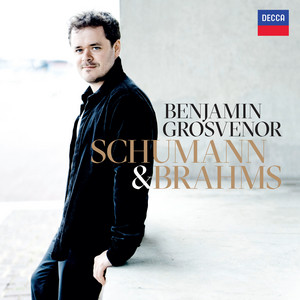 | 3 Romanzen, Op. 28: No. 2 in F-Sharp Major (Einfach) | Robert Schumann, Benjamin Grosvenor | E♭ Major | 0 | 5B | 99 BPM | |
 | Piano Concerto in F-Sharp Minor, Op. 20: I. Allegro | Alexander Scriabin, Konstantin Scherbakov, Moscow Philharmonic Orchestra, Igor Golovschin | E♭ Major | 0 | 5B | 81 BPM | |
 | Schumann: Davidsbündlertänze, Op. 6, Heft II: No. 14, Zart und singend | Robert Schumann, Jonathan Biss | E♭ Major | 0 | 5B | 135 BPM | |
 | In the Steppes of Central Asia | Alexander Borodin, Royal Philharmonic Orchestra, Vladimir Ashkenazy | A Major | 0 | 11B | 69 BPM | |
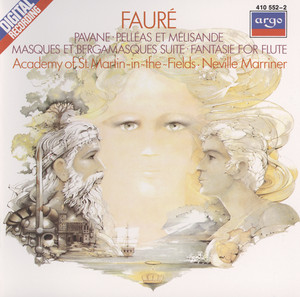 | Pelléas et Mélisande, Op. 80, Suite: I. Prélude | Gabriel Fauré, Academy of St. Martin in the Fields, Sir Neville Marriner | G Major | 1 | 9B | 134 BPM | |
 | Cello Sonata in D Major, Op. 17: II. Andante tranquillo | Luise Adolpha Le Beau, Steven Isserlis, Connie Shih | B Minor | 1 | 10A | 86 BPM | |
 | A Little Book of Hours: VI. Singing Sun | Peter Sculthorpe, Elena Riu | B♭ Major | 0 | 6B | 79 BPM | |
 | Petite suite de concert, Op. 77: II. Demande et reponse | Samuel Coleridge-Taylor, Chicago Sinfonietta, Paul Freeman | G Major | 0 | 9B | 90 BPM |
- ISRC
- HKI190330605
- Label
- L-M Records/RCA Records