- BPM
- 153
- Key
- B♭ Major
- Camelot
- 6B
Boris Godunov: Opera in Four Acts With a Prologue: Prologue, Scene 1: "Who are you adandoning us to" by Modest Mussorgsky, Claudio Abbado, Berliner Philharmoniker, Slovak Philharmonic Chorus Bratislava, Rundfunkchor Berlin, Tölzer Knabenchor, Mikhail Krutikov Song Details
"Boris Godunov: Opera in Four Acts With a Prologue: Prologue, Scene 1: "Who are you adandoning us to"" by Modest Mussorgsky, Claudio Abbado, Berliner Philharmoniker, Slovak Philharmonic Chorus Bratislava, Rundfunkchor Berlin, Tölzer Knabenchor, Mikhail Krutikov had its release date on 1994. With This song being less than two minutes long, at 1:26, we are fairly confident that this song is not explicit and is safe for all ages. Based on the duration of this song, this song duration is much smaller than the average song duration. The track order of this song in Modest Mussorgsky, Claudio Abbado's "Mussorgsky: Boris Godunov - The Sony Opera House" album is number 4 out of 78. On top of that, United States appears to be the country where this track was created. Based on our statistics, Boris Godunov: Opera in Four Acts With a Prologue: Prologue, Scene 1: "Who are you adandoning us to"'s popularity is not that popular right now. In our opinion, the overall tone is not very danceable and projects negative sounds, such as being sad, depressed, or angry.
BPM and Tempo
We consider the tempo marking of Boris Godunov: Opera in Four Acts With a Prologue: Prologue, Scene 1: "Who are you adandoning us to" by Modest Mussorgsky, Claudio Abbado, Berliner Philharmoniker, Slovak Philharmonic Chorus Bratislava, Rundfunkchor Berlin, Tölzer Knabenchor, Mikhail Krutikov to be Allegro (fast, quick, and bright) because the track has a tempo of 153 BPM, a half-time of 76BPM, and a double-time of 306 BPM. Based on that, the speed of the song's tempo is fast. Activities such as, running, can go well with this song. The time signature for this track is 4/4.
Music Key
This song is in the music key of B♭ Major. This also means that this song has a camelot key of 6B. So, the perfect camelot match for 6B would be either 6B or 7A. While, 7B can give you a low energy boost. For moderate energy boost, you would use 3B and a high energy boost can either be 8B or 1B. Though, if you want a low energy drop, you should looking for songs with either a camelot key of 6A or 5B will give you a low energy drop, 9B would be a moderate one, and 4B or 11B would be a high energy drop. Lastly, 3A allows you to change the mood.
Want to find the BPM and music key for other songs? Check out our BPM and Key Finder page!
- Popularity
- 5%
- Loudness
- -20.93 dB
- Acousticness
- 97%
- Danceability
- 30%
- Energy
- 11%
- Instrumentalness
- 87%
- Liveness
- 11%
- Loudness
- 65%
- Speechiness
- 5%
- Valence
- 9%
Recommendations
| Track | Artist | Key | Energy | Camelot | BPM | ||
|---|---|---|---|---|---|---|---|
 | Serenade for String Orchestra in C Major, Op. 48, TH 48: II. Valse | Pyotr Ilyich Tchaikovsky, The Russian Virtuosi of Europe, Yuri Zhislin | G Major | 2 | 9B | 98 BPM | |
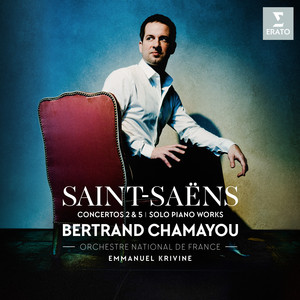 | Saint-Saëns: Piano Concerto No. 5 in F Major, Op. 103 "Egyptian": II. Andante | Camille Saint-Saëns, Bertrand Chamayou, Emmanuel Krivine, Orchestre National De France | D Major | 1 | 10B | 129 BPM | |
 | Fantasia & Fugue in C Minor, Op. 86 (After J.S. Bach's BWV 537): Fantasia | Edward Elgar, Seattle Symphony Orchestra, Gerard Schwarz | F Minor | 1 | 4A | 143 BPM | |
 | Prince Igor (Knyaz Igor), Act II: Dance of the Polovtsian Maidens | Alexander Borodin, Angelina Shvachka, Dmytro Popov, Mykola Koval, Taras Shtonda, Kiev Chamber Choir, Ukraine National Radio Symphony Orchestra, Theodore Kuchar | F Major | 2 | 7B | 95 BPM | |
 | Violin Concerto No. 1 In D, Op. 19: 1. Andantino | Sergei Prokofiev, Gil Shaham, London Symphony Orchestra, André Previn | G Major | 1 | 9B | 64 BPM | |
 | Symphony No. 4 in G Major: II. In gemächlicher Bewegung. Ohne Hast | Gustav Mahler, Berliner Philharmoniker, Yannick Nézet-Séguin | C Major | 0 | 8B | 135 BPM | |
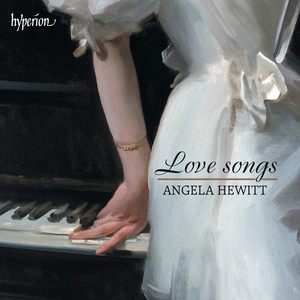 | Morgen, Op. 27 No. 4 (Arr. Reger for Piano) | Richard Strauss, Angela Hewitt | A Major | 2 | 11B | 143 BPM | |
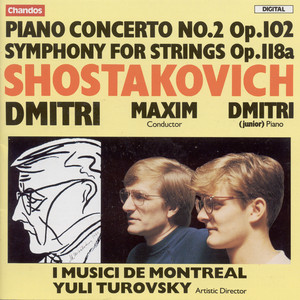 | Piano Concerto No. 2 in F Major, Op. 102: I. Allegro | Dmitri Shostakovich, I Musici de Montréal, Maxim Shostakovich | B♭ Major | 3 | 6B | 160 BPM | |
 | 3 Pieces in Old Style: No. 1, Aria | Krzysztof Penderecki, Warsaw Philharmonic Chamber Orchestra, Antoni Wit | B♭ Major | 0 | 6B | 75 BPM | |
 | Aleko: Intermezzo | Sergei Rachmaninoff, Berliner Philharmoniker, Lorin Maazel | B♭ Major | 0 | 6B | 90 BPM | |
 | La forza del destino: Overture (Sinfonia) | Giuseppe Verdi, Berliner Philharmoniker, Claudio Abbado | E Minor | 2 | 9A | 80 BPM | |
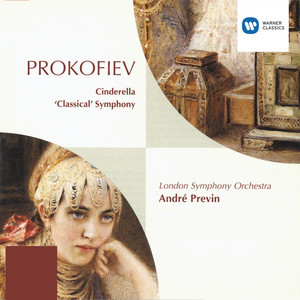 | Prokofiev: Symphony No. 1 in D Major, Op. 25 "Classical": II. Larghetto | Sergei Prokofiev, André Previn, London Symphony Orchestra | A Major | 0 | 11B | 104 BPM | |
 | D'un matin de printemps | Lili Boulanger, Yan Pascal Tortelier, BBC Philharmonic | C Major | 1 | 8B | 130 BPM | |
 | Symphony No.7 In E Major - Ed. Haas: 4. Finale. Bewegt, doch nicht schnell | Anton Bruckner, Wiener Philharmoniker, Herbert von Karajan | D♭ Major | 1 | 3B | 117 BPM | |
 | Symphony No. 5 in B-Flat Major, Op. 100: II. Allegro marcato | Sergei Prokofiev, The Cleveland Orchestra, Franz Welser-Möst | C Major | 0 | 8B | 105 BPM | |
 | Concertstück in F Major, Op. 86: II. Romanze. Ziemlich langsam | Robert Schumann, Robert Bonnevie, Mark Robbins, David C. Knapp, Scott Wilson, Seattle Symphony Orchestra, Gerard Schwarz | B♭ Major | 0 | 6B | 60 BPM | |
 | The Firebird (L'oiseau De Feu) - Suite (1919): 3. Variation Of The Firebird | Igor Stravinsky, Orchestre de l'Opéra National de Paris, Myung-Whun Chung | A♭ Minor | 2 | 1A | 110 BPM | |
 | Symphony No. 2 in C minor - "Resurrection" / 5th Movement: Wieder sehr breit | Gustav Mahler, Wiener Philharmoniker, Gilbert Kaplan | D♭ Major | 2 | 3B | 66 BPM | |
 | Boris Godunov | Modest Mussorgsky, Choir of the Bolshoi Theater, Vladimir Atlantov, Mark Ermler, Yevgeny Nesterenko, Yelena Obratsova, Yuri Mazurok, Alexandr Ognivcev, Orchestra of The Bolshoi Theater | C Major | 2 | 8B | 80 BPM | |
 | Symphony No. 3 In C Minor, Op. 78 "Organ Symphony": 2b. Maestoso - Più allegro - Molto allegro | Camille Saint-Saëns, Simon Preston, Berliner Philharmoniker, James Levine | C Major | 3 | 8B | 106 BPM | |
 | Jeux d'enfants, Op. 22: No. 3, La poupée | Georges Bizet, Katia Labèque, Marielle Labèque | B Major | 0 | 1B | 64 BPM | |
 | Symphonie fantastique, H. 48: IV. Marche au supplice | Hector Berlioz, Chicago Symphony Orchestra, Claudio Abbado | G Minor | 2 | 6A | 166 BPM | |
 | String Quartet No. 12 in F major, Op. 96 - "American" B.179: 2. Lento | Antonín Dvořák, Hagen Quartett | D Minor | 1 | 7A | 88 BPM | |
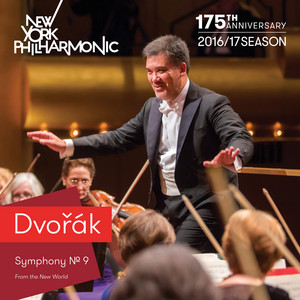 | Symphony No. 9 in E Minor, Op. 95 "From the New World": I. Adagio — Allegro molto | Antonín Dvořák, New York Philharmonic, Alan Gilbert | E Minor | 1 | 9A | 125 BPM | |
 | The Planets, Op. 32: I. Mars, the Bringer of War | Gustav Holst, Los Angeles Philharmonic, Zubin Mehta | F Major | 4 | 7B | 89 BPM |
- ISRC
- USSM10205330
- Label
- L-M Records/RCA Records