- BPM
- 103
- Key
- D Major
- Camelot
- 10B
Der Rosenkavalier, Op. 59 / Act 2: "Mir ist die Ehre widerfahren" by Richard Strauss, Sophie Koch, Diana Damrau, Munich Philharmonic Orchestra, Christian Thielemann Song Details
Richard Strauss, Sophie Koch, Diana Damrau, Munich Philharmonic Orchestra, Christian Thielemann's 'Der Rosenkavalier, Op. 59 / Act 2: "Mir ist die Ehre widerfahren"' had a release date set for January 1, 2008. Since This song is still less than 10 minute long, it is still considered a pretty long duration song compared to the average song length. This song does not appear to be explicit due to the lack of the "E" tag. There are a total of 43 in the song's album "Strauss, R.: Der Rosenkavalier". In this album, this song's track order is #3. Furthermore, we believe that the track originated from United Kingdom. In terms of popularity, Der Rosenkavalier, Op. 59 / Act 2: "Mir ist die Ehre widerfahren" is currently not that popular. In our opinion, the overall tone is not very danceable and projects negative sounds, such as being sad, depressed, or angry.
BPM and Tempo
With Der Rosenkavalier, Op. 59 / Act 2: "Mir ist die Ehre widerfahren" by Richard Strauss, Sophie Koch, Diana Damrau, Munich Philharmonic Orchestra, Christian Thielemann having a BPM of 103 with a half-time of 52 BPM and a double-time of 206 BPM, we would consider this track to have a Andante (at a walking pace) tempo marking. Because of this, we believe that the song has an overall slow tempo. The time signature for this track is 4/4.
Music Key
This song has a musical key of D Major. Or for those who are familiar with the camelot wheel, this song has a camelot key of 10B. So, the perfect camelot match for 10B would be either 10B or 11A. While, 11B can give you a low energy boost. For moderate energy boost, you would use 7B and a high energy boost can either be 12B or 5B. Though, if you want a low energy drop, you should looking for songs with either a camelot key of 10A or 9B will give you a low energy drop, 1B would be a moderate one, and 8B or 3B would be a high energy drop. Lastly, 7A allows you to change the mood.
Want to find the BPM and music key for other songs? Check out our BPM and Key Finder page!
- Popularity
- 5%
- Loudness
- -16.373 dB
- Acousticness
- 96%
- Danceability
- 27%
- Energy
- 40%
- Instrumentalness
- 93%
- Liveness
- 13%
- Loudness
- 73%
- Speechiness
- 7%
- Valence
- 27%
Recommendations
| Track | Artist | Key | Energy | Camelot | BPM | ||
|---|---|---|---|---|---|---|---|
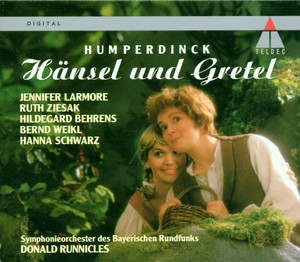 | Humperdinck : Hänsel und Gretel : Overture to Act 1 | Engelbert Humperdinck, Donald Runnicles, Bavarian Radio Symphony Orchestra | C Major | 0 | 8B | 92 BPM | |
 | La Damnation de Faust, Op. 24, H 111 / Pt. 1: Marche hongroise | Hector Berlioz, Chicago Symphony Orchestra, Sir Georg Solti | A Major | 2 | 11B | 93 BPM | |
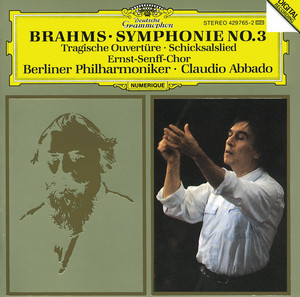 | Tragic Overture, Op. 81 | Johannes Brahms, Berliner Philharmoniker, Claudio Abbado | D Minor | 1 | 7A | 85 BPM | |
 | Elektra: Xii. Was sagen sie ihr denn? | Hugo von Hofmannsthal, Richard Strauss, Laila Andersson-palme, Royal Swedish Opera Orchestra, Siegfried Köhler | B Major | 3 | 1B | 136 BPM | |
 | Nabucco: Overture | Giuseppe Verdi, Berliner Philharmoniker, Claudio Abbado | F Major | 2 | 7B | 100 BPM | |
| Symphony No. 3 in F Major, Op. 90: IV. Allegro | Johannes Brahms, Berliner Philharmoniker, Claudio Abbado | C Major | 1 | 8B | 79 BPM | |
 | Tone Poems: Träumerei am Kamin | Richard Strauss, Orchestre Philharmonique De Strasbourg, Marc Albrecht | A♭ Major | 1 | 4B | 111 BPM | |
 | Piano Concerto in G Major, M. 83: III. Presto | Maurice Ravel, Martha Argerich, Berliner Philharmoniker, Claudio Abbado | C Major | 4 | 8B | 81 BPM | |
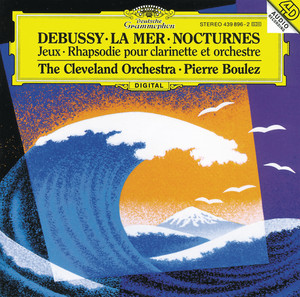 | Nocturnes, CD 98: I. Nuages | Claude Debussy, The Cleveland Orchestra, Pierre Boulez | C Major | 0 | 8B | 90 BPM | |
 | Sibelius: Symphony No. 5 in E-Flat Major, Op. 82: III. Allegro molto | Jean Sibelius, Sakari Oramo, City Of Birmingham Symphony Orchestra | A♭ Major | 1 | 4B | 149 BPM | |
 | L’arlésienne Suite No. 2 (Arr. E. Guiraud): II. Intermezzo | Georges Bizet, Orquestra Simfònica de Barcelona i Nacional de Catalunya, Pablo González | D Major | 3 | 10B | 91 BPM | |
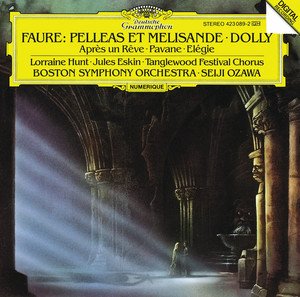 | Pelléas et Mélisande, Op. 80, Suite: IV. La mort de Mélisande | Gabriel Fauré, Boston Symphony Orchestra, Seiji Ozawa | D Minor | 0 | 7A | 82 BPM | |
 | Symphony No. 8 in G Major, Op. 88, B. 163: III. Allegretto grazioso - Molto vivace | Antonín Dvořák, Los Angeles Philharmonic, Gustavo Dudamel | C Major | 1 | 8B | 127 BPM | |
 | Romeo and Juliet, Op. 64: Introduction | Sergei Prokofiev, The Cleveland Orchestra, Lorin Maazel | E Major | 1 | 12B | 112 BPM | |
 | Lieder ohne Worte (Songs without Words), Book 2, Op. 30: No. 7 in E-Flat Major, Op. 30, No. 1, MWV U103 | Felix Mendelssohn, Péter Nagy | E♭ Major | 0 | 5B | 65 BPM | |
 | Serenade for String Orchestra in C Major, Op. 48, TH 48: II. Valse | Pyotr Ilyich Tchaikovsky, The Russian Virtuosi of Europe, Yuri Zhislin | G Major | 2 | 9B | 98 BPM | |
 | Toccata | Johann Sebastian Bach, Symphonica Orchestra, Leopold Stokowski | D Major | 2 | 10B | 130 BPM | |
 | Serenade for Strings in E Minor, Op. 20: I. Allegro piacevole | Edward Elgar, Orpheus Chamber Orchestra | F Minor | 0 | 4A | 124 BPM | |
 | 4 Lieder, Op. 27: No. 4, Morgen! (Arranged for Violin & Orchestra by Joshua Bell) | Richard Strauss, Joshua Bell, Anna Netrebko, Michael Stern, Orchestra of St. Luke's | G Major | 1 | 9B | 93 BPM | |
 | Variations On An Original Theme, Op.36 "Enigma": 12. B.G.N. (Andante) | Edward Elgar, BBC Symphony Orchestra, Leonard Bernstein | B♭ Major | 0 | 6B | 82 BPM | |
 | Elektra, Op. 58, TrV 223: "Elektra!" / "Schweig, und tanze." | Richard Strauss, Marianne Schech, Inge Borkh, Staatskapelle Dresden, Karl Böhm | D♭ Major | 5 | 3B | 179 BPM | |
 | Sicilienne, Op. 78 | Gabriel Fauré, Harriet Krijgh, Kamilla Isanbaeva | G Minor | 1 | 6A | 123 BPM | |
 | Piano Concerto in A Minor, Op. 16: II. Adagio - Remastered | Edvard Grieg, Arthur Rubinstein, RCA Victor Symphony Orchestra, Alfred Wallenstein | D♭ Major | 0 | 3B | 86 BPM | |
 | Fauré: Élégie, Op. 24 (Orchestral Version) | Gabriel Fauré, Paavo Järvi, Eric Picard, Orchestre de Paris | A♭ Major | 0 | 4B | 89 BPM | |
 | Piano Concerto No. 2 in F Major, Op. 102: II. Andante | Dmitri Shostakovich, Boris Giltburg, Royal Liverpool Philharmonic Orchestra, Vasily Petrenko | C Minor | 0 | 5A | 80 BPM |
- ISRC
- GBBBA0942918
- Label
- L-M Records/RCA Records