- BPM
- 80
- Key
- F Major
- Camelot
- 7B
Duo (Theme and Variations): VIII. Variation VII Lento serioso by Gaia Duo, Elizabeth Maconchy Song Details
"Duo (Theme and Variations): VIII. Variation VII Lento serioso" by Gaia Duo, Elizabeth Maconchy had its release date on April 7, 2023. The duration of This song is about two minutes long, specifically at 2:12. This song does not appear to have any foul language. Duo (Theme and Variations): VIII. Variation VII Lento serioso's duration is considered a little bit shorter than the average duration of a typical track. There are a total of 28 in the song's album "Stone, Salt & Sky: Beamish | Maconchy | Strachan | R Clarke". In this album, this song's track order is #13. Furthermore, we believe that the track originated from United Kingdom. Duo (Theme and Variations): VIII. Variation VII Lento serioso is unknown right now. In our opinion, the overall tone is not very danceable and projects negative sounds, such as being sad, depressed, or angry.
BPM and Tempo
With Duo (Theme and Variations): VIII. Variation VII Lento serioso by Gaia Duo, Elizabeth Maconchy having a BPM of 80 with a half-time of 40 BPM and a double-time of 160 BPM, we would consider this track to have a Andante (at a walking pace) tempo marking. Because of this, we believe that the song has an overall slow tempo. The time signature for this track is 4/4.
Music Key
This song is in the music key of F Major. Or for those who are familiar with the camelot wheel, this song has a camelot key of 7B. So, the perfect camelot match for 7B would be either 7B or 8A. While, 8B can give you a low energy boost. For moderate energy boost, you would use 4B and a high energy boost can either be 9B or 2B. Though, if you want a low energy drop, you should looking for songs with either a camelot key of 7A or 6B will give you a low energy drop, 10B would be a moderate one, and 5B or 12B would be a high energy drop. Lastly, 4A allows you to change the mood.
Want to find the BPM and music key for other songs? Check out our BPM and Key Finder page!
- Popularity
- 0%
- Loudness
- -24.879 dB
- Acousticness
- 95%
- Danceability
- 18%
- Energy
- 3%
- Instrumentalness
- 93%
- Liveness
- 11%
- Loudness
- 59%
- Speechiness
- 5%
- Valence
- 3%
Recommendations
| Track | Artist | Key | Energy | Camelot | BPM | ||
|---|---|---|---|---|---|---|---|
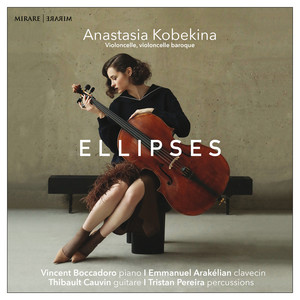 | Les Folies d'Espagne (Transcribed for Cello & Harpsichord) | Marin Marais, Anastasia Kobekina, Emmanuel Arakélian | D Minor | 2 | 7A | 182 BPM | |
 | The Seven Last Words of Our Saviour on the Cross, Hob. XX (Hybrid Version): Introduction 2. Largo e cantabile | Joseph Haydn, Emerson String Quartet | C Minor | 2 | 5A | 114 BPM | |
 | Oriental Suite: I - Song Of The Aisors | G. I. Gurdjieff, Thomas de Hartmann, Metropole Orkest, The Little Orchestra | F Minor | 0 | 4A | 112 BPM | |
 | Schubert: String Quartet No. 14 in D Minor, D. 810, "Death and the Maiden": II. Theme - | Franz Schubert, vision string quartet | G Minor | 0 | 6A | 131 BPM | |
 | Fantasia No. 1 for Solo Violin in B-Flat Major, TWV 40:14: III. Grave – | Georg Philipp Telemann, Alina Ibragimova | A Minor | 2 | 8A | 160 BPM | |
 | 12 Klavierstücke für kleine und große Kinder, Op. 85: No. 12, Abendlied (Arr. for Violin and Piano by Amanda Maier) | Robert Schumann, Trio Ernest | D♭ Major | 0 | 3B | 87 BPM | |
 | Lachrimae, or Seaven Teares: No. 1, Lachrimae Antiquae | John Dowland, Christian-Pierre La Marca | A♭ Minor | 1 | 1A | 100 BPM | |
 | Ciudadano Sombra: II. - Live Concert | Ramón Paus, Pablo Martos, Yuval Gotlibovich, Alberto Martos | G Major | 1 | 9B | 94 BPM | |
 | Ancor che col partire (Arr. The Dowland Project, Potter) | Cipriano de Rore, The Dowland Project | A Minor | 1 | 8A | 111 BPM | |
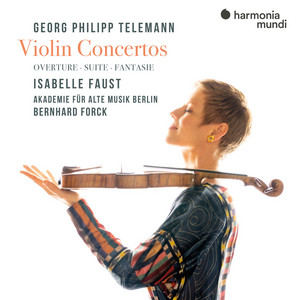 | Concerto for Violin, Strings and Continuo in A Minor, TWV 51:a1: I. Adagio | Georg Philipp Telemann, Isabelle Faust, Akademie für Alte Musik Berlin, Bernhard Forck | A♭ Minor | 0 | 1A | 81 BPM | |
 | Piano Trio No. 1 in D Minor, Op. 49: III. Scherzo: Leggiero e vivace | Felix Mendelssohn, Joshua Bell, Steven Isserlis, Jeremy Denk | D Major | 2 | 10B | 156 BPM | |
 | Duo (Theme and Variations): III. Variation II Andante espressivo, rubato | Gaia Duo, Elizabeth Maconchy | C Major | 0 | 8B | 82 BPM | |
 | String Quartet, M. 35: II. Assez vif, très rythmé | Maurice Ravel, Ayako Tanaka, Hungwei Huang, Svetlin Roussev, Woongwhee Moon | F Major | 1 | 7B | 150 BPM | |
 | Terpsichore, HWV 8b: Chaconne | Georg Friedrich Händel, Die Freitagsakademie, Katharina Suske | A♭ Major | 2 | 4B | 114 BPM | |
 | 6 Lieder, Op. 1: No. 1, Schwanenlied (Arr. Lidström for Cello & Piano) | Fanny Mendelssohn, Mats Lidström, Leif Kaner-Lidström | D Minor | 0 | 7A | 71 BPM | |
 | Concerto in B minor for Double-bass and Orchestra: 1. Allegro moderato | Giovanni Bottesini, Odon Racz, Franz Liszt Chamber Orchestra | G Major | 1 | 9B | 92 BPM | |
 | Caprice sur des motifs de l'opéra 'Le comte Ory', Op. 3: III. Variation 2 | Adrien François Servais, Sol Gabetta, Victor Julien-Laferrière | A Major | 2 | 11B | 138 BPM | |
 | From Jewish Life, B. 54: I. Prayer | Ernest Bloch, Emmanuelle Bertrand, Pascal Amoyel | D♭ Major | 1 | 3B | 149 BPM | |
 | Insight | Dobrinka Tabakova, Maxim Rysanov, Roman Mints, Kristine Blaumane | D Minor | 1 | 7A | 86 BPM | |
| Duo (Theme and Variations): IV. Variation III Allegro commodo – | Gaia Duo, Elizabeth Maconchy | G Major | 1 | 9B | 146 BPM | |
 | Viola da gamba Sonata in D Major, Wq. 137 (Arr. for Cello & Piano): III. Arioso | Carl Philipp Emanuel Bach, Daniel Müller-Schott, Angela Hewitt | D Major | 0 | 10B | 76 BPM | |
 | String Quartet No. 1 in D Major, Op. 25: I. Andante Sostenuto - Allegro Vivo | Benjamin Britten, Barbican Quartet | C Major | 0 | 8B | 173 BPM | |
 | Armenian Song | G. I. Gurdjieff, Thomas de Hartmann, Gurdjieff Quartet | B♭ Minor | 2 | 3A | 87 BPM | |
 | String Quintet in B-Flat Major, Op. 39 No. 1, G. 337: I. Andante lento | Luigi Boccherini, La Ritirata | A Major | 1 | 11B | 127 BPM | |
 | Reflection No. 2 | Camille Thomas, Julien Brocal | C Major | 0 | 8B | 173 BPM |
- ISRC
- GBEBL2326313
- Label
- L-M Records/RCA Records